Context: BRICS meeting India will host the BRICS Foreign Ministers’ meeting on May 14–15 with participation from China and Russia amid global tensions, which will culminate in the 18th BRICS Summit to be held in India in 2026 under its presidency. Key points • Participation of Wang Yi and Sergey Lavrov• Iran may join depending on situation• Focus on multipolarity and global coordination• India balancing West and China–Russia axis BRICS members • Brazil Russia India China South Africa• New members Egypt UAE Iran Ethiopia Indonesia About BRICS • Platform for economic cooperation and global governance reform• Promotes multipolar world order• Key institution New Development Bank
Strait of Hormuz: Importance for global oil and energy flows
Context: Strait of Hormuz Escalation involving Iran, the US and Israel led to restrictions and threats of blockade in the Strait of Hormuz, sharply reducing ship traffic and triggering global energy concerns. Why Hormuz matters • Carries ~21 million barrels/day ≈ 20% of global oil consumption• Major route for LNG exports from Qatar and UAE• ~80% of these flows go to Asia (India China Japan South Korea)• Connects Persian Gulf → Gulf of Oman → Indian Ocean• Very narrow ~21 nautical miles → high vulnerability Impact of disruption • Immediate oil price spike• Shipping disruption and higher freight cost• Risk of inflation and supply chain shocks• Limited rerouting options Maritime chokepoint • Narrow sea route with concentrated global trade flow• No easy alternatives → strategic bottleneck Other key chokepoints • Strait of Malacca• Bab el Mandeb• Suez Canal• Panama Canal Legal framework • Governed by UNCLOS• Transit passage allows continuous movement• States cannot block but can regulate
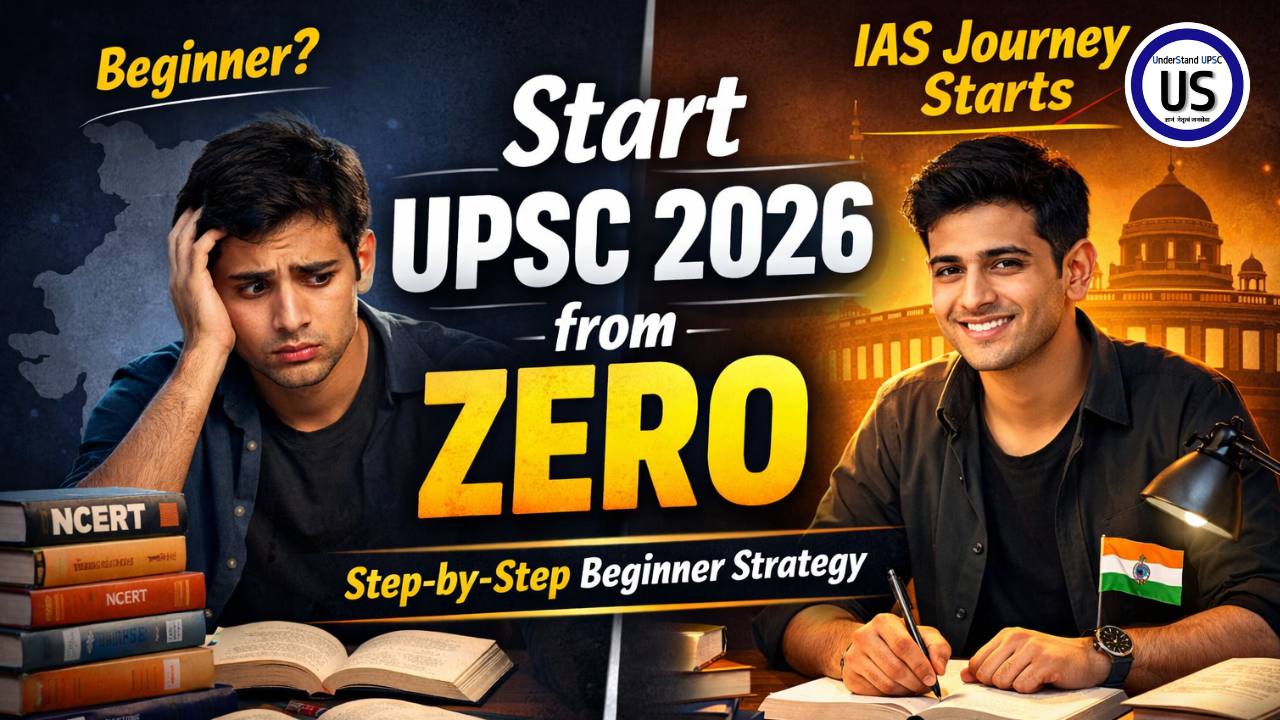
UPSC Preparation: How to Start UPSC Preparation from Zero in 2026
How to Start UPSC Preparation from Zero in 2026 If you are just starting out with UPSC Preparation and feeling overwhelmed by the syllabus, the booklist, and unsure where to begin, do not worry, you are at the right place. See, UPSC feels intimidating because it throws too many things at you at once. The syllabus is vast, the resources are endless, and the advice is often contradictory. One person tells you to read current affairs from 4 different sources. Another tells you to finish ten books before anything else. In all this noise, students often forget the most important thing: this exam is not cleared by doing everything. It is cleared by doing the right things in the right order. First, understand the structure of the exam. UPSC has three stages: Prelims, Mains, and Interview. Prelims tests your awareness and clarity. Mains checks how deeply you understand topics and how well you express them in writing. The Interview looks at your thinking, judgment, and personality. Once you understand what each stage demands, your UPSC Preparation stops feeling random. Then begin with the basics. Start with NCERTs for History, Geography, Polity, Economy, and Science. These books are not “basic” in a weak sense. They are basic in the strongest sense: they build your foundation. After that, move to trusted standard books like Laxmikanth for Polity and Spectrum for Modern History. Also, protect yourself from the biggest beginner trap: too many resources. You do not need to study from everywhere. You need a few good sources, one newspaper, short notes, and repeated revision for effective UPSC Preparation. If you need more precise guidance from someone who has recently cleared this exam, you can watch this YouTube video on UnderStand UPSC’s YouTube channel. It will take you to our Free Launchpad for UPSC 2027/28 Beginners curated by Dr. Iram (AIR 40, 2024). Remember, UPSC is not a test of who starts the fastest. It is a test of who stays consistent the longest. So do not aim for a dramatic beginning. Aim for a stable one. Once your base is right, your confidence starts building on its own, and that is when UPSC Preparation truly begins.
NAQUIM aquifer mapping
Introduction NAQUIM stands for National Aquifer Mapping and Management Programme. It is a major groundwater initiative of the Central Ground Water Board, under the Ministry of Jal Shakti, aimed at scientifically mapping India’s aquifers and preparing management plans for sustainable groundwater use. It basic idea is often captured in the phrase “Know your aquifer, manage your aquifer.” Aquifer mapping means identifying and studying underground water-bearing formations. Under NAQUIM, this is not limited to locating groundwater. It includes: • delineation of aquifer boundaries• characterization of aquifer geometry and thickness• assessment of groundwater quantity• study of groundwater quality• preparation of aquifer-specific management plans So, NAQUIM is both a scientific mapping exercise and a groundwater management exercise. Objective The programme aims to support sustainable groundwater management by generating scientific knowledge about aquifers and translating that knowledge into practical plans for local administrations and communities. Its broad objectives are: • to map aquifers in three dimensions• to understand groundwater availability and quality• to identify stress, depletion, and contamination issues• to prepare area-specific groundwater management plans• to support participatory and evidence-based groundwater governance The implementing agency is the Central Ground Water Board, which carries out studies under the broader Ground Water Management and Regulation scheme. Why NAQUIM is important India depends heavily on groundwater for drinking water, irrigation, and industrial use. In many regions, groundwater extraction has become unsustainable. A major problem is that groundwater is often used without sufficient knowledge of the aquifer system itself. NAQUIM is important because it shifts groundwater policy from blind extraction to scientific management. It helps answer key questions such as: • how much groundwater is available• where it is stored• what its quality is• how recharge can be improved• what management measures are suitable for the local aquifer Scale of mapping According to the latest official PIB reply from 5 days ago, during Phase 1.0 of NAQUIM, the entire mappable area of the country of about 25 lakh sq km has been mapped. District-wise aquifer maps and groundwater management plans have also been shared with local administrations. This is the most important current fact to remember. Outputs of NAQUIM The programme produces: • aquifer maps• hydrogeological information• groundwater-quality assessment• area-specific management plans• district and taluk-level aquifer reports• recommendations on recharge, extraction, and local interventions These outputs are shared with States and Union Territories so that local authorities can design suitable interventions. Management dimension NAQUIM is not only about scientific mapping. It also includes preparation of Aquifer Management Plans. These plans may recommend: • artificial recharge structures• rainwater harvesting• crop and irrigation adjustments• regulation of extraction• groundwater quality mitigation measures• community-based local water conservation This makes the programme highly relevant for water security planning. Current phase and continued use Even after Phase 1 mapping, NAQUIM continues to be used as the scientific basis for district, taluk, and area-level groundwater planning. Recent parliamentary material from late 2025 shows taluk-wise aquifer mapping and management plans being prepared and used in states like Karnataka, indicating that the programme has moved from broad mapping to finer operational application. Significance NAQUIM is important because it introduces a scientific and decentralized approach to groundwater governance. Its significance lies in: • moving from extraction-led use to aquifer-based management• helping identify groundwater stress and contamination• supporting local planning for recharge and conservation• improving long-term water security• strengthening evidence-based decision-making in the water sector NAQUIM is India’s major scientific groundwater mapping and management initiative. It is important not just because it identifies aquifers, but because it connects hydrogeological knowledge with practical groundwater management, recharge planning, and long-term water security.
WASH systems
Introduction WASH stands for water, sanitation and hygiene. In contemporary policy, WASH systems mean the full set of services, infrastructure, institutions, financing arrangements, regulations and behaviours needed to ensure safe water, safe sanitation and hygienic living conditions for people and communities. WHO describes safe drinking water, sanitation and hygiene as crucial to health and well-being, while UNICEF treats WASH as central to child survival, dignity and resilient communities. What a WASH system actually includes A WASH system is much broader than taps and toilets. It includes the entire chain through which services are delivered and sustained. It covers: • safe water sources, treatment, storage and distribution• toilets, sewerage, faecal sludge management and wastewater handling• drainage and waste management linkages• hygiene facilities such as handwashing stations• behaviour change and public awareness• institutions, standards, regulation, monitoring and financing• maintenance and long-term service sustainability This systems approach is now central to global health and development thinking because infrastructure without maintenance, or access without behaviour change, does not produce durable health outcomes. Core components Water The water component focuses on access to safe, sufficient, reliable and affordable water for drinking, cooking, washing and health-care use. Unsafe water contributes directly to disease, while poor reliability affects household welfare, schooling, and health services. Sanitation Sanitation means safe containment, treatment and disposal of human waste. It includes toilets, sewerage, septage, wastewater systems and faecal sludge management. Sanitation matters because untreated excreta contaminates soil, groundwater and surface water, and drives disease transmission. Hygiene Hygiene includes practices and facilities that reduce infection risk, especially handwashing with soap, menstrual hygiene management, food hygiene and safe handling of household water. UN-Water describes hygiene knowledge and facilities as life-saving and highly cost-effective public health interventions. Why WASH matters WASH is one of the foundational conditions of public health. WHO notes that unsafe water and poor sanitation contribute to illnesses such as diarrhoea, and that untreated excreta contaminate water sources used for drinking and household purposes. UNICEF links WASH directly to child survival, education and protection. Its importance can be understood through a few major effects: • reduction in water-borne and faecal-oral diseases• better maternal and child health• stronger nutrition outcomes, because repeated infection worsens undernutrition• improved school attendance, especially for girls• protection of dignity, privacy and safety• stronger resilience in health-care facilities and communities WASH and human rights Access to water and sanitation is recognized internationally as a human rights issue. UN-Water explicitly states that access to water and sanitation are human rights. This is important because it shifts WASH from being seen only as an engineering or welfare issue to being seen as a matter of equity, dignity and state obligation. WASH and the Sustainable Development Goals WASH is directly linked to the 2030 Agenda, especially: • SDG 3, good health and well-being• SDG 6, clean water and sanitation But its effect goes beyond these two goals. WASH also influences education, nutrition, gender equality, poverty reduction and sustainable urbanization. This wider linkage is emphasized across WHO and UNICEF strategy documents. WASH in health-care facilities A major recent policy focus is WASH in health-care facilities. WHO and UNICEF updated the Country Progress Tracker in July 2025, covering 107 countries and reporting progress against the UN General Assembly resolution on water, sanitation, hygiene, waste and electricity services in health-care facilities. The update found that nearly every country was taking some action, but only 17 percent had secured sufficient financing to improve and sustain these services. This is a major finding because health-care facilities cannot deliver safe care without reliable water, sanitation, hygiene, waste management and electricity. The United Nations General Assembly in 2023 adopted a resolution calling sustainable, safe and universal water, sanitation, hygiene, waste and electricity services in health-care facilities a core measure for universal health coverage, outbreak preparedness and stronger primary health care. Why WASH in health facilities is especially critical In health-care facilities, WASH is not only about comfort or cleanliness. It is a basic condition for clinical safety. It is essential for: • infection prevention and control• safe childbirth and neonatal care• surgical and emergency care• biomedical waste handling• health-worker safety• trust in public health institutions The 2024 WHO framework on universal WASH, waste and electricity services in health-care facilities explicitly treats these services as prerequisites for quality care. Global policy architecture WASH is now embedded in a broader international policy framework. Important elements include: • WHO and UNICEF global monitoring and country progress tracking on WASH in health-care facilities• the 2023 UN General Assembly resolution on WASH, waste and electricity in health-care facilities• WHO’s broader health-centred framing of WASH as essential to resilience, well-being and healthy environments• UNICEF’s long-term strategy linking WASH to child outcomes, schools, preschools and health systems India’s position India has been recognized in recent global tracking for efforts related to WASH in health-care facilities, including infrastructure improvement and inclusion of WASH indicators in national monitoring systems. That recognition does not mean the challenge is over, but it does indicate that India is part of the group of countries taking structured action in this field. India’s larger WASH architecture is anchored in major national programmes. Jal Jeevan Mission Jal Jeevan Mission aims to provide safe and adequate drinking water through household tap connections in rural India. According to a PIB release dated 8 days ago, as of 3 March 2026, around 15.82 crore rural households, or 81.71 percent of rural households, were reported to have tap water supply at home, up from 3.23 crore, or 16.7 percent, at the start of the mission. Swachh Bharat Mission Swachh Bharat Mission has been the major sanitation drive aimed at eliminating open defecation and improving sanitation infrastructure and behaviour. UNICEF India explicitly identifies it as one of the flagship national programmes to which it provides support in the WASH domain. WASH in schools, anganwadis and health facilities UNICEF India also highlights support to WASH in schools, preschools or anganwadis, and health-care facilities, showing that WASH is being treated in India not just as an infrastructure issue but
West Asia conflict poverty impact: UNDP warns rise in India poverty
Context: West Asia conflict poverty impact A United Nations Development Programme (UNDP) report titled “The Impact of the West Asia Conflict on Sustainable Development in Asia and the Pacific” highlights that the ongoing West Asia conflict may increase poverty and reverse development gains. Key Data • 2.5 million people in India at risk of falling into poverty.• 8.8 million people globally at risk.• India’s poverty rate: 23.9% → 24.2%.• India imports >90% crude oil, including >40% crude and ~90% Liquefied Petroleum Gas (LPG) from West Asia.• Countries like Iran may lose 1–1.5 years of Human Development Index (HDI) progress. Reasons for Rise in Poverty
US Iran nuclear issue: key disputes on uranium, Strait of Hormuz, and regional conflict
Context: US Iran nuclear issue Following Iran–United States (US) talks in Islamabad, both sides have made progress, but disagreements persist over nuclear capability, regional security, and control of strategic routes. Nuclear Issue (Highly Enriched Uranium) • Problem: Iran possesses about 400 kg of uranium enriched up to 60%, close to weapons-grade (sufficient for ~10–12 nuclear bombs if further enriched).• Resolution: Iran to hand over or dilute HEU and cap enrichment at 3.67%; in return, the US to lift nuclear sanctions, allow International Atomic Energy Agency (IAEA) inspections, and support peaceful nuclear use. Strait of Hormuz • Problem: Iran is militarising the Strait of Hormuz and considering levying tolls on shipping, threatening a key global oil transit route.• Resolution: The US to ease non-nuclear sanctions and release frozen Iranian assets, reducing Iran’s need for coercive leverage and ensuring free and secure maritime movement. Israel–Hezbollah Conflict (Lebanon) • Problem: Iran backs Hezbollah, while the US supports Israel, prolonging conflict in Lebanon.• Resolution: US and Iran to pressure their respective allies to initiate negotiations, aiming for time-bound de-escalation.
India heatwave legislative gap: lack of legal protection for workers in heat crisis
Context: India heatwave legislative gap India’s heatwaves have evolved into a structural national crisis, with over 57% of districts classified as heat-prone, exposing serious gaps in labour protection, disaster governance, and legal enforcement—especially for informal workers. Key Information Nature of the Crisis (Thermal Inequality) • Heatwaves now affect coastal and temperate regions.• Around 400–490 million informal workers face direct exposure.• Results in income loss + health risks → termed thermal injustice. Vulnerable Groups • Construction workers, sanitation workers, street vendors, gig workers.• Face heat stress + loss of livelihood simultaneously. Legislative Gap (Core Issue) • Factories Act, 1948 → limited to indoor workplaces.• Occupational Safety, Health and Working Conditions Code, 2020 (OSHWC)Section 23: Government can set safety standards (including heat), but not mandatory.• Implementation exists (Code notified, draft rules issued), but no uniform, enforceable heat protection law.• Heatwaves not fully integrated into disaster funding framework → limited fiscal response. What Needs to be Done • Make heat safety rules legally binding (not advisory).• Include heatwaves in Notified Disaster List → better funding access.• Ensure work-rest cycles, protective gear, cooling shelters, water access.• Provide income compensation during extreme heat days. Supreme Court Link • Ranjitsinh v. Union of India (2024)• Recognised “Right to Cool” under Article 21 (Right to Life).
Women reservation delimitation issue: concerns over federal balance and seat redistribution
Context: women reservation delimitation issue The Union government has introduced the Constitution (131st Amendment) Bill, 2026 along with a Delimitation Bill to implement the Nari Shakti Vandan Adhiniyam, 2023 (106th Constitutional Amendment), linking 33% women’s reservation with delimitation after Census. Key Information Core Concern • Women’s reservation is linked with delimitation, which may change seat distribution among States and affect federal balance. Census Delay + Removal of Safeguard (Integrated) • 2021 Census delayed → now 2026–27 → allows earlier delimitation.• Earlier protection:• 42nd Amendment (1976) → froze seat distribution (1971 population)• 84th Amendment (2001) → extended this freeze Now:• 131st Amendment removes this safeguard (Articles 82 & 170) • Result:• Seats depend more on current population → benefits high-population States. Major Constitutional Changes • Articles amended: 55, 81, 82, 170, 330, 332, 334A• Lok Sabha seats increased:• States: 530 → 815• Union Territories: 20 → 35• Total: 550 → 850 Criticism • States that controlled population may lose representation• Weakens federal balance• Women’s reservation can be implemented without delimitation (rotation method)
River pollution religious practices: environmental impact of ritual offerings in rivers
Context: River pollution religious practices A recent incident in Sehore (Madhya Pradesh), where 11,000 litres of milk were poured into the Narmada River during a religious ritual, has reignited the debate on environmental impact of faith-based practices on rivers. Key Points Environmental Impact • Offerings like milk, oil, flowers increase Biochemical Oxygen Demand (BOD) → reduce oxygen in water.• Leads to aquatic stress, algal blooms, biodiversity loss. Data Evidence CPCB (Central Pollution Control Board):• 296 polluted river stretches (17 rivers)• Safe limit: BOD < 3 mg/L• Yamuna: up to 83 mg/L (≈27× limit)• Festivals (Kumbh, Durga Puja, Ganesh Utsav) → spike in pollution. Legal Position • Article 21 → Right to clean environment• Article 25 → Religious freedom (not absolute)• Water Act, 1974 + NGT enforce norms• Gap: No specific law regulating ritual offerings Core Issue • Faith vs Ecology conflict• Small individual acts → large cumulative pollution• Rapid population growth → greater ecological pressure Way Forward • Regulated immersion zones / artificial tanks• Waste management + eco-friendly rituals• Stronger enforcement (not just advisories)