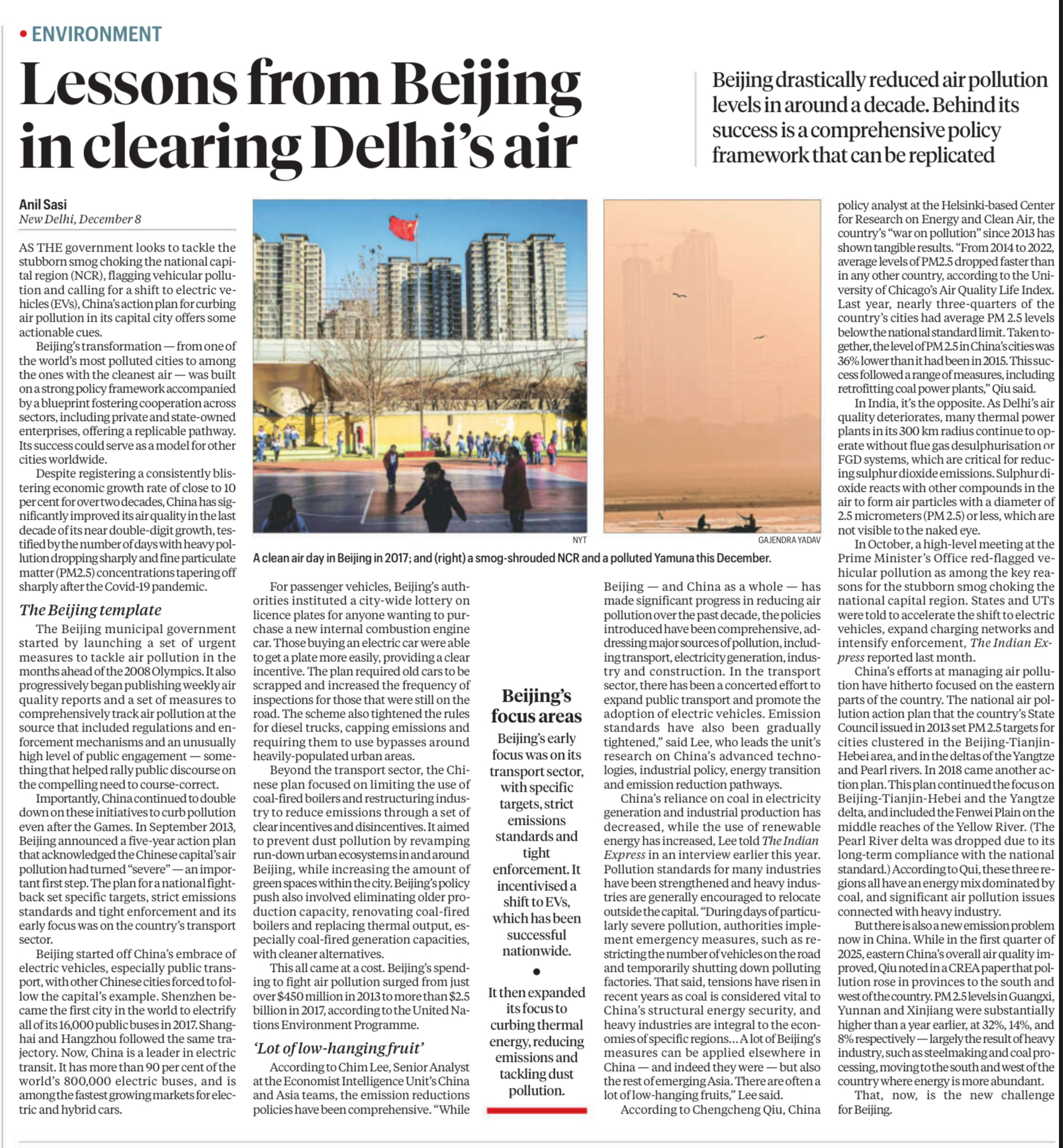

Beijing’s Governance Approach to Air Pollution
- Treated air pollution as a governance challenge, not an environmental afterthought—requiring coordinated state action across sectors.
- Adopted a centralised clean-air action plan with clear targets, strict timelines, and institutional accountability.
- Implemented multi-sector reforms simultaneously—energy transition, industrial restructuring, transport reforms, and construction controls.
- Ensured strong enforcement, real-time monitoring, and transparency to track progress.
- Backed reforms with substantial public investment in clean energy, EVs, mass transit, and cleane industrial technology.
What Delhi Can Learn from Beijing ??
- Unified Clean Air Mission: Create a single NCR-wide command structure with time-bound targets covering transport, industry, energy, and construction.
- Transport Transformation: Rapid expansion of metro/bus fleets, last-mile EVs; reduce private vehicle dependence through congestion and parking management.
- Industrial & Energy Reforms: Relocate/retrofit polluting units; enforce strict emission norms; phase down dirty fuels in NCR periphery and shift to cleaner energy sources.
- Dust & Construction Management: Strict controls on construction emissions and real-time monitoring of hotspots.
- Robust Enforcement & Transparency: Rigorous inspections, emissions monitoring, public dashboards, and penalties for non-compliance.
- Investment-Backed Action: Prioritise funding for clean energy, EV infrastructure, and pollution-control technology—making clean air a strategic state objective.