11 Feb 2026 | Daily Current Affairs

New IT Rules on AI Content Labelling | UPSC GS-2 Governance

Context
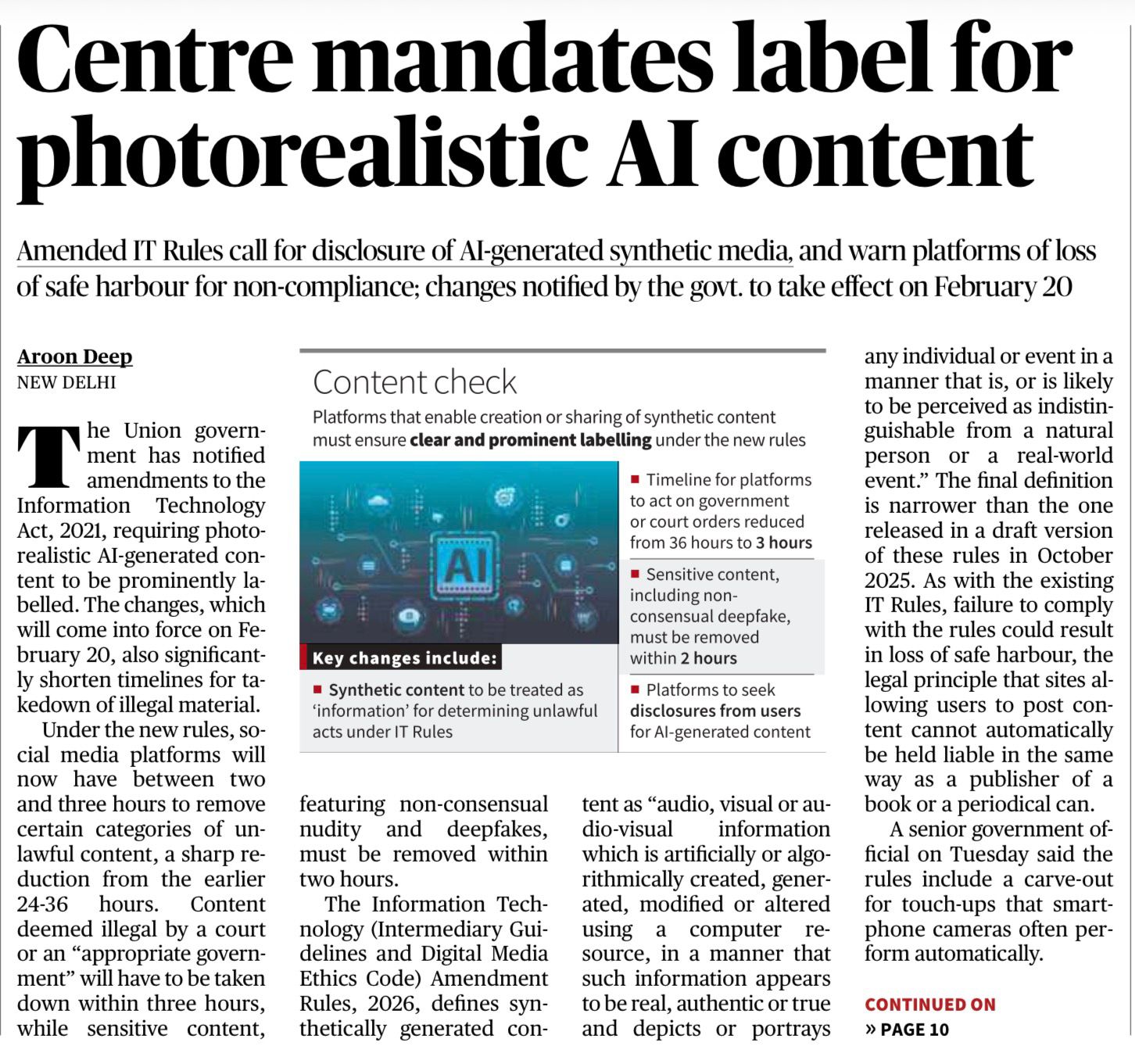
Amendments to the Information Technology Act, 2021 introducing mandatory labelling for photorealistic AI-generated content.

Key Changes
• Mandatory Labelling: Photorealistic AI-generated/synthetic content must be clearly and prominently labelled.
• Synthetic Content = “Information”: Treated as “information” under IT Rules for determining unlawful acts.
• Faster Takedown Deadlines:
• Unlawful content: 3 hours (earlier 24–36 hours).
• Sensitive content (non-consensual deepfakes/nudity): must be removed within 2 hours.
• Disclosure Requirement: Platforms must seek information from users if content is AI-generated.
• Definition of Synthetic Content: Any audio-visual content algorithmically created or altered to appear real.
• Penalty Risk: Non-compliance may lead to loss of safe harbour protection for platforms.
• Exemption: Smartphone camera touch-ups are exempt.
New IT Rules
New IT Rules

Indus Water Treaty Suspension and J&K Projects | UPSC GS-2

Context
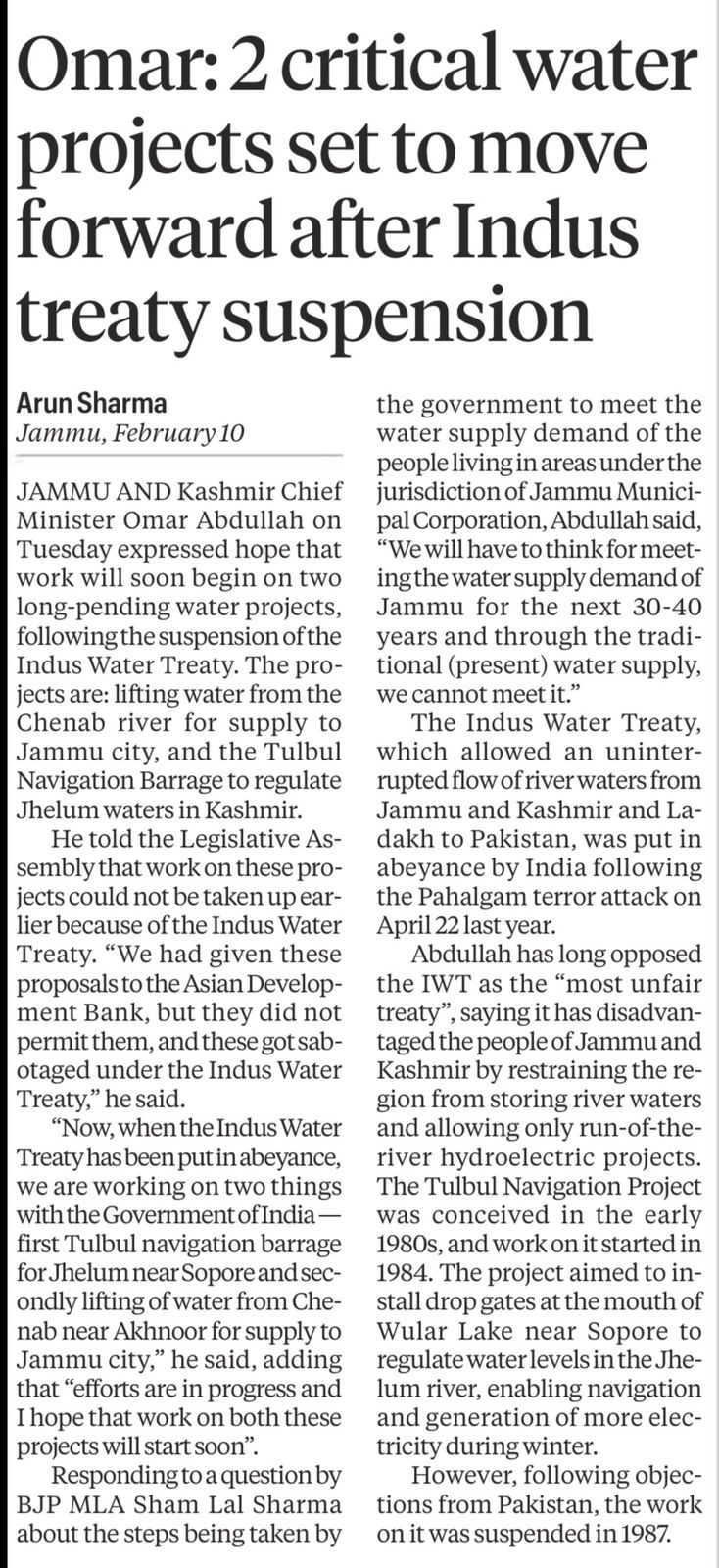
Suspension of the Indus Water Treaty (IWT) has allowed two long-pending water projects in J&K to finally move forward.

Key Projects

  1. Tulbul Navigation Barrage (Jhelum, near Sopore)
    • Purpose: Regulate water levels in Wular Lake → ensure navigation + enhance winter electricity generation.
  2. Chenab Lift Water Supply Project (near Akhnoor → Jammu City)

Indus Water Treaty
• Signed in 1960 between India & Pakistan, brokered by the World Bank.

Allocated:
• Eastern rivers (Ravi, Beas, Sutlej) → India
• Western rivers (Indus, Jhelum, Chenab) → Pakistan (with limited use allowed to India)

• India was allowed only run-of-the-river hydroelectric projects on western rivers; could not create storage or regulate flows.

Suspension
• India placed the treaty in abeyance after the Pahalgam terror attack (April 22, last year).
• This removed procedural barriers that previously prevented the two projects from being approved or funded.

Indus Water Treaty
Indus Water Treaty

Coral Bleaching and Climate Change Impact | UPSC GS-3 Environment

Context
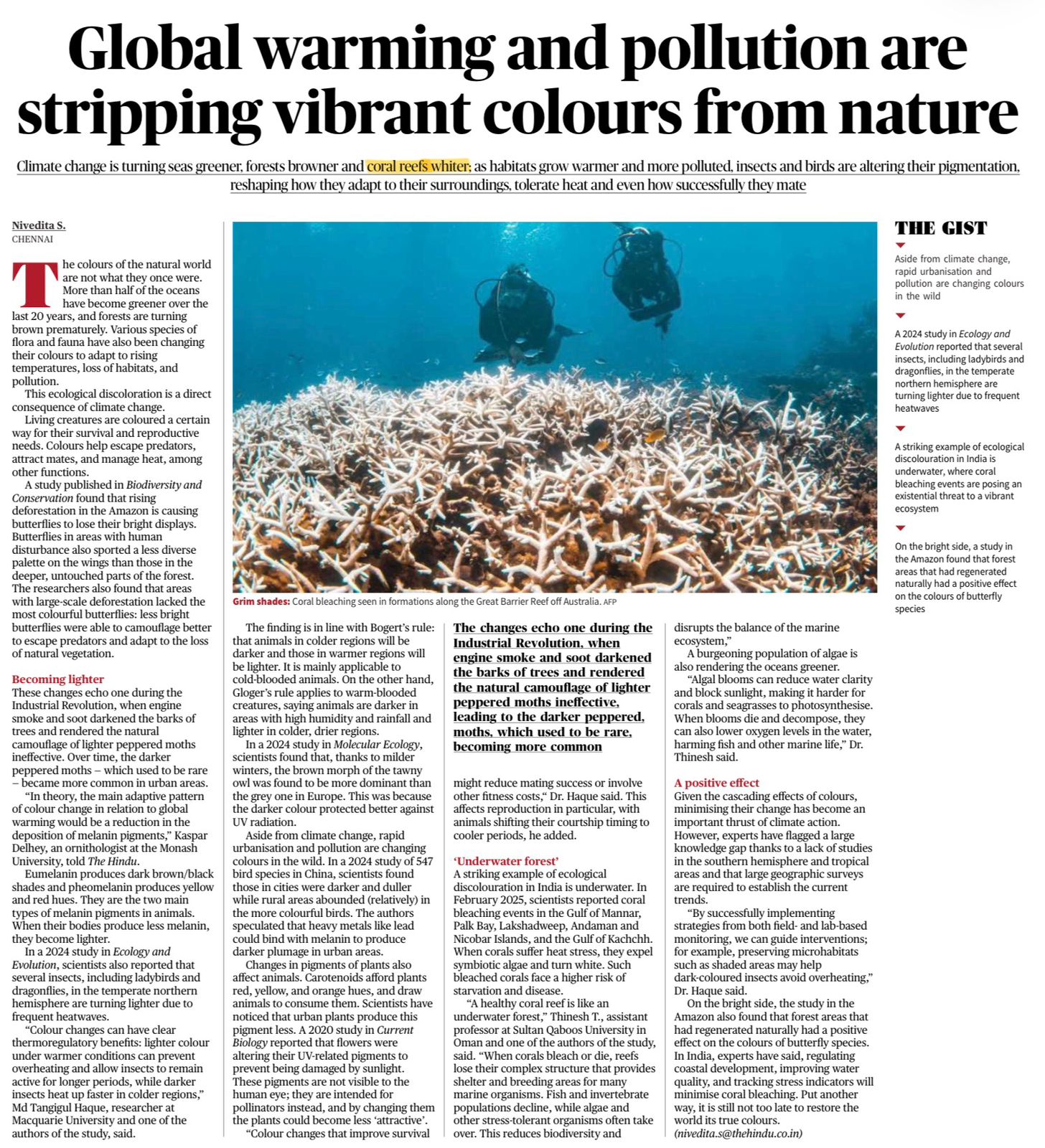
A new study published in Biodiversity and Conservation shows how climate change and pollution are causing major colour loss in nature.

Key Points
• Nature losing colours: Seas turning greener, forests browner, coral reefs whitening, insects and birds changing pigmentation.
• Why colours fade: Rising temperatures, pollution, habitat loss, altered rainfall, and extreme weather events.

Examples:
• Butterflies in Amazon losing bright colours in disturbed areas.
• Insects in temperate regions turning lighter due to frequent heatwaves.
Darker peppered moths becoming more common as surfaces lighten.
• Coral reefs: Severe bleaching events recently in Australia, Gulf of Mannar, Andaman–Nicobar, Kutch → leading to starvation and disease.
• Ecological impact: Loss of camouflage, difficulty attracting mates, disrupted predator–prey relations, imbalance in marine ecosystems.

Coral Bleaching
Coral Bleaching
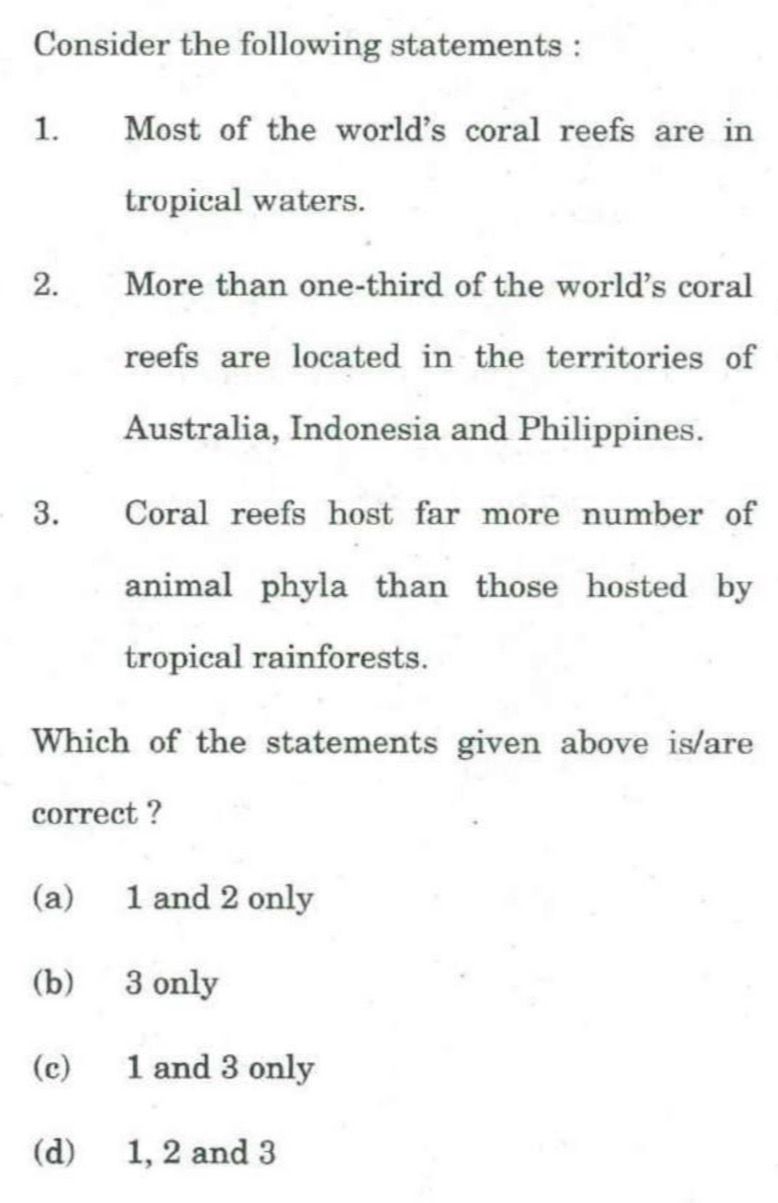
PYQ – 2018, Ans – D

NRI Investment Rules Eased in Budget 2026-27 | UPSC GS-3 Economy

Context
Budget 2026-27 raises NRI investment limits in Indian equities while NRIs currently hold very little of NSE-listed shares.

Who are NRIs?
Indian citizens living abroad for more than 182 days, retaining Indian citizenship but residing outside India.

What is an FCNR Account?
Foreign Currency Non-Resident account
• Fixed-deposit account for NRIs.
• Held in foreign currency (USD, GBP, EUR etc.).
• Often gives higher stable returns than Indian equities, especially highlighted for NRIs.

Old RBI Limits for NRI Equity Investment
Under Portfolio Investment Scheme (PIS):
• 5% per NRI
• 10% aggregate for all NRIs in a company
• Investments above 10% → allowed up to 24% only with RBI approval.

New Rule (Union Budget 2026-27)
• Individual NRI limit doubled: 5% → 10%
• Aggregate NRI limit doubled: 10% → 24%
• No RBI approval needed → intended to improve ease of doing business.

NRI Investment Rules
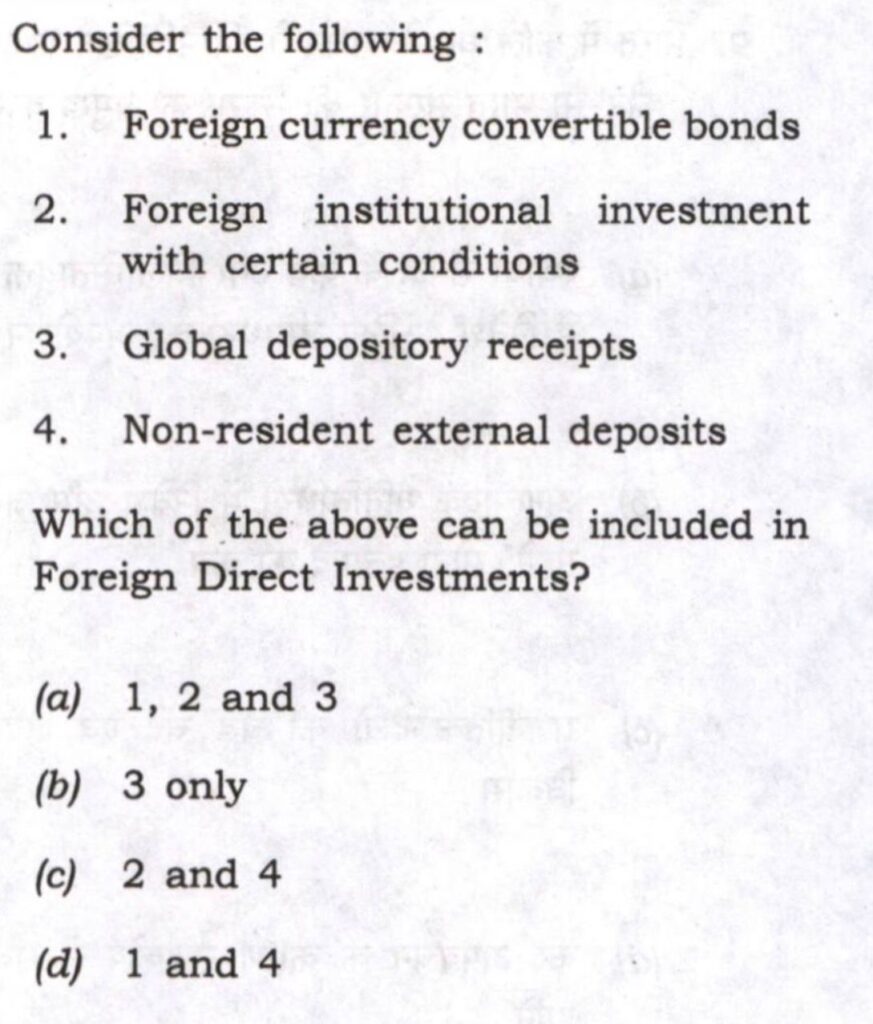
PYQ – 2021, Ans – A

US–Bangladesh Trade Pact: Impact on India’s Cotton Exports | UPSC GS-2

Context
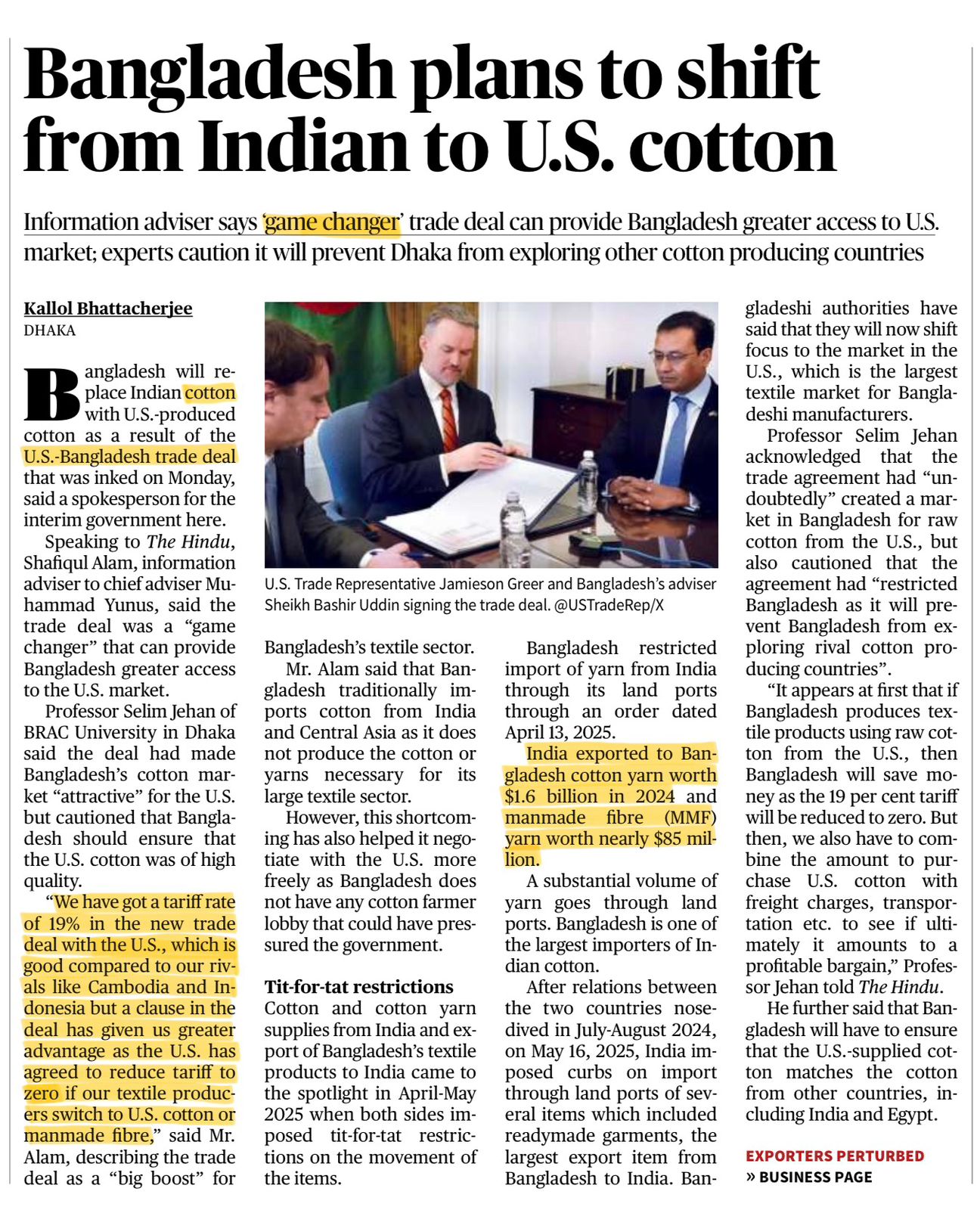
Bangladesh plans to switch its cotton imports from India to the U.S. following a new U.S.–Bangladesh trade pact.

U.S.–Bangladesh Trade Pact
• A new U.S.–Bangladesh trade deal was signed, described as a “game changer” by Bangladesh’s interim government adviser.
• U.S. will reduce tariff on Bangladeshi textile products to 0% if Bangladesh shifts its raw material sourcing to U.S. cotton or U.S. man-made fibre (MMF).
• Bangladesh supports this shift because the U.S. cotton quality is high and provides better market access to USA.

Data from the Article
India exported to Bangladesh:
• Cotton yarn worth $1.6 billion in 2024
• Manmade fibre yarn worth nearly $85 million in 2024

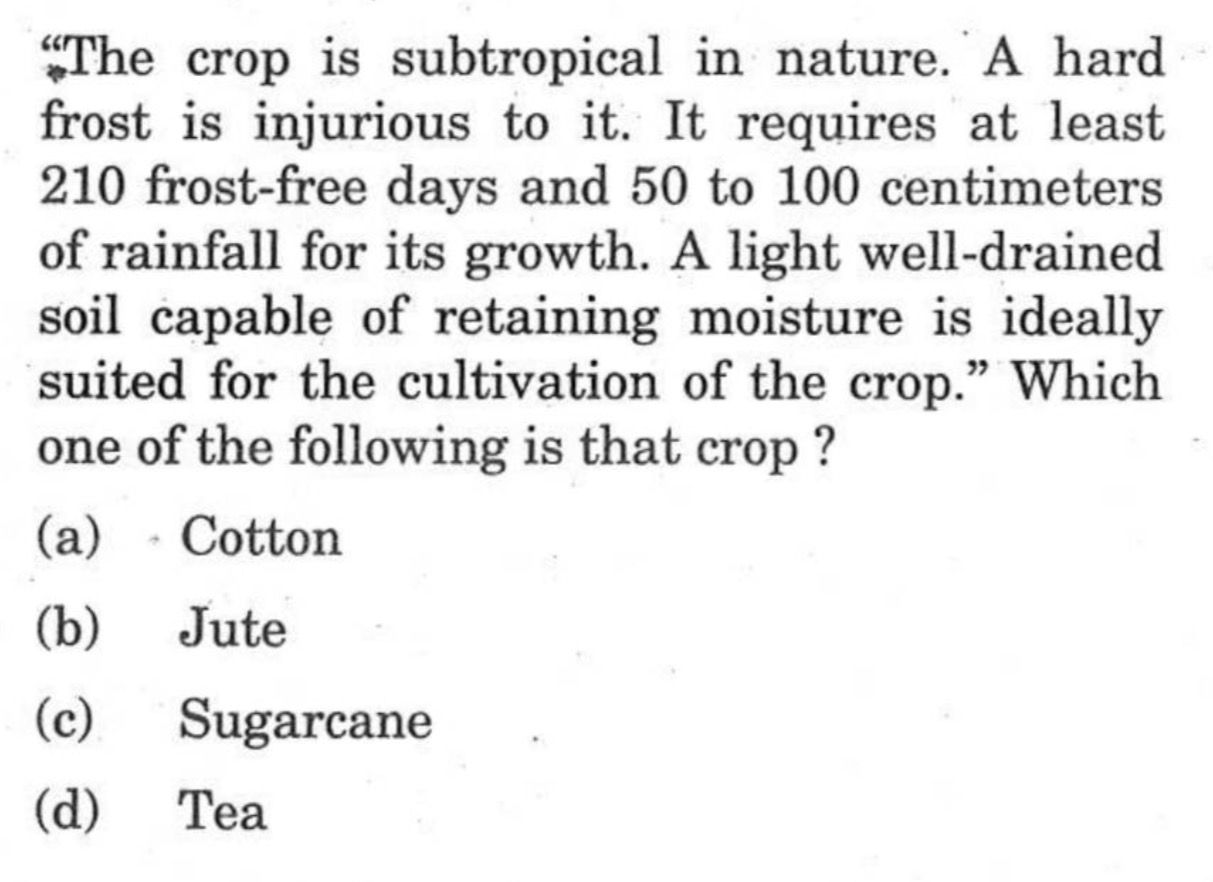
Cotton
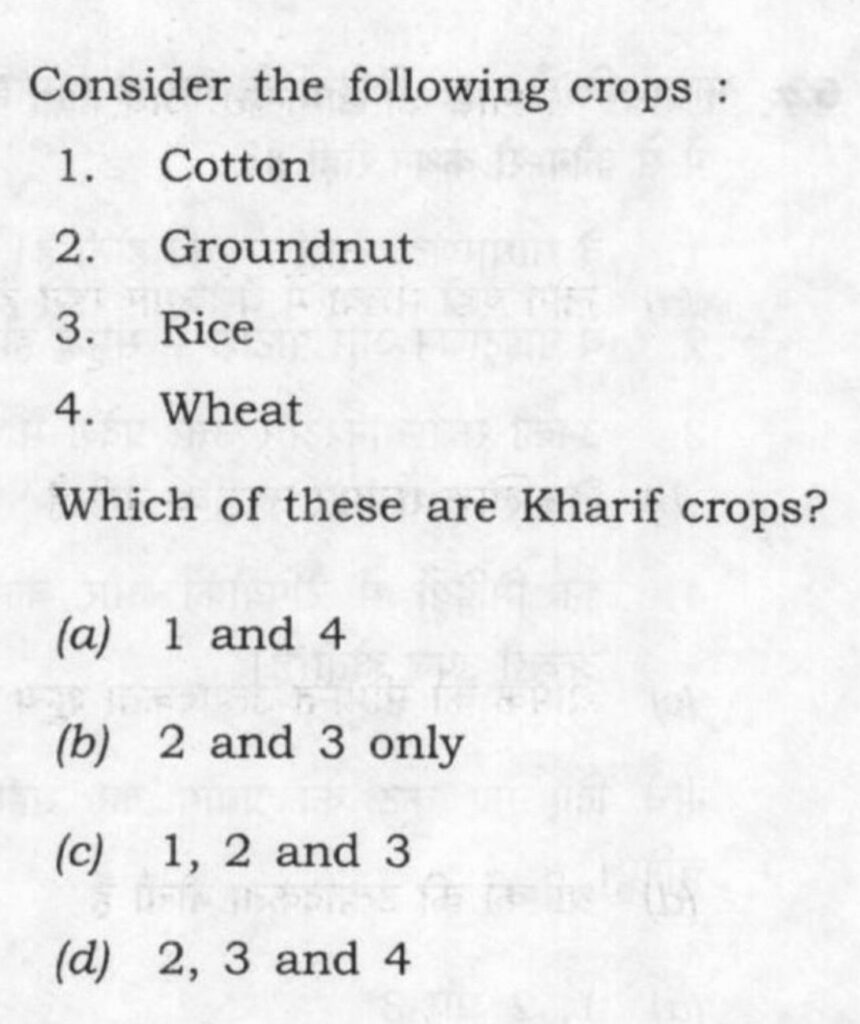
• Cotton is a kharif crop (sown June–July, harvested Oct–Jan).
• Requires warm climate and light, well-drained soil (black soil).

US–Bangladesh Trade Pact
PYQ – 2020, Ans – A
PYQ – 2013, Ans – C

About the UPSC Civil Services Examination (UPSC CSE)

The UPSC Civil Services Examination (CSE) is one of the most competitive and esteemed examinations in India, conducted by the Union Public Service Commission to recruit officers for services such as the Indian Administrative Service (IAS), Indian Police Service (IPS), Indian Foreign Service (IFS), and others. The exam comprises three stages — Prelims, Mains, and the Personality Test (Interview) — designed to test a candidate’s knowledge, aptitude, decision-making, and leadership skills.


How to Prepare Effectively for UPSC CSE

Cracking the UPSC CSE requires a deep understanding of the syllabus, consistent revision, structured answer writing, and smart test-taking strategies. The Prelims test analytical and conceptual clarity, the Mains focuses on critical thinking, articulation, and subject mastery, while the Interview assesses presence of mind, ethical judgment, and personality traits relevant to public service.

At UnderStand UPSC, we empower aspirants with a personalized and focused approach to each stage of the exam.


Why Choose UnderStand UPSC?

UnderStand UPSC is a mentorship-driven platform offering a clear, clutter-free strategy to tackle the Civil Services Examination. Our programs like Transform (for beginners and intermediate learners) and Conquer (for advanced mains preparation) provide structured study plans, syllabus-wise video content, interactive live sessions, and answer writing support.

We emphasize:

  • Concept clarity through topic-wise lectures

  • Test series designed around real UPSC standards

  • Personalized mentorship in small groups

  • Regular performance tracking and peer benchmarking

  • Doubt-clearing sessions, current affairs analysis, and monthly magazines


Join the UnderStand UPSC Learning Community

Our mission is to make UPSC preparation less overwhelming and more strategic. We combine mentorship, discipline, and academic rigor to help you clear CSE with confidence. Whether you’re preparing from Delhi, Mumbai, Bangalore, or a remote village — our online-first model ensures quality guidance reaches every corner of India.

Join the thousands of aspirants who trust UnderStand UPSC to guide their journey toward becoming civil servants.

Stay connected with us through our Telegram, YouTube, and Instagram channels for daily tips, strategies, and updates.

Copyright © 2026 USARAMBHA EDUCATION (UnderStand UPSC). All Rights Reserved.

Join the Success Journey!