Context
A new study published in Biodiversity and Conservation shows how climate change and pollution are causing major colour loss in nature.
Key Points
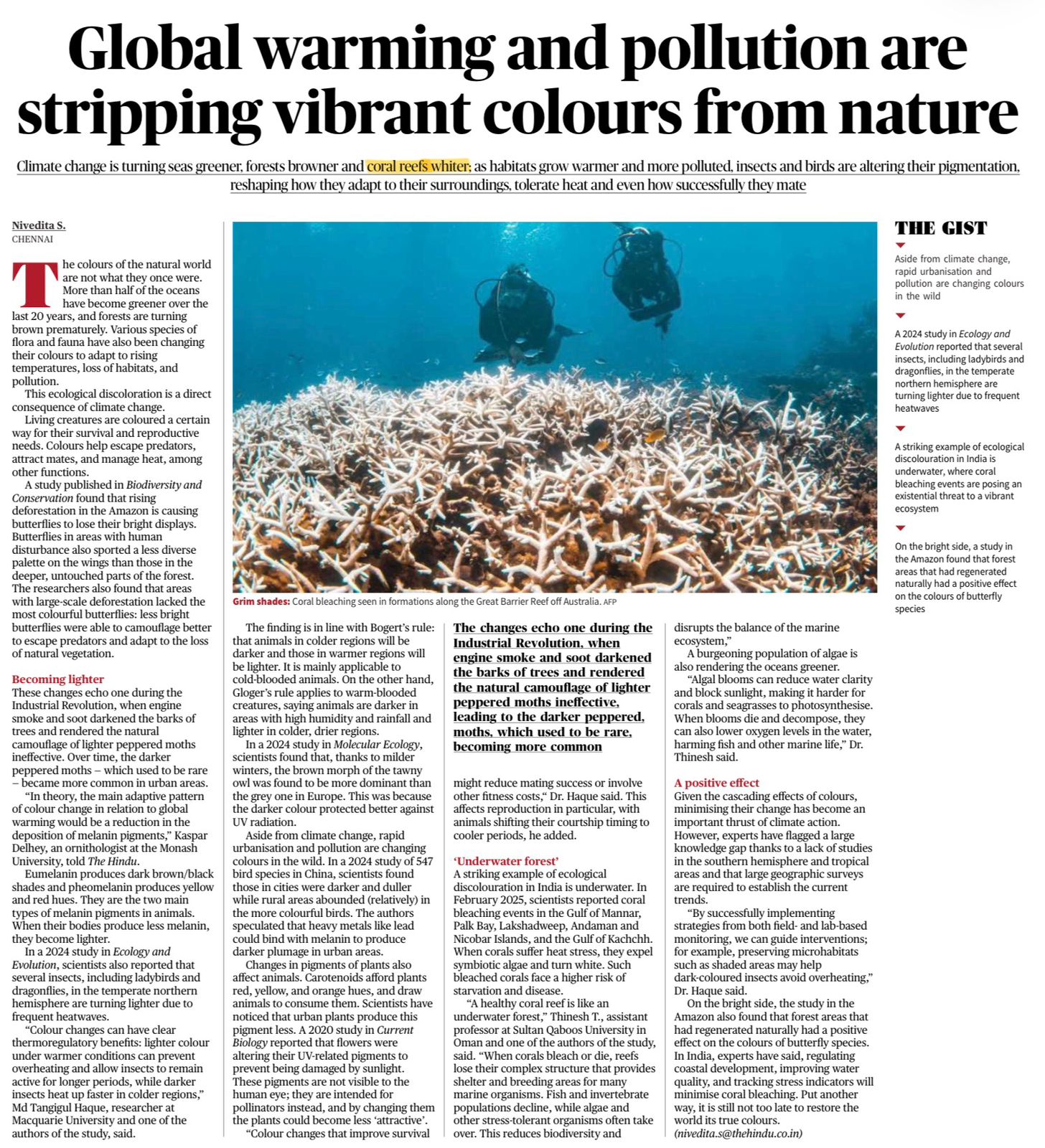
• Nature losing colours: Seas turning greener, forests browner, coral reefs whitening, insects and birds changing pigmentation.
• Why colours fade: Rising temperatures, pollution, habitat loss, altered rainfall, and extreme weather events.
Examples:
• Butterflies in Amazon losing bright colours in disturbed areas.
• Insects in temperate regions turning lighter due to frequent heatwaves.
• Darker peppered moths becoming more common as surfaces lighten.
• Coral reefs: Severe bleaching events recently in Australia, Gulf of Mannar, Andaman–Nicobar, Kutch → leading to starvation and disease.
• Ecological impact: Loss of camouflage, difficulty attracting mates, disrupted predator–prey relations, imbalance in marine ecosystems.