7 April 2026 | Daily Current Affairs

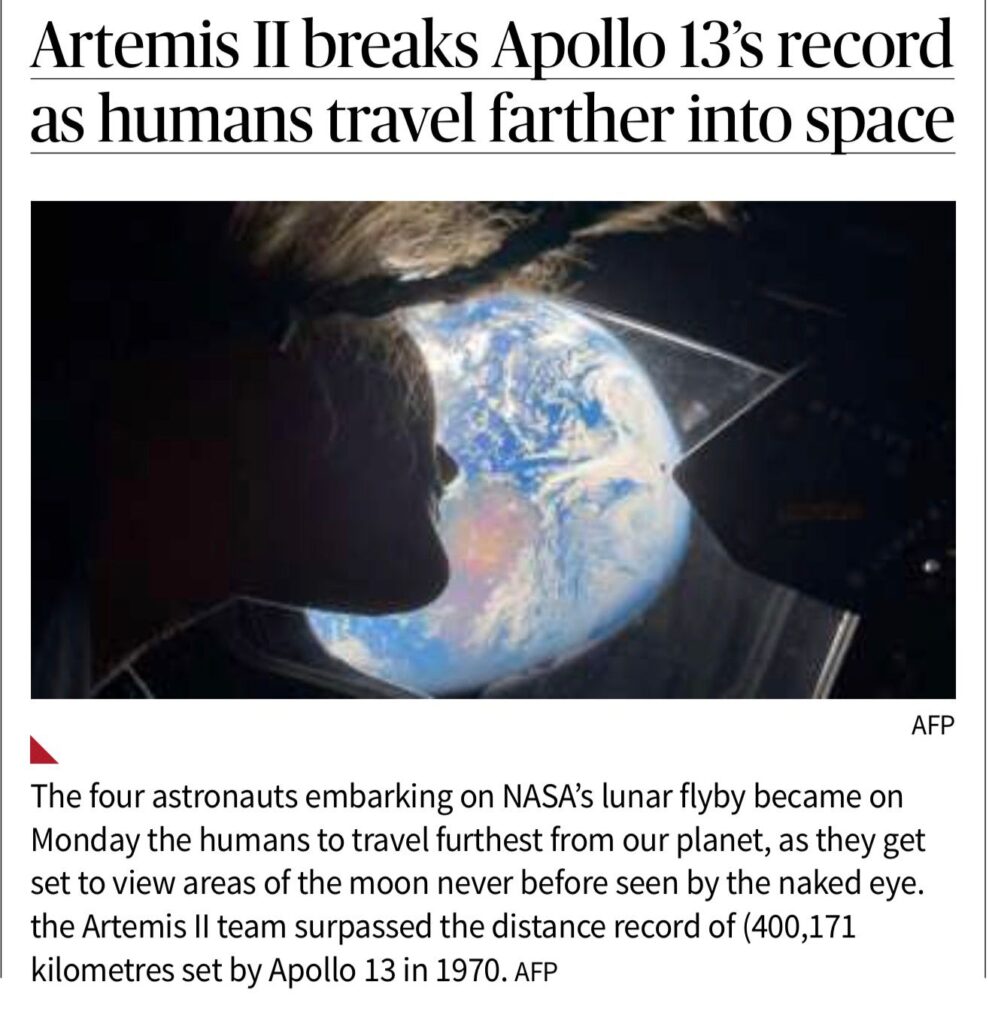
Artemis II Mission Breaks Apollo 13 Distance Record

Context: Artemis II Mission

Artemis II is a crewed lunar flyby mission that has surpassed the distance record of Apollo 13 (400,171 km), making it the farthest humans have travelled from Earth.

Summary (with lunar missions evolution):
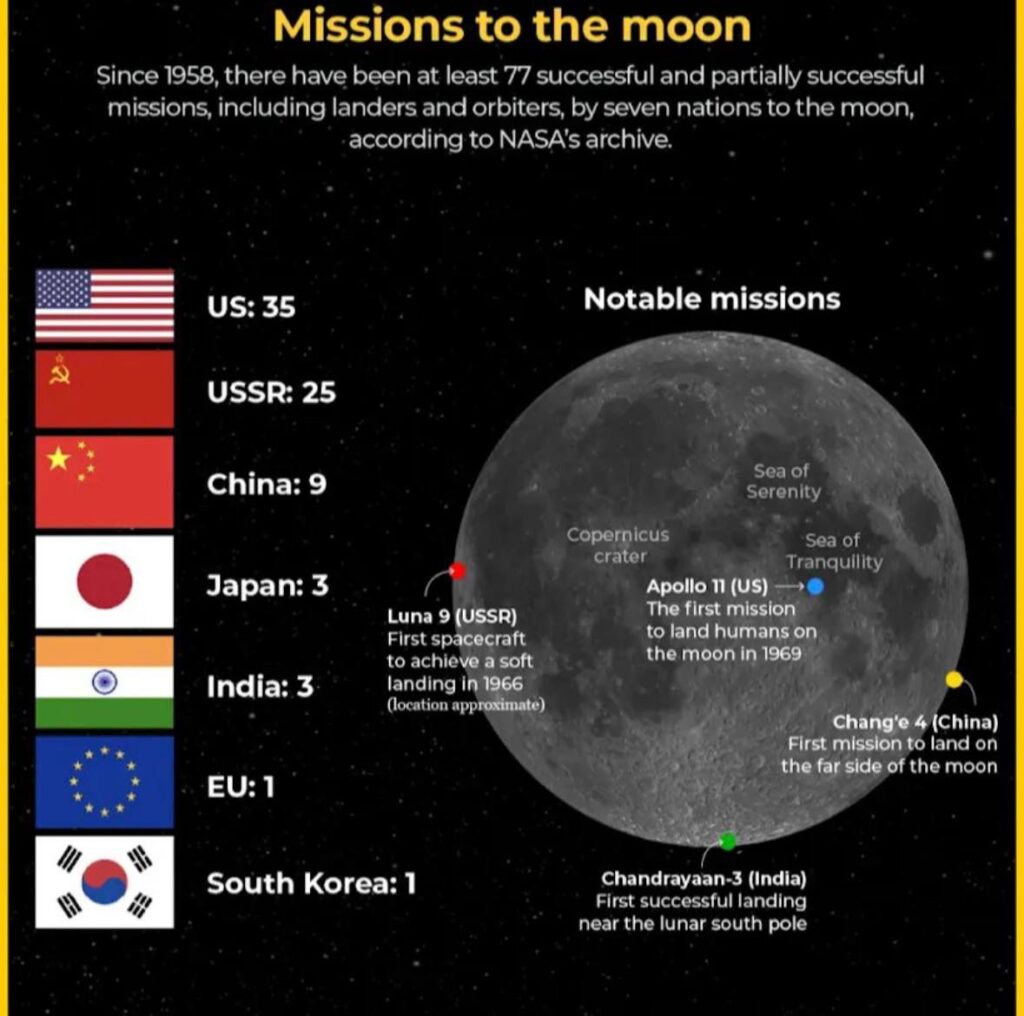
• Since 1958: 77+ Moon missions by multiple countries.

Key milestones:
• Luna 9 → first soft landing
• Apollo 11 → first human landing
• Chang’e 4 → far side landing
• Chandrayaan-3 → south pole landingWhat Artemis II shows:
• Return of humans to deep space (after ~50 years)
• Step towards future Moon landing (Artemis III)

Artemis II Mission
Artemis II Mission
Artemis II Mission
Artemis II Mission

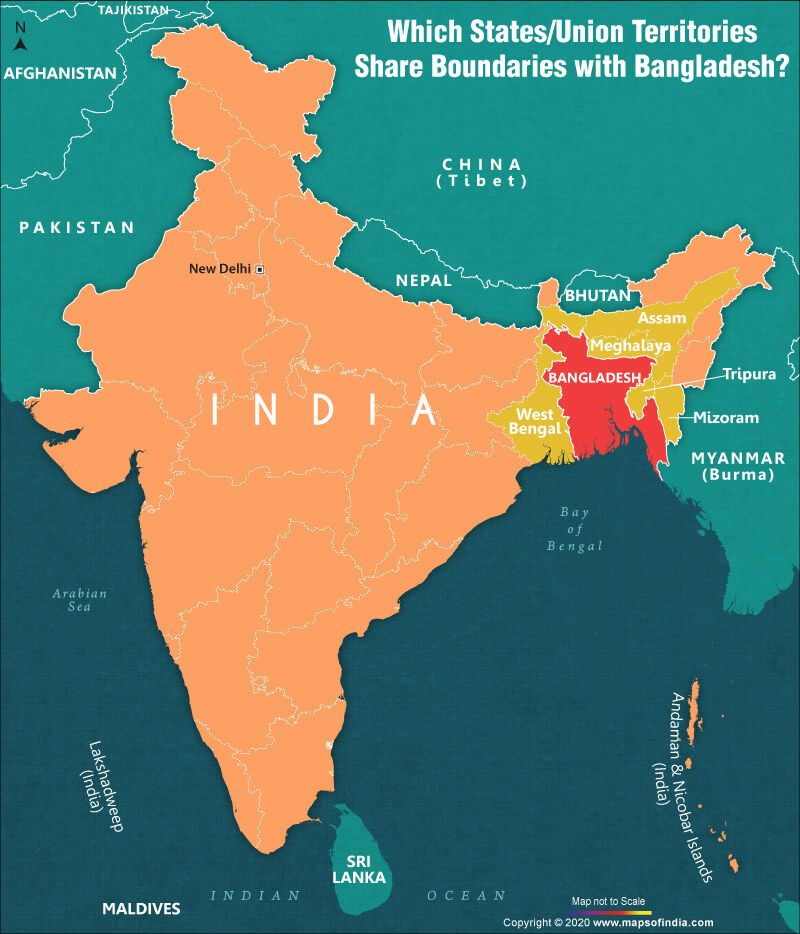
India Bangladesh Relations Reset After Political Transition

Context: India Bangladesh Relations

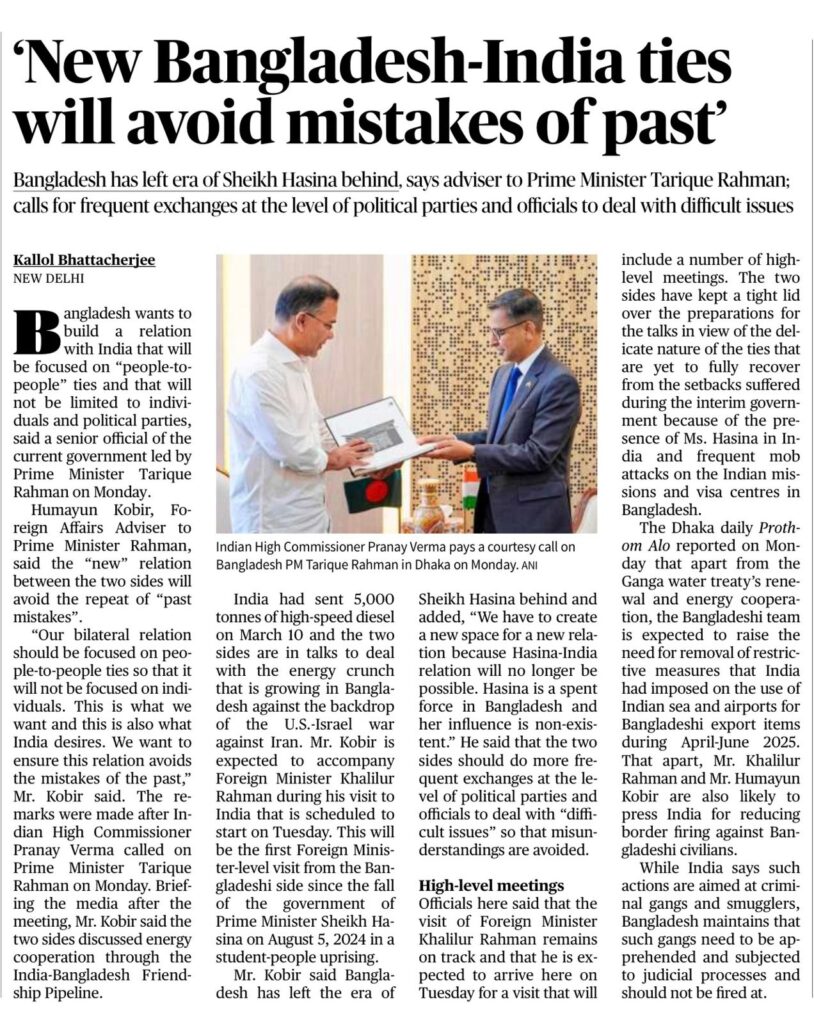
After political transition in Bangladesh, ties with India are being reset through high-level engagement, moving from leader-centric to institutional relations.

Key Issues

2.1 Political Trust
• Post-Hasina phase → trust deficit + demand for neutrality

2.2 Border
• 4,096 km border
• Issues: migration, smuggling, firing incidents

2.3 Water
• 54 shared rivers
• Teesta dispute unresolved | Ganga Treaty (1996) functional

2.4 Trade & Economy
• Bilateral trade: ~USD 15–16 bn
• India exports: ~USD 13–14 bn
• Imports: ~USD 2 bn
• Issues: trade imbalance, access restrictions
• Strength: duty-free access, strong connectivity

2.5 Security Sentiment
• Anti-India sentiment during transition phase
• Attacks on Indian establishments

Current Developments

• High-level meetings resumed
• Foreign Minister visit (first after regime change)
• Focus: energy, trade, connectivity, regular dialogue

Core Shift

• From: Personality-driven ties
• To: Institutional + people-to-people engagement

India Bangladesh Relations
PYQ – 2015, Ans – C
India Bangladesh Relations

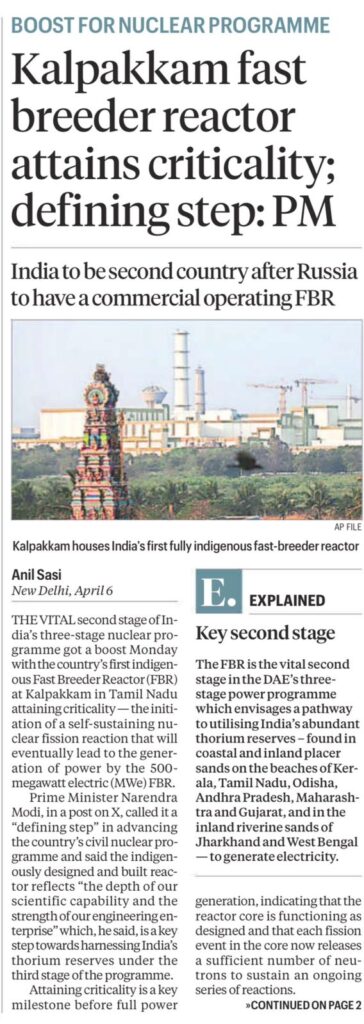
Fast Breeder Reactor at Kalpakkam Achieves Criticality

Context

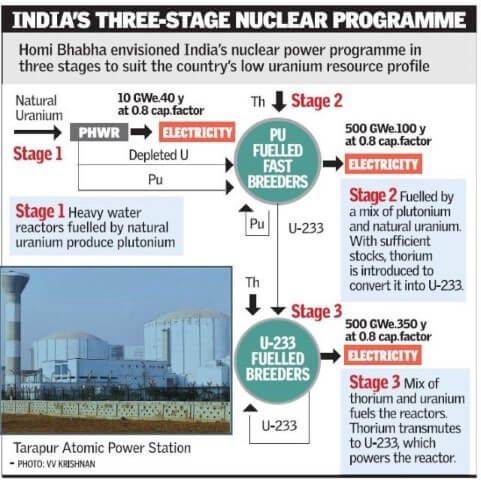
India’s Kalpakkam Fast Breeder Reactor (PFBR) attaining criticality marks the operationalisation of Stage 2 of India’s nuclear programme. This is important because it connects India’s present uranium-based reactors with its long-term goal of thorium-based energy.

India’s Nuclear Programme

India’s programme is designed around its resource reality:
• Limited uranium
• Large thorium reserves

So, the strategy is sequential:
Use uranium → generate plutonium → use plutonium to activate thorium

Three-Stage Nuclear Programme

Stage 1 – Uranium Stage
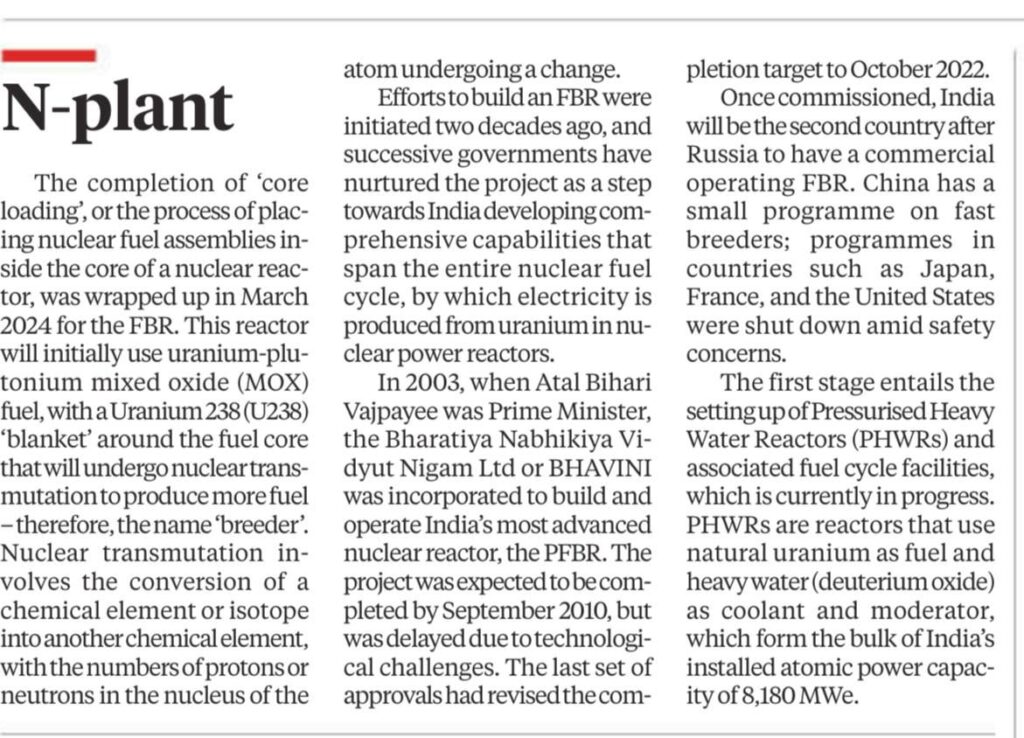
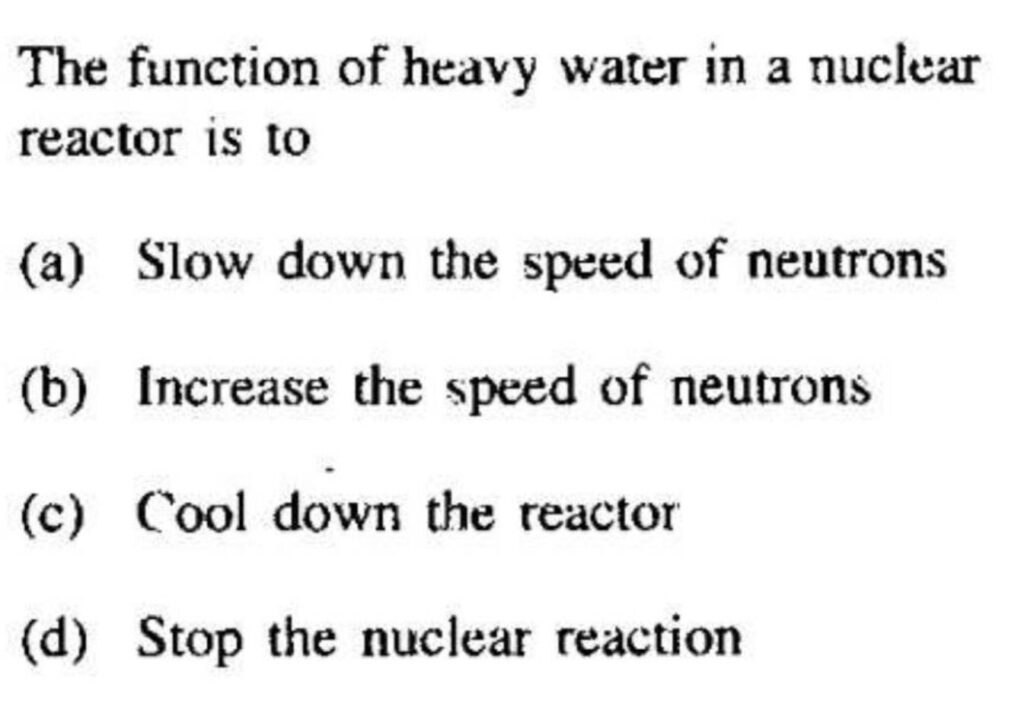
• Reactors: Pressurised Heavy Water Reactors (PHWRs)
• Fuel: Natural uranium

What happens:
• Uranium undergoes fission → produces electricity
• Side output: Plutonium is generated inside the reactor

Understanding:
This stage is not just for power; it is mainly to produce plutonium, which India lacks naturally.

Stage 2 – Plutonium Stage (Current focus: PFBR)
• Reactors: Fast Breeder Reactors (FBRs)
• Fuel: Plutonium (from Stage 1)

What happens:
• Plutonium produces energy
• At the same time, it converts unused material (Uranium-238) into more plutonium
• Also produces excess neutrons

Understanding:
This stage does two critical things:

  1. Multiplies nuclear fuel (breeding)
  2. Generates the neutron environment required to use thorium

This is why PFBR is called a defining step.

Stage 3 – Thorium Stage (Final goal)
• Fuel: Thorium (abundant in India)

What happens:
• Thorium itself cannot produce energy directly
• It absorbs neutrons (from Stage 2 system)
• Converts into Uranium-233, which is a usable fuel

Then:
• Uranium-233 undergoes fission → produces electricity
• Can sustain further reactions

Understanding:
Thorium becomes useful only after conversion, and that conversion depends on plutonium-driven reactions of Stage 2.

Why PFBR is crucial

• Without Stage 2:
• Thorium cannot be effectively utilised

• PFBR enables:
• Transition from fuel-consuming system → fuel-generating system

• Makes India:
• Capable of long-term, resource-based nuclear energy independence

Fast Breeder Reactor
PYQ – 2011, Ans – A
Fast Breeder Reactor

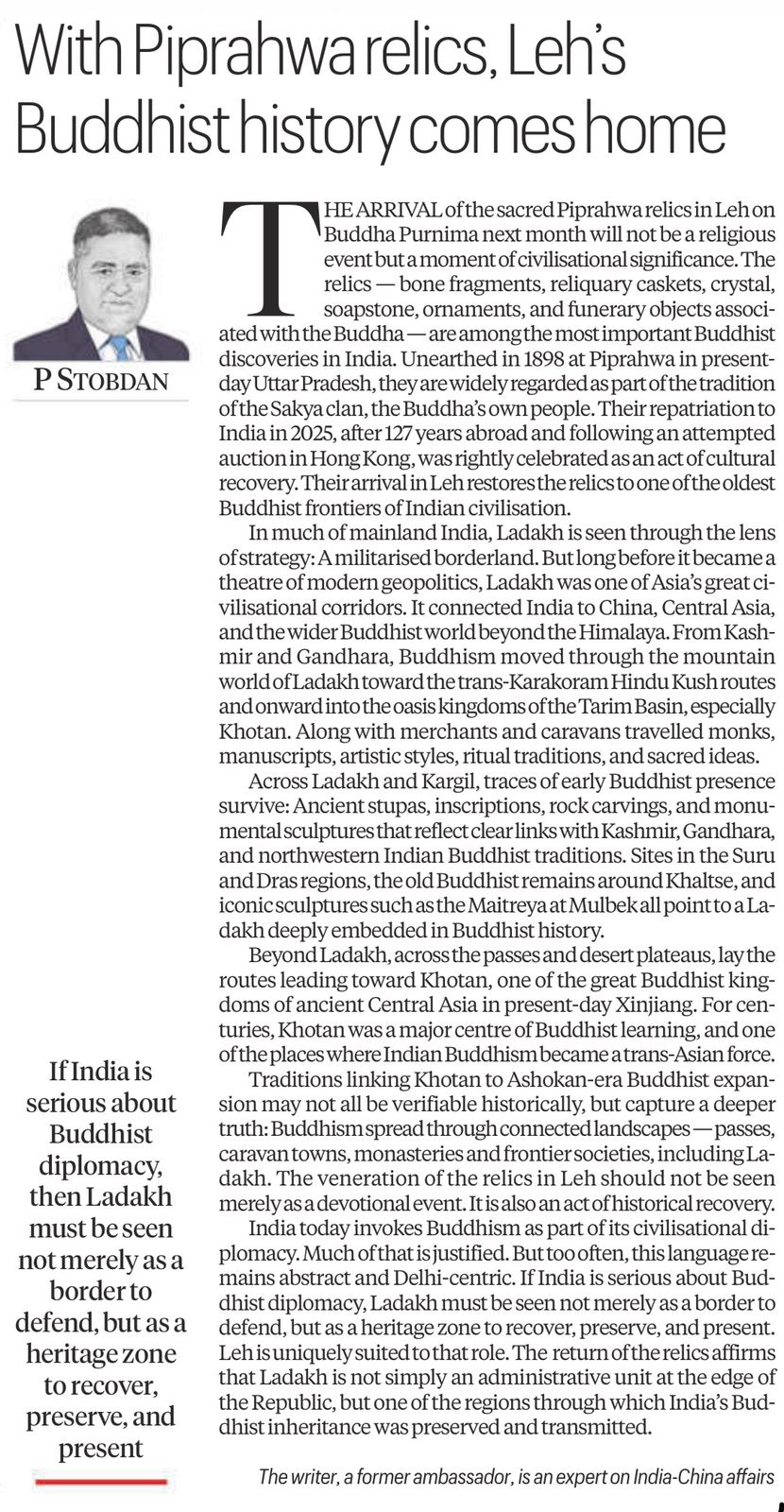
Piprahwa Relics Return Highlights Ladakh Buddhist Heritage

Context: Piprahwa Relics

• Piprahwa relics (1898, UP) returned to Leh (Ladakh) after ~127 years
• Event = civilisational recovery of Buddha-linked heritage

Piprahwa Relics (Basics)

• Contents → Bone fragments | reliquary caskets | ritual objects
• Association → Buddha / Shakya clan
• Importance → One of the earliest major Buddhist relic discoveries in India

Ladakh’s Historical Role

• Buddhist corridor (not a peripheral region)
• Connectivity → India → Central Asia → China (Khotan)
• Function → Spread of monks | texts | art | ideas

Evidence in Region

• Locations → Suru | Dras | Khaltse | Mulbekh
• Remains → Stupas | inscriptions | rock carvings | Maitreya statue
• Link → Kashmir–Gandhara Buddhist tradition

Core Argument

• Ladakh = Civilisational + heritage zone
• Not only = Strategic/military frontier

Diplomacy Angle

• Buddhism → India’s soft power tool
• Ladakh → Gateway for Buddhist diplomacy (Central & East Asia)

Piprahwa Relics
Piprahwa Relics
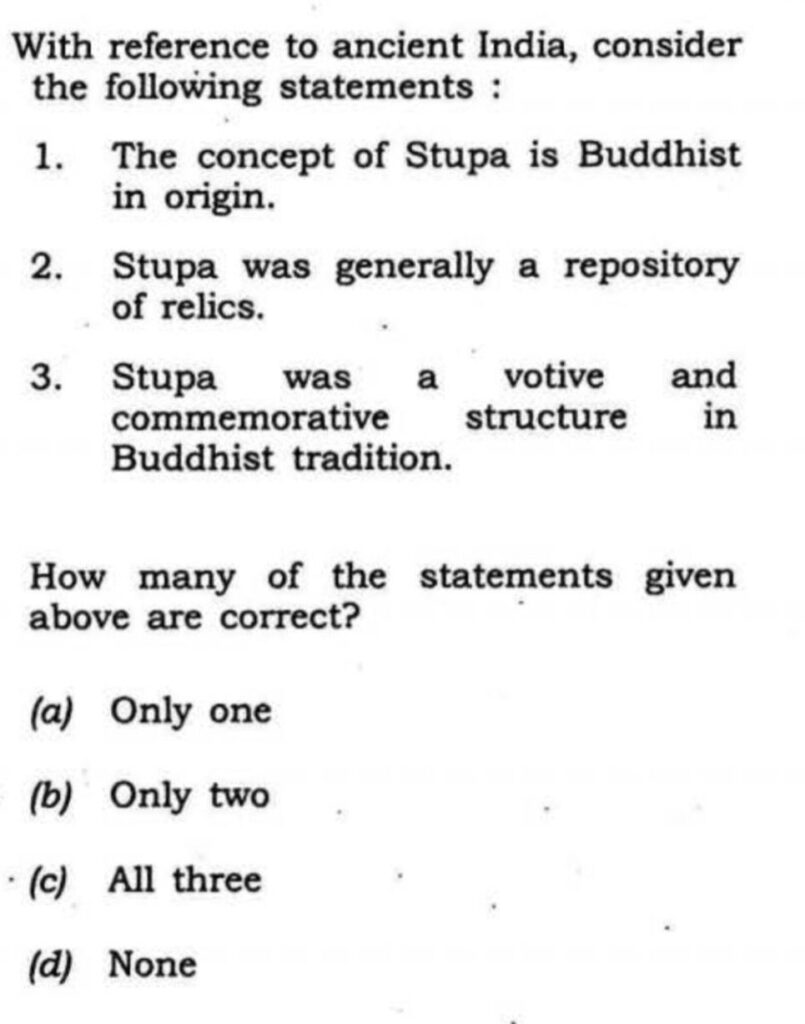
PYQ – 2023, Ans – B

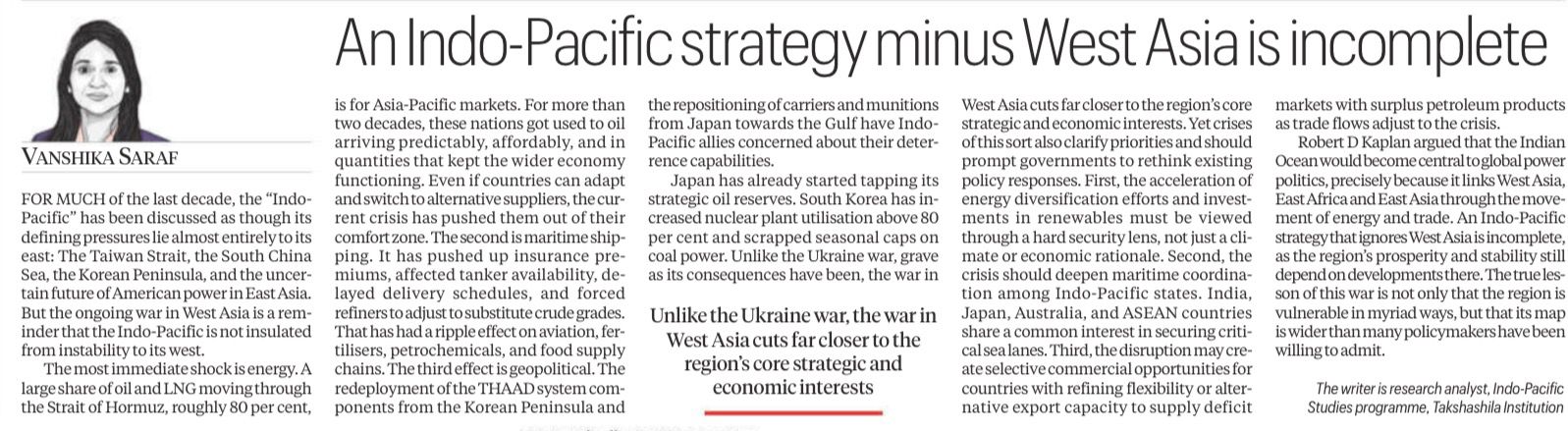
Indo Pacific Strategy Needs West Asia Integration

Context: Indo Pacific Strategy

West Asia conflict shows Indo-Pacific strategy is incomplete without West Asia linkage.

Core Link

• Indo-Pacific depends on West Asia for:
• Energy | Trade routes | Security stability

Key Impacts

3.1 Energy
• ~80% oil & LNG via Strait of Hormuz
• Disruption → price rise + supply risk

3.2 Trade
• Higher insurance + delays
• Impact → global supply chains

3.3 Strategic
• Military shifts → security concerns in Indo-Pacific

What needs to be done

4.1 Diversify energy
• Alternate suppliers + renewables

4.2 Secure sea lanes
• Cooperation: India, Japan, Australia, ASEAN

4.3 Policy shift
• Indo-Pacific must include West Asia dimension

About the UPSC Civil Services Examination (UPSC CSE)

The UPSC Civil Services Examination (CSE) is one of the most competitive and esteemed examinations in India, conducted by the Union Public Service Commission to recruit officers for services such as the Indian Administrative Service (IAS), Indian Police Service (IPS), Indian Foreign Service (IFS), and others. The exam comprises three stages — Prelims, Mains, and the Personality Test (Interview) — designed to test a candidate’s knowledge, aptitude, decision-making, and leadership skills.


How to Prepare Effectively for UPSC CSE

Cracking the UPSC CSE requires a deep understanding of the syllabus, consistent revision, structured answer writing, and smart test-taking strategies. The Prelims test analytical and conceptual clarity, the Mains focuses on critical thinking, articulation, and subject mastery, while the Interview assesses presence of mind, ethical judgment, and personality traits relevant to public service.

At UnderStand UPSC, we empower aspirants with a personalized and focused approach to each stage of the exam.


Why Choose UnderStand UPSC?

UnderStand UPSC is a mentorship-driven platform offering a clear, clutter-free strategy to tackle the Civil Services Examination. Our programs like Transform (for beginners and intermediate learners) and Conquer (for advanced mains preparation) provide structured study plans, syllabus-wise video content, interactive live sessions, and answer writing support.

We emphasize:

  • Concept clarity through topic-wise lectures

  • Test series designed around real UPSC standards

  • Personalized mentorship in small groups

  • Regular performance tracking and peer benchmarking

  • Doubt-clearing sessions, current affairs analysis, and monthly magazines


Join the UnderStand UPSC Learning Community

Our mission is to make UPSC preparation less overwhelming and more strategic. We combine mentorship, discipline, and academic rigor to help you clear CSE with confidence. Whether you’re preparing from Delhi, Mumbai, Bangalore, or a remote village — our online-first model ensures quality guidance reaches every corner of India.

Join the thousands of aspirants who trust UnderStand UPSC to guide their journey toward becoming civil servants.

Stay connected with us through our Telegram, YouTube, and Instagram channels for daily tips, strategies, and updates.

Copyright © 2026 USARAMBHA EDUCATION (UnderStand UPSC). All Rights Reserved.

Join the Success Journey!