
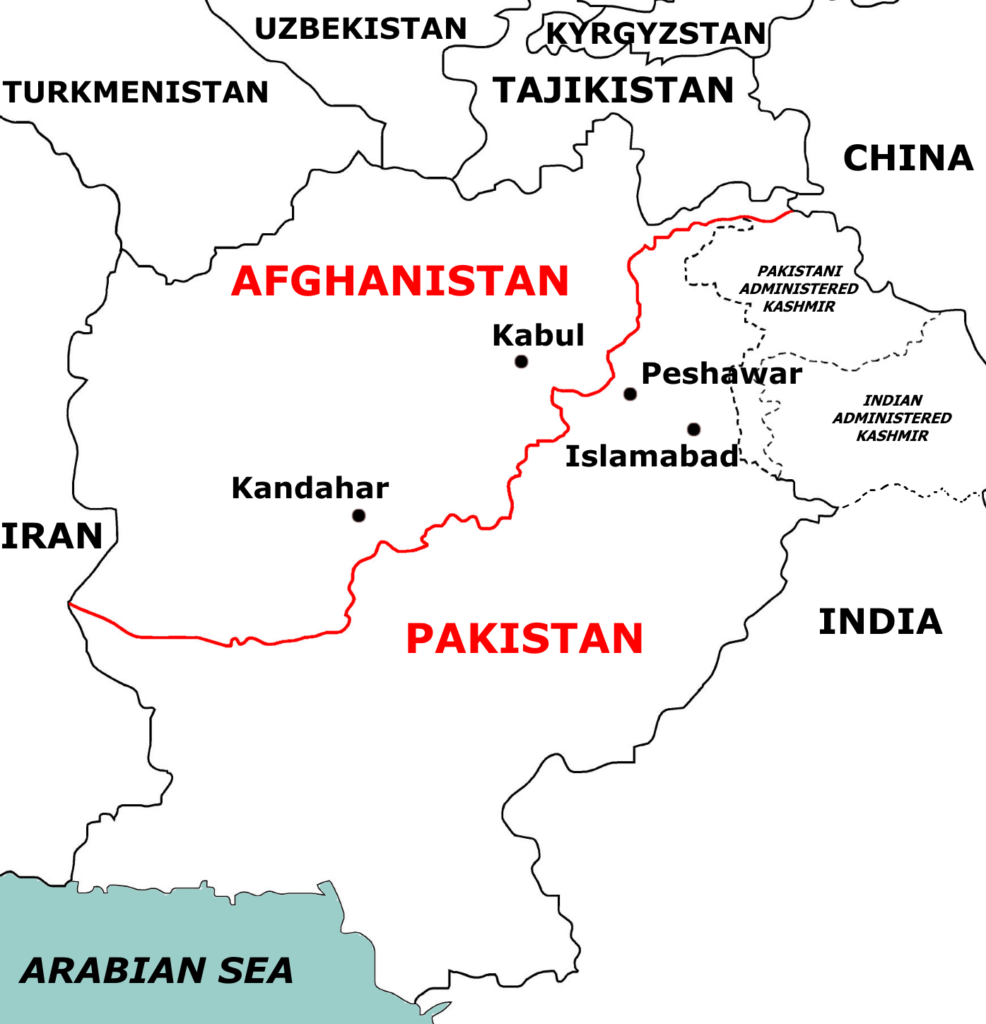
Overview
The Durand Line is the 2,640-kilometre boundary separating Pakistan and Afghanistan.
- Drawn in 1893.
- Named after Sir Mortimer Durand, the British Indian foreign secretary.
- Divides the Pashtun tribal areas between the two countries.
- Remains one of the most disputed borders in South Asia.
Historical Background
- Established through an agreement between British India and Amir Abdur Rahman Khan of Afghanistan.
- Intended to define spheres of influence between British India and Afghanistan.
- After the creation of Pakistan in 1947, Pakistan inherited the boundary.
- Afghanistan has historically questioned its legitimacy.
Legal and Political Status
- Pakistan recognises the Durand Line as its official international border.
- Afghanistan has refused formal recognition, arguing the 1893 agreement was imposed under colonial conditions.
- The issue remains a major source of diplomatic tension between the two countries.
Ethnic and Strategic Dimensions
- The line cuts across Pashtun tribal territories.
- Divides communities with strong cultural, tribal and familial ties.
- Facilitates cross-border movement, both legal and illegal.
- Rugged terrain makes border control difficult.
Security Implications
- Region has been a hub for militant activity.
- Used by insurgent groups for cross-border movement.
- Pakistan has constructed border fencing to regulate movement.
- Tensions have periodically escalated into border clashes.
Contemporary Relevance
- Central to Pakistan–Afghanistan relations.
- Influences regional stability in South Asia.
- Plays a role in counterterrorism operations and refugee flows.
- Became more sensitive after the Taliban takeover of Afghanistan in 2021.
Strategic Importance
- Acts as a geopolitical fault line between South Asia and Central Asia.
- Historically linked to the “Great Game” between British and Russian empires.
- Continues to shape regional security calculations.
The Durand Line is not merely a colonial-era boundary; it remains a politically sensitive and strategically significant frontier influencing security, diplomacy and ethnic dynamics in the Afghanistan–Pakistan region.







