Core Argument
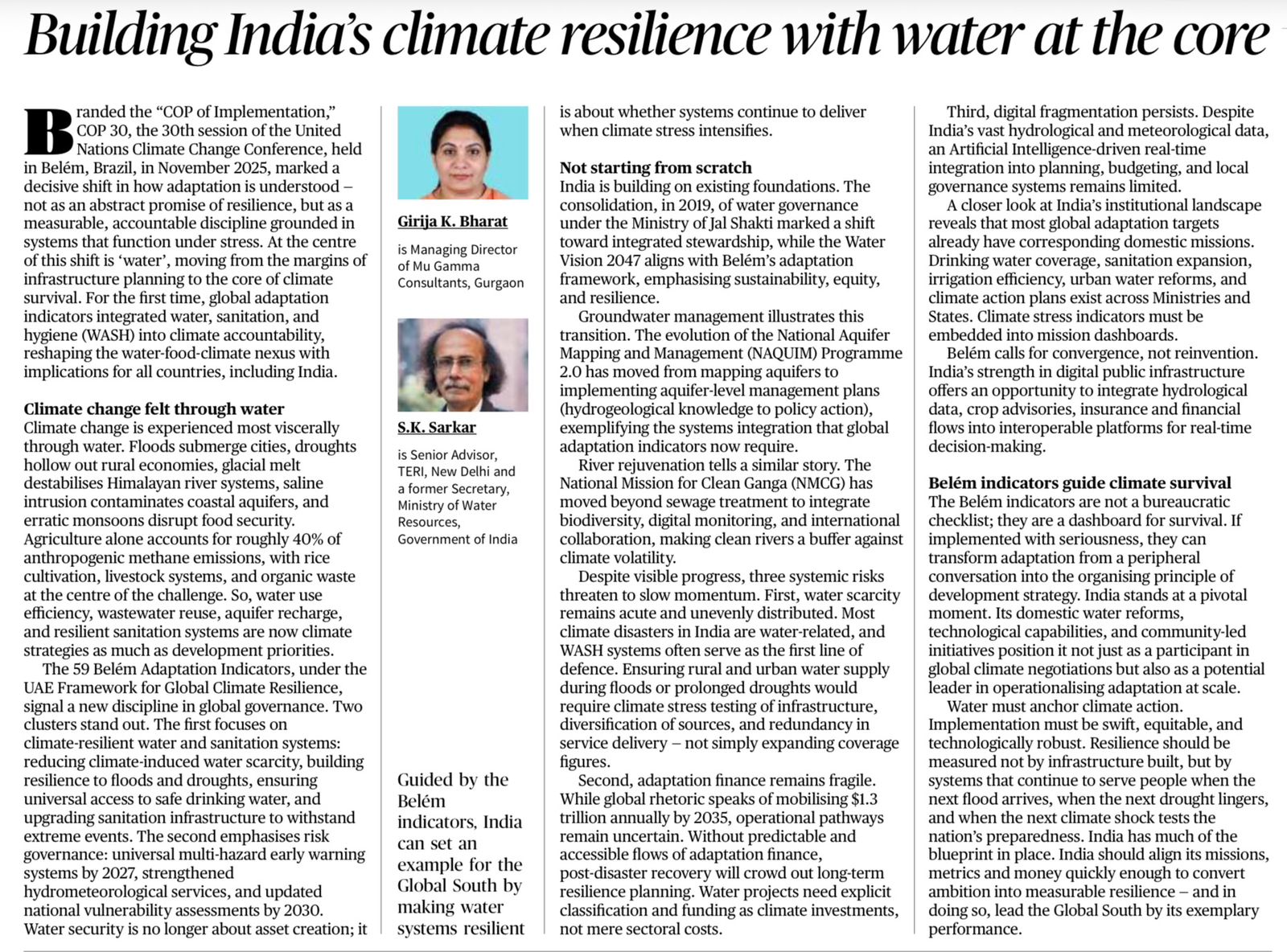
The article argues that water must be placed at the centre of India’s climate adaptation strategy, shifting resilience from infrastructure expansion to integrated, accountable water systems that continue functioning under climate stress.
Key Points
- Shift in adaptation thinking
COP-30 reframes resilience as measurable system performance under stress, with water at the core of the climate-food-energy nexus. - Climate change felt through water
Floods, droughts, glacier melt, saline intrusion and erratic monsoons reveal climate impacts primarily through water systems. - Belém Adaptation Indicators
Focus on climate-resilient WASH systems, flood and drought preparedness, universal safe drinking water, early warning systems and updated vulnerability assessments. - India not starting from scratch
Institutional progress includes Jal Shakti Ministry reforms, Water Vision 2047, NAQUIM aquifer mapping and the National Mission for Clean Ganga. - Systemic risks remain
Water scarcity remains uneven; WASH systems require climate stress testing, diversified sources and redundancy. - Finance gap
Adaptation finance remains uncertain. Water investments must be treated as climate investments. - Governance and data integration
Fragmented data weakens planning; AI-driven integration of hydrological, crop and financial data can improve decision-making. - Implementation priority
India must align missions, metrics and financing to translate climate ambitions into measurable resilience outcomes.