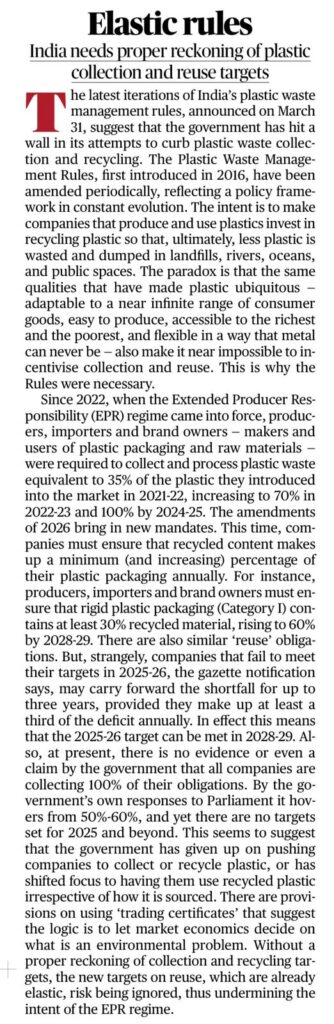
Context: Plastic Waste Management Rules 2026
The recent amendment to India’s plastic waste framework indicates a shift from strict enforcement of waste collection to a more flexible, compliance-based system, raising concerns about actual outcomes.
The Plastic Waste Management Rules, 2016
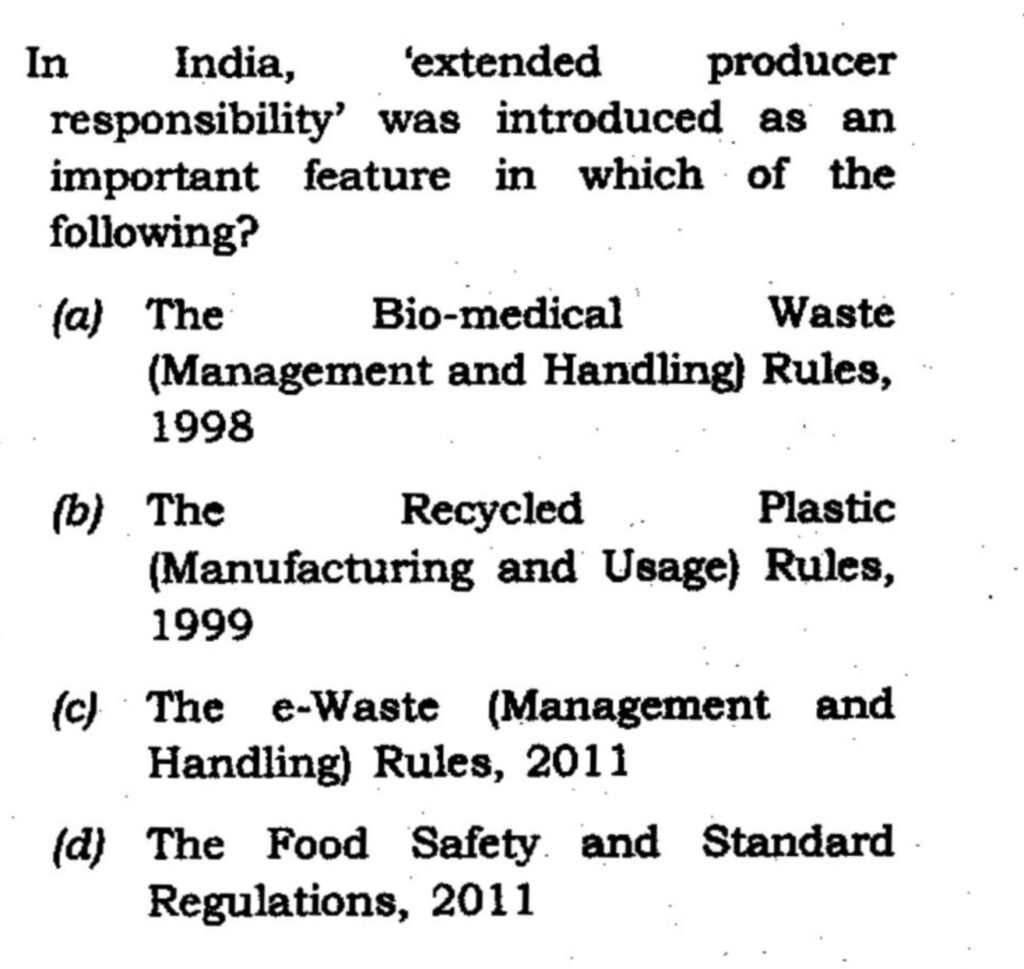
- Foundation: Extended Producer Responsibility
Producers, importers and brand owners are legally responsible to collect and process plastic waste equivalent to what they introduce. - Primary focus: Physical waste management
Emphasis on actual collection, recycling and safe disposal, to prevent plastic leakage into environment. - Time-bound escalating targets
• 35% (2021-22) → 70% (2022-23) → 100% (2024-25)
Aim: Achieve full accountability in a phased manner. - Compliance philosophy: Direct and strict
Responsibility was non-transferable and outcome-based → companies had to create real collection systems.
The Plastic Waste Management Rules, 2026 Amendment
- Shift in focus: From collection to recycled content
Mandates use of recycled plastic in packaging:
• 30% initially → 60% by 2028-29
Focus moves to input composition rather than waste recovery. - Flexible compliance mechanism introduced
• Shortfall allowed to be carried forward for 3 years
• Only one-third gap needs annual correction
→ Reduces immediacy of compliance. - Dilution of timelines
Targets meant for 2025-26 effectively extend to 2028-29, weakening enforcement pressure. - Market-based compliance tools
Introduction of trading certificates → obligations can be met indirectly through market exchange. - Lack of forward clarity
No defined targets beyond 2025-26, creating uncertainty in long-term waste management strategy.
Ground Reality (Critical Gap)
- Actual collection remains limited
Only about 50%-60% of plastic waste is being processed against targets. - No evidence of full compliance
Even as 100% target approaches, no confirmation of achievement.