Context
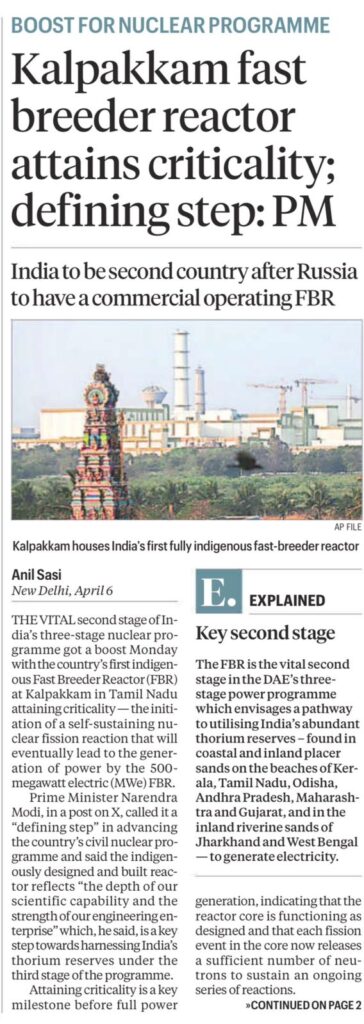
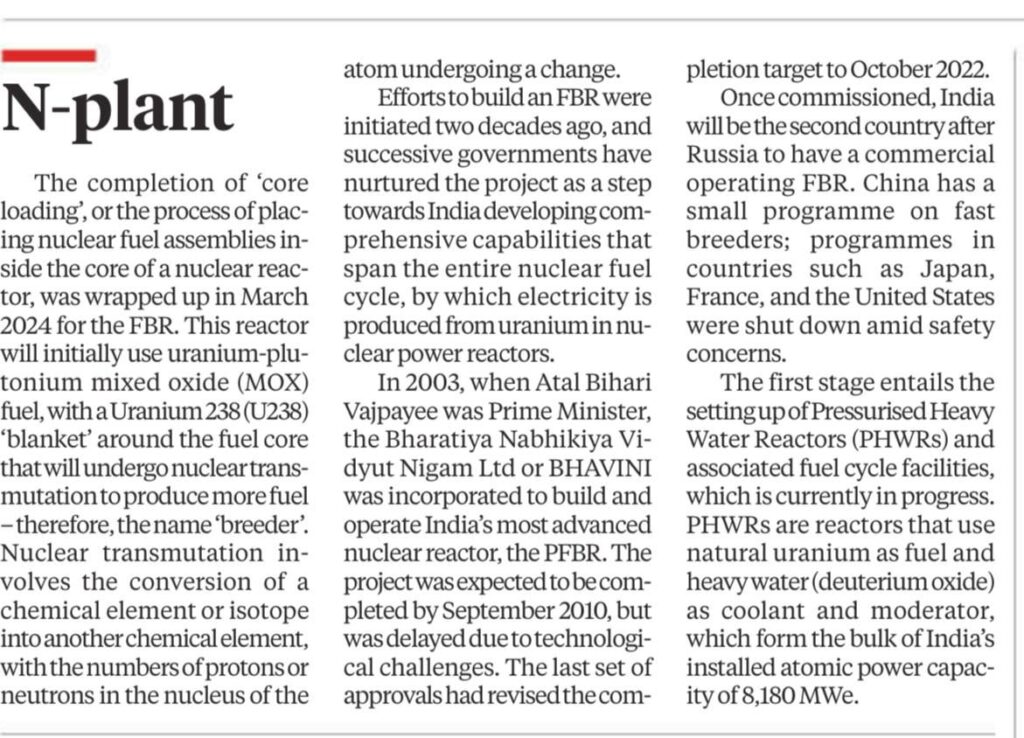
India’s Kalpakkam Fast Breeder Reactor (PFBR) attaining criticality marks the operationalisation of Stage 2 of India’s nuclear programme. This is important because it connects India’s present uranium-based reactors with its long-term goal of thorium-based energy.
India’s Nuclear Programme
India’s programme is designed around its resource reality:
• Limited uranium
• Large thorium reserves
So, the strategy is sequential:
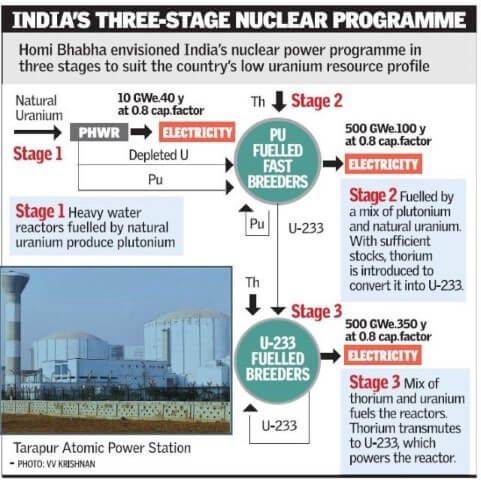
Use uranium → generate plutonium → use plutonium to activate thorium
Three-Stage Nuclear Programme
Stage 1 – Uranium Stage
• Reactors: Pressurised Heavy Water Reactors (PHWRs)
• Fuel: Natural uranium
What happens:
• Uranium undergoes fission → produces electricity
• Side output: Plutonium is generated inside the reactor
Understanding:
This stage is not just for power; it is mainly to produce plutonium, which India lacks naturally.
Stage 2 – Plutonium Stage (Current focus: PFBR)
• Reactors: Fast Breeder Reactors (FBRs)
• Fuel: Plutonium (from Stage 1)
What happens:
• Plutonium produces energy
• At the same time, it converts unused material (Uranium-238) into more plutonium
• Also produces excess neutrons
Understanding:
This stage does two critical things:
- Multiplies nuclear fuel (breeding)
- Generates the neutron environment required to use thorium
This is why PFBR is called a defining step.
Stage 3 – Thorium Stage (Final goal)
• Fuel: Thorium (abundant in India)
What happens:
• Thorium itself cannot produce energy directly
• It absorbs neutrons (from Stage 2 system)
• Converts into Uranium-233, which is a usable fuel
Then:
• Uranium-233 undergoes fission → produces electricity
• Can sustain further reactions
Understanding:
Thorium becomes useful only after conversion, and that conversion depends on plutonium-driven reactions of Stage 2.
Why PFBR is crucial
• Without Stage 2:
• Thorium cannot be effectively utilised
• PFBR enables:
• Transition from fuel-consuming system → fuel-generating system
• Makes India:
• Capable of long-term, resource-based nuclear energy independence