Context: Fertiliser Sector Reforms
India’s fertiliser sector is under stress due to global price volatility, supply disruptions, rising subsidy burden, and persistent imbalance in nutrient use, requiring structural reforms.
Structure of the Problem
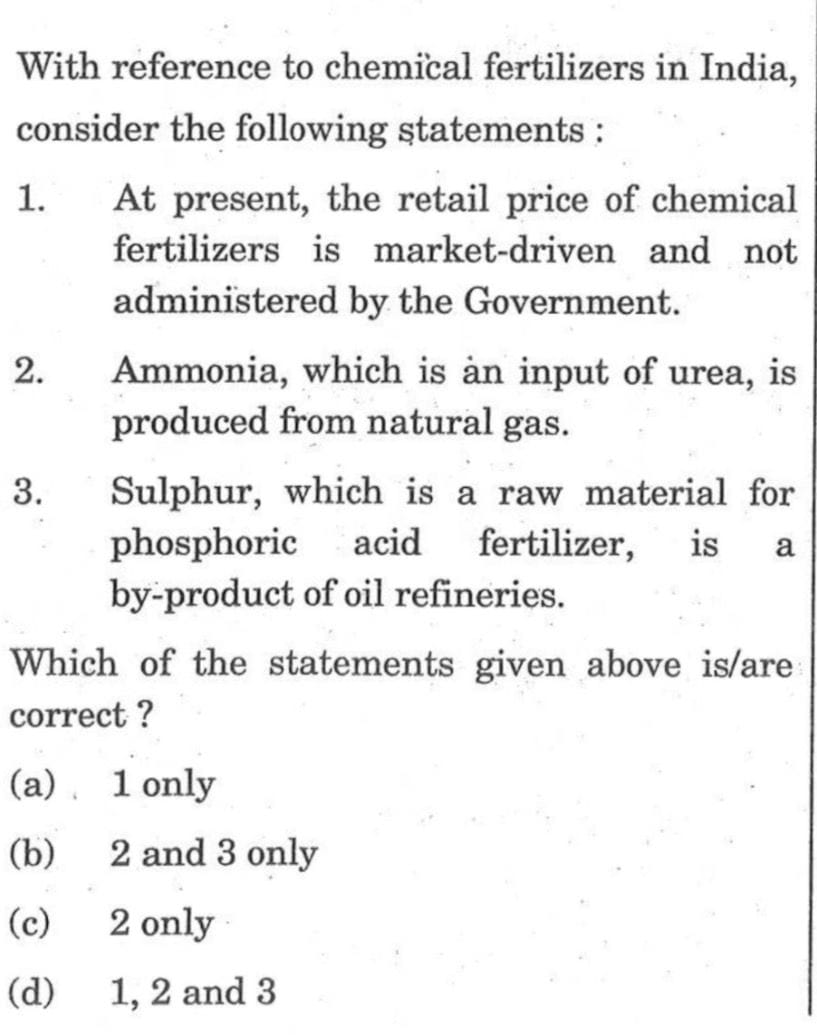
- Urea is price-controlled while P&K fertilisers are market-linked under NBS
- This creates a pricing distortion favouring urea
Consumption Pattern
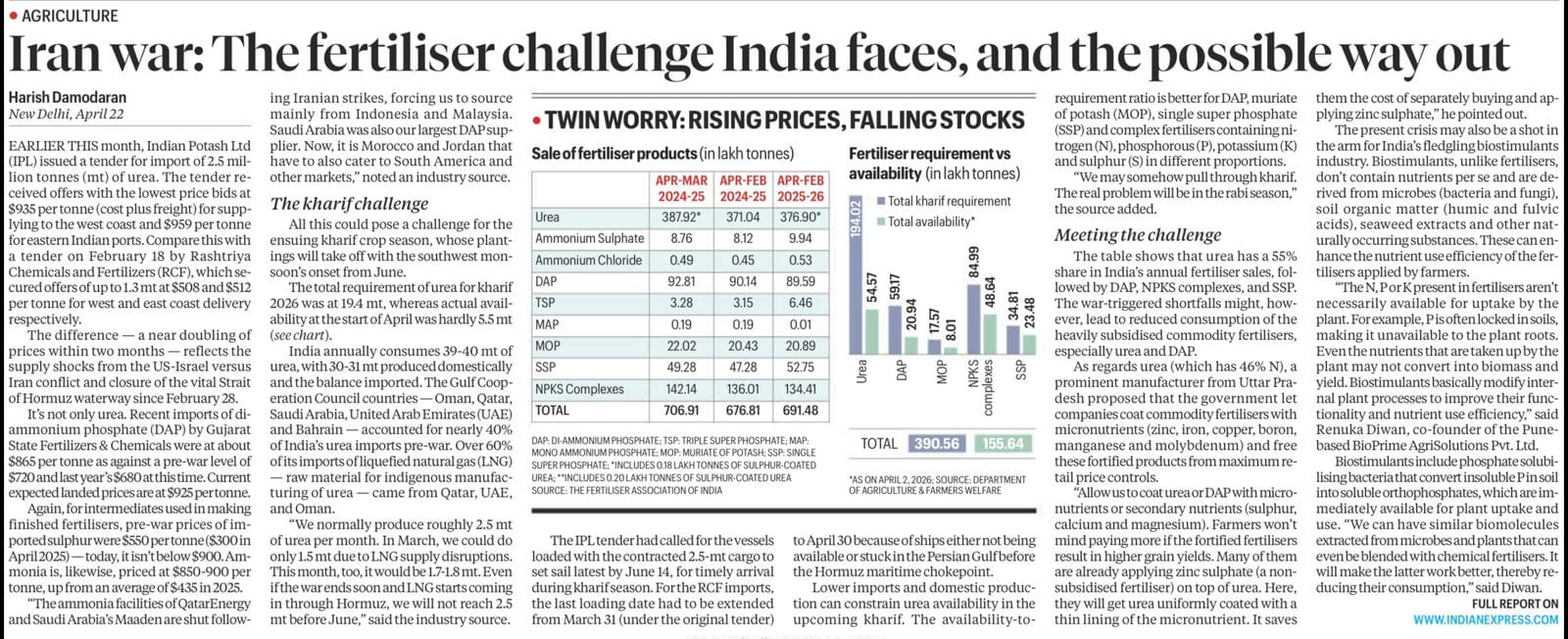
- Total fertiliser consumption: ~70–71 million tonnes
- Urea consumption: ~39–40 million tonnes (~55%)
- Leads to nitrogen-heavy, imbalanced nutrient use
External Vulnerability
- High import dependence for phosphatic and potassic fertilisers
- Exposure to global price shocks and geopolitical risks
- Recent sharp rise in global fertiliser prices affecting availability
Fiscal Impact
- Fertiliser subsidy: ~₹1.7–1.9 lakh crore
- Major burden due to underpriced urea
Impact on Soil and Environment
- Overuse of urea leads to soil degradation
- Low nutrient-use efficiency
- Water pollution and environmental stress
Limitations of Existing Reforms
- Neem-coated urea reduces diversion but not overuse
- DBT improves delivery but does not correct price distortion
Way Forward
- Bring urea under nutrient-based subsidy
- Promote balanced fertilisation
- Encourage alternative fertilisers (nano, bio)
- Improve soil testing and precision agriculture
- Reduce import dependence through diversification and domestic production