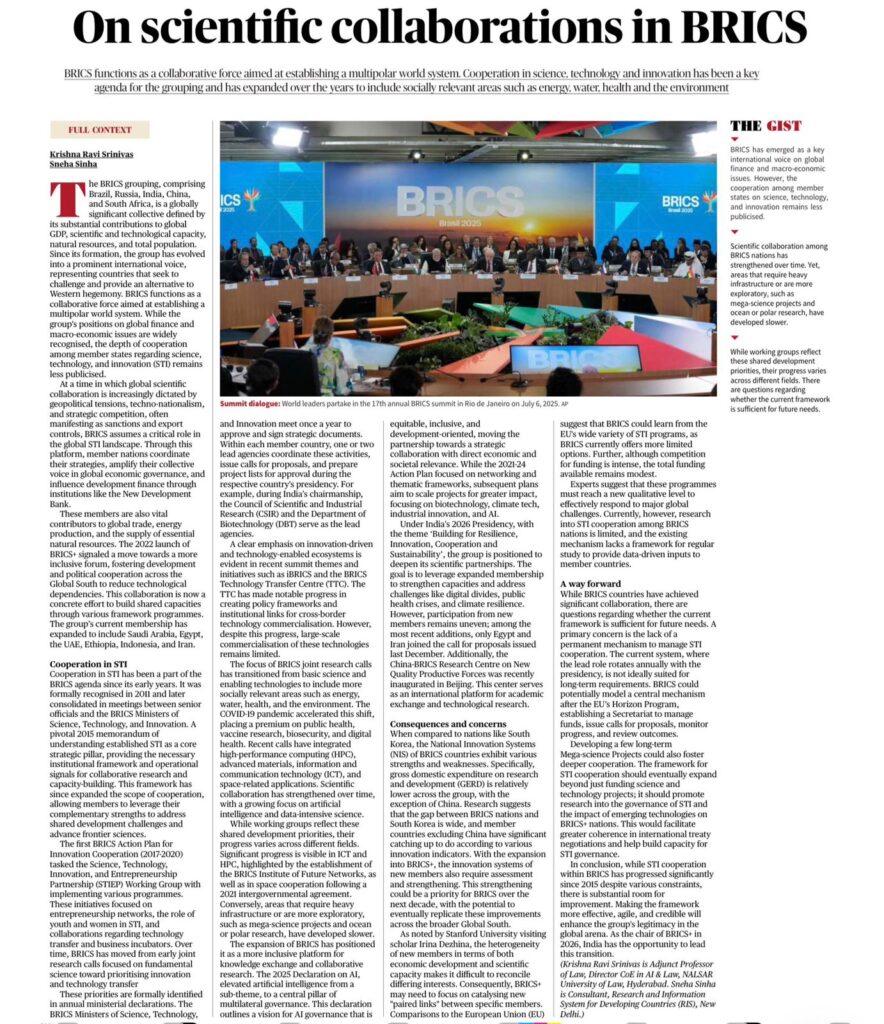

Context
While BRICS has made visible progress in macroeconomic and financial cooperation, its collaboration in science, technology and innovation (STI) remains comparatively limited and uneven, highlighting the need for deeper institutional coordination.
Key Points
• Broad agenda → cooperation in energy, health, environment, digital technologies
• Mechanisms → ministerial meetings, working groups, STI Action Plan, Technology Transfer Centre
• Uneven outcomes → faster gains in AI & biotechnology; slow progress in mega-science collaboration
• Constraints → funding gaps, absence of permanent institutional structure, unequal capacities, weak data-sharing
• Way forward → institutional strengthening, higher funding, inclusive partnerships, focus on global challenges
BRICS
• Intergovernmental grouping of major emerging economies for economic, political and development cooperation
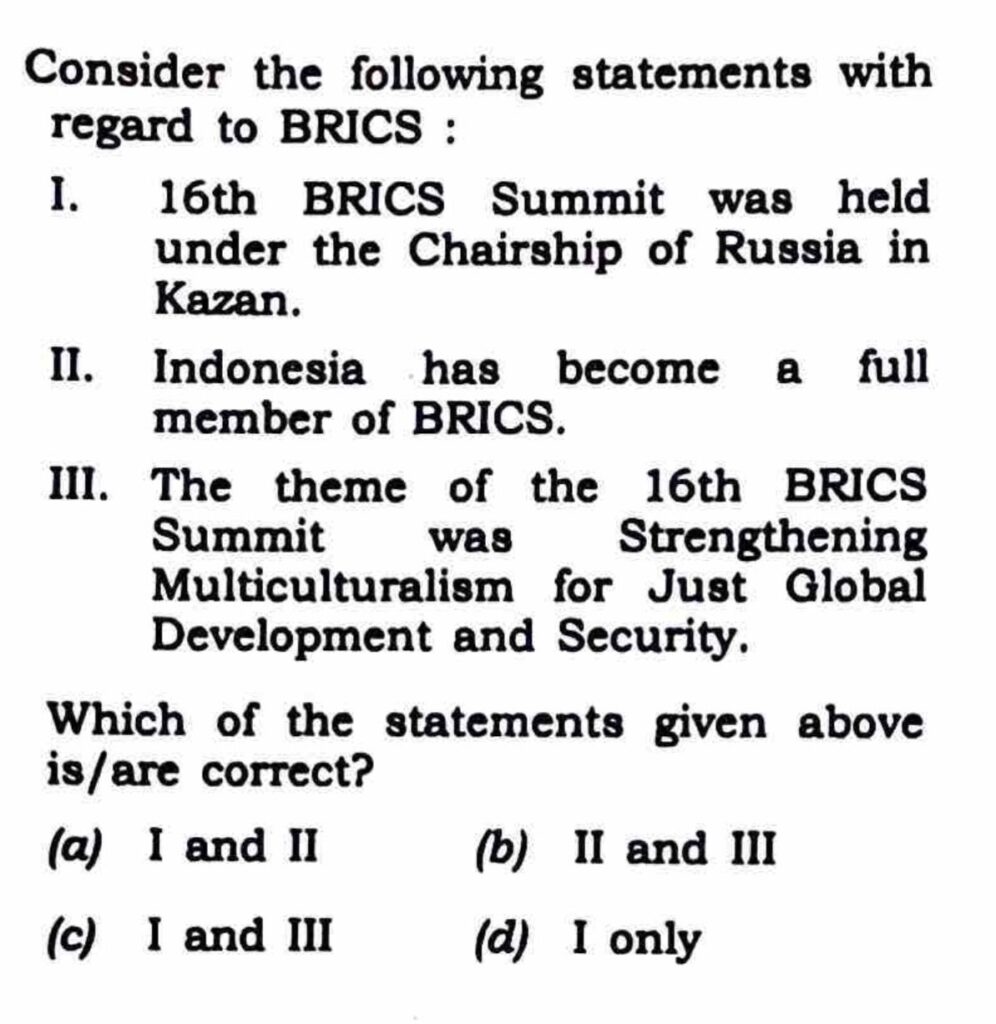
• Members → Brazil, Russia, India, China, South Africa + Egypt, Ethiopia, Iran, UAE & Indonesia.
• Focus areas → macroeconomy, finance, development, security, technology, climate, health
• Key mechanisms → New Development Bank (NDB), Contingent Reserve Arrangement (CRA)
• Purpose → strengthen South-South cooperation and push for reforms in global governance institutions (IMF, World Bank)