

Context: China energy security strategy
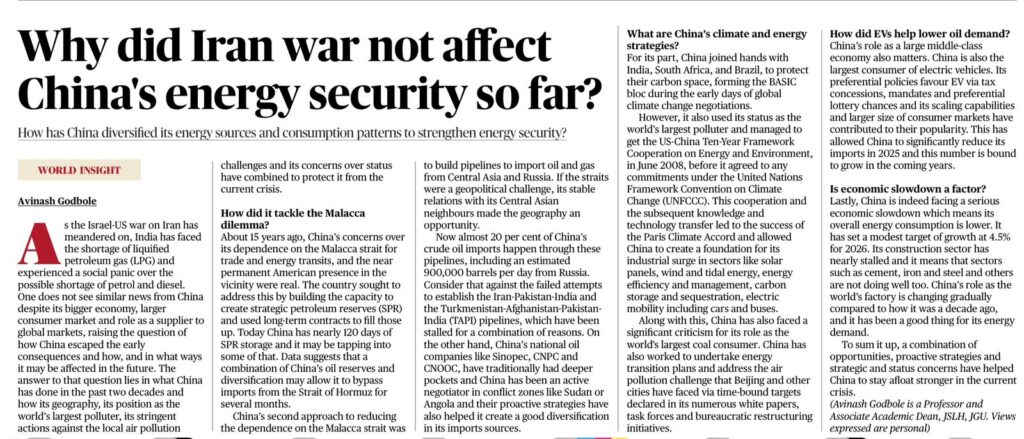
West Asia tensions and risks around the Strait of Hormuz did not significantly disrupt China because it had already strengthened its energy system through diversification, secure supply mechanisms, and reduced demand pressure.
1. Diversification and supply security
- Geographical spread of imports: China sources oil from Russia, Central Asia, and Africa, reducing reliance on West Asia.
- Pipeline-based imports: Land pipelines from Russia and Central Asia carry a significant share of crude, avoiding maritime chokepoints.
- Strategic petroleum reserves: Around 120 days of storage provides a buffer during global supply disruptions.
- Long-term contracts by state companies: CNPC, Sinopec, and CNOOC secure stable supplies through long-duration agreements.
- Overseas oil asset investments: Ownership stakes in oil fields abroad ensure partial control over production and supply chains.
2. Demand management
- Expansion of electric vehicles: Large EV adoption reduces oil consumption, especially in transport.
- Renewable energy growth: Increased use of solar and wind energy lowers dependence on fossil fuels.
- Energy efficiency measures: Industrial and urban policies reduce overall energy intensity.
- Slower economic growth: Moderation in industrial sectors like steel and construction reduces incremental energy demand.


