
Context:
The Centre withdrew the revised earthquake zoning under draft IS 1893:2025 after objections over its scientific basis and cost implications for infrastructure.
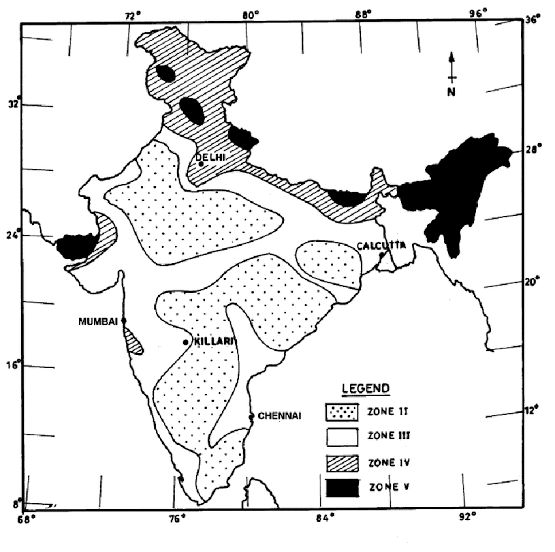
1. Earlier Zoning (IS 1893:2016)
Zone II (Low)
• Central & Peninsular interiors — e.g., Madhya Pradesh, Chhattisgarh, parts of Karnataka, Telangana.
Zone III (Moderate)
• e.g., Kerala, Tamil Nadu, Andhra Pradesh, Odisha, Maharashtra (parts).
Zone IV (High)
• e.g., Delhi, Haryana, Punjab, Bihar, West Bengal (parts).
Zone V (Very High)
• e.g., Jammu & Kashmir/Ladakh, Himachal Pradesh, Uttarakhand, Northeast, Rann of Kutch.
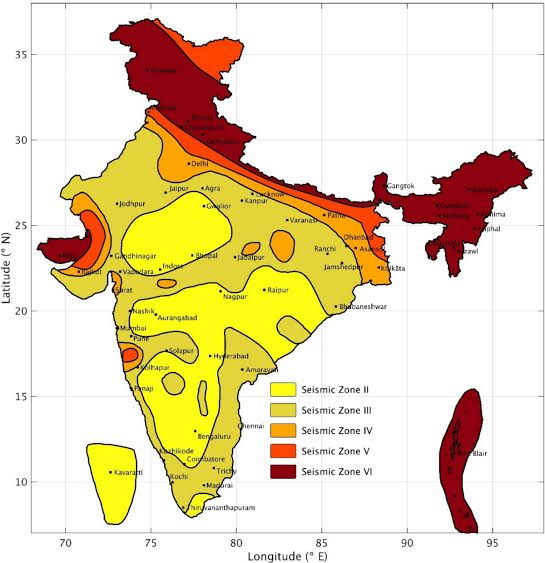
2. Proposed Change (IS 1893:2025 draft — exact shift)
• Based on probabilistic seismic hazard assessment (PSHA), new ground-motion data, tectonic mapping and historical earthquake records.
• Proposed six-zone gradation (II–VI):
Zone II: Low — peninsular interiors.
Zone III: Moderate — southern & central belts.
Zone IV: High — Indo-Gangetic plains (Delhi–Bihar belt).
Zone V: Very high — Himalayan belt & Northeast.
Zone VI (new): Extremely high — parts of Kashmir, Northeast and Kutch.
3. Basis for Introducing Zone VI
• Areas with highest peak ground acceleration (PGA) levels.
• Active faults and plate-boundary interactions (Himalayan collision zone).
• Past major earthquakes (Kashmir, Assam, Bhuj region).
• Required stricter building norms, deeper foundations and higher safety margins.
4. Why Questioned
• Agencies (MoHUA, NDMA/NDSA, Metro Rail bodies) flagged methodology concerns.
• Reclassification → higher construction costs for large infrastructure.
• Risks of delays and stranded projects cited.
5. Agency Responsible
• Bureau of Indian Standards (BIS) prepares seismic zoning and building codes.
• BIS is a statutory body under the BIS Act, 2016.
• Works under Ministry of Consumer Affairs, Food & Public Distribution.