Source: The Indian Express, Tags: 25 April 2026
Context: Extreme climate events impact habitats
A study in Nature Ecology & Evolution finds extreme climate events could affect over one-third of land animal habitats by 2085.
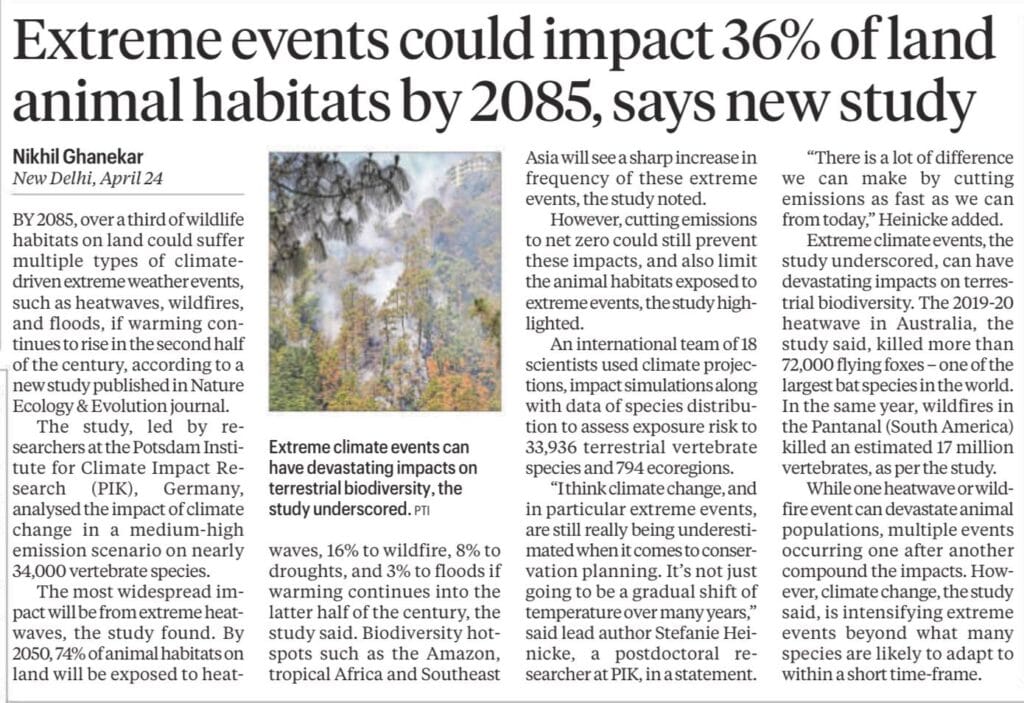
Key Points
- Magnitude of risk
- 36% habitats exposed to multiple extreme events by 2085
- Based on ~34,000 vertebrate species across 794 ecoregions
- Nature of threat
- Shift from gradual warming to frequent, intense extreme events
- Heatwaves most widespread driver of impact
- Projected exposure
- By 2050: ~74% habitats exposed to heatwaves
- Other risks:
- Wildfires: ~16%
- Droughts: ~8%
- Floods: ~3%
- Geographical concentration
- High-risk zones: Amazon, Tropical Africa, Southeast Asia
- Asia to witness a sharp increase in extreme events
- Compounding effect
- Sequential or simultaneous events amplify ecosystem damage
- Greater risk than isolated events
- Empirical evidence
- Australia heatwave (2019–20): >72,000 flying foxes died
- Pantanal wildfires: ~17 million vertebrates lost
- Key concern
- Species cannot adapt at the pace of climate change
- Conservation planning underestimates extreme-event risks
- Way forward
- Rapid emission cuts and net-zero transition can significantly limit exposure
- Need for climate-resilient conservation strategies