
Context
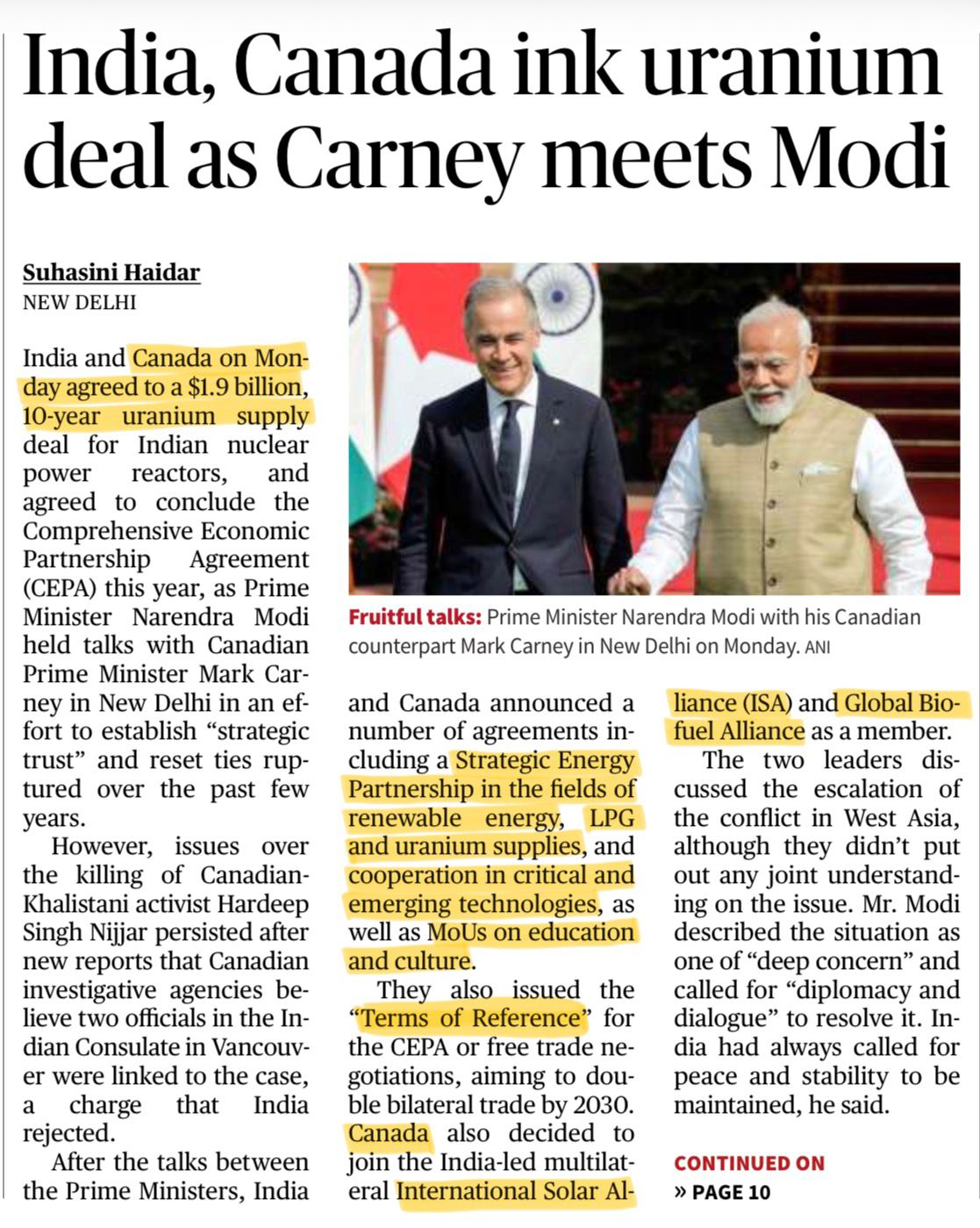
• India and Canada signed a $1.9-billion, 10-year uranium supply agreement during Prime Minister-level talks.
• The engagement marked a structured reset in bilateral relations after diplomatic strain.
• Focus areas include energy security, trade negotiations, and climate cooperation.
Major Bilateral Developments
1. Uranium Supply Deal
• Long-term uranium supply for India’s civilian nuclear power reactors.
• Supports India’s clean energy targets and baseload electricity requirements.
• Strengthens Canada’s position as a key global nuclear fuel supplier.
2. Trade Negotiations – CEPA
• Terms of Reference (ToR) issued for the Comprehensive Economic Partnership Agreement.
• ToR defines the scope, structure, objectives, and timelines of negotiations.
• Aim is to create a structured roadmap to significantly expand bilateral trade by 2030.
3. Strategic Energy & Technology Cooperation
• Collaboration in renewables, LPG, and uranium supply chains.
• Cooperation in critical and emerging technologies.
4. Climate & Multilateral Engagement
• Canada joined the International Solar Alliance (Headquarters: Gurugram).
• Canada joined the Global Biofuel Alliance (launched during G20 2023).
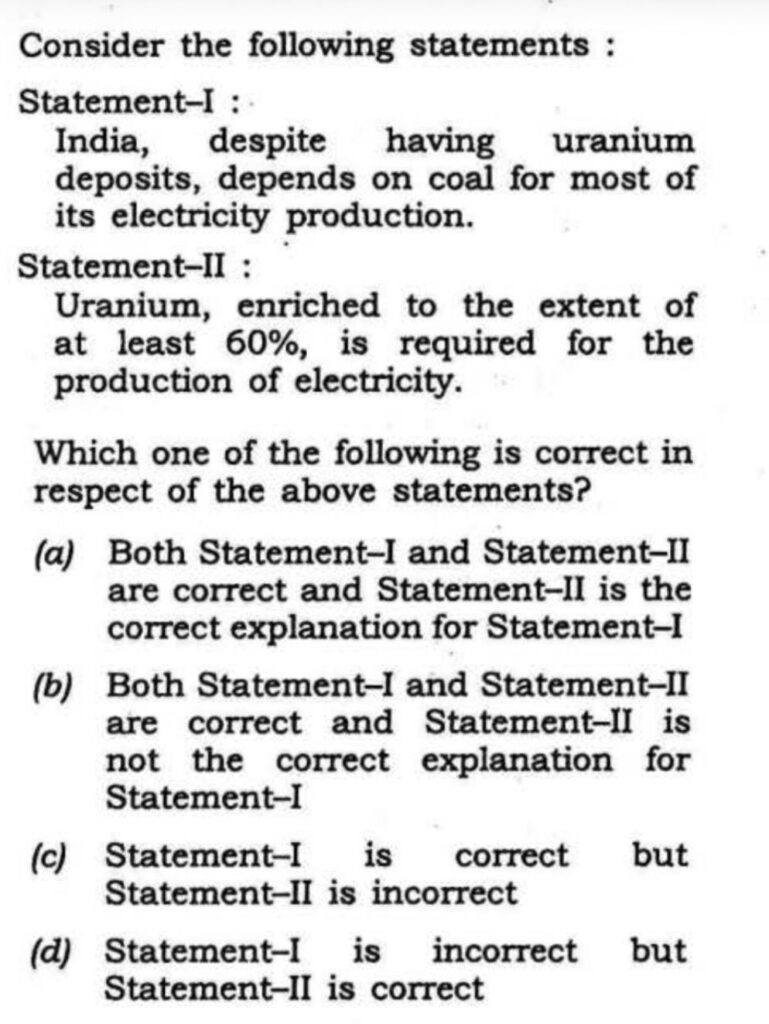
Uranium Enrichment Levels
• Natural Uranium: approximately 0.7% U-235
• Nuclear Power (Electricity Production): 3–5% (Low Enriched Uranium)
• Research / Advanced Reactors: up to 20%
• Nuclear Weapons: 90%+ (Highly Enriched Uranium)
Power reactors require low enrichment, whereas nuclear weapons require very high enrichment, indicating a major technical distinction.
Top Uranium Producing Countries
Kazakhstan | Canada | Namibia