Context: India heatwave legislative gap
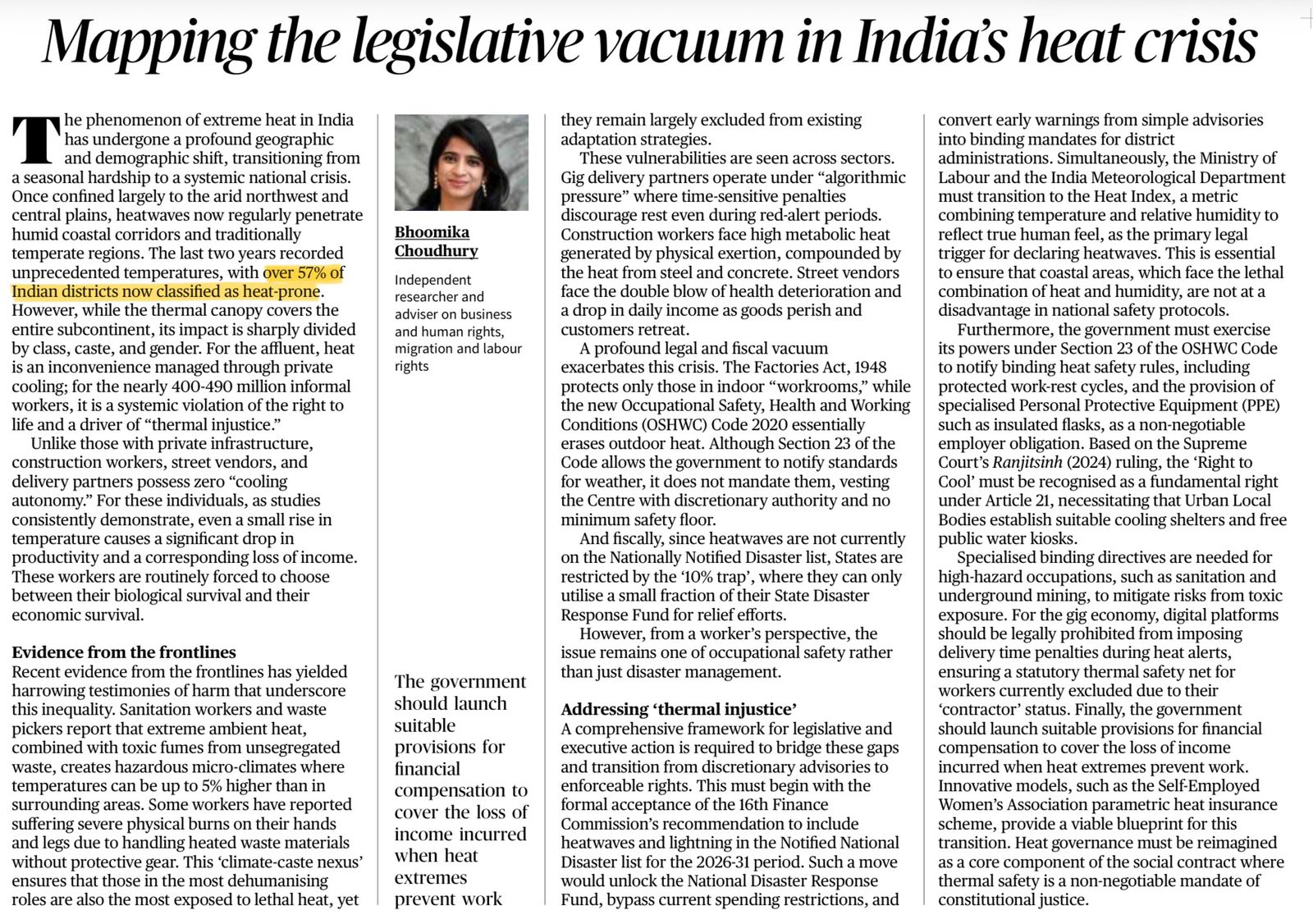
India’s heatwaves have evolved into a structural national crisis, with over 57% of districts classified as heat-prone, exposing serious gaps in labour protection, disaster governance, and legal enforcement—especially for informal workers.
Key Information
Nature of the Crisis (Thermal Inequality)
• Heatwaves now affect coastal and temperate regions.
• Around 400–490 million informal workers face direct exposure.
• Results in income loss + health risks → termed thermal injustice.
Vulnerable Groups
• Construction workers, sanitation workers, street vendors, gig workers.
• Face heat stress + loss of livelihood simultaneously.
Legislative Gap (Core Issue)
• Factories Act, 1948 → limited to indoor workplaces.
• Occupational Safety, Health and Working Conditions Code, 2020 (OSHWC)
Section 23: Government can set safety standards (including heat), but not mandatory.
• Implementation exists (Code notified, draft rules issued), but no uniform, enforceable heat protection law.
• Heatwaves not fully integrated into disaster funding framework → limited fiscal response.
What Needs to be Done
• Make heat safety rules legally binding (not advisory).
• Include heatwaves in Notified Disaster List → better funding access.
• Ensure work-rest cycles, protective gear, cooling shelters, water access.
• Provide income compensation during extreme heat days.
Supreme Court Link
• Ranjitsinh v. Union of India (2024)
• Recognised “Right to Cool” under Article 21 (Right to Life).