1. Context
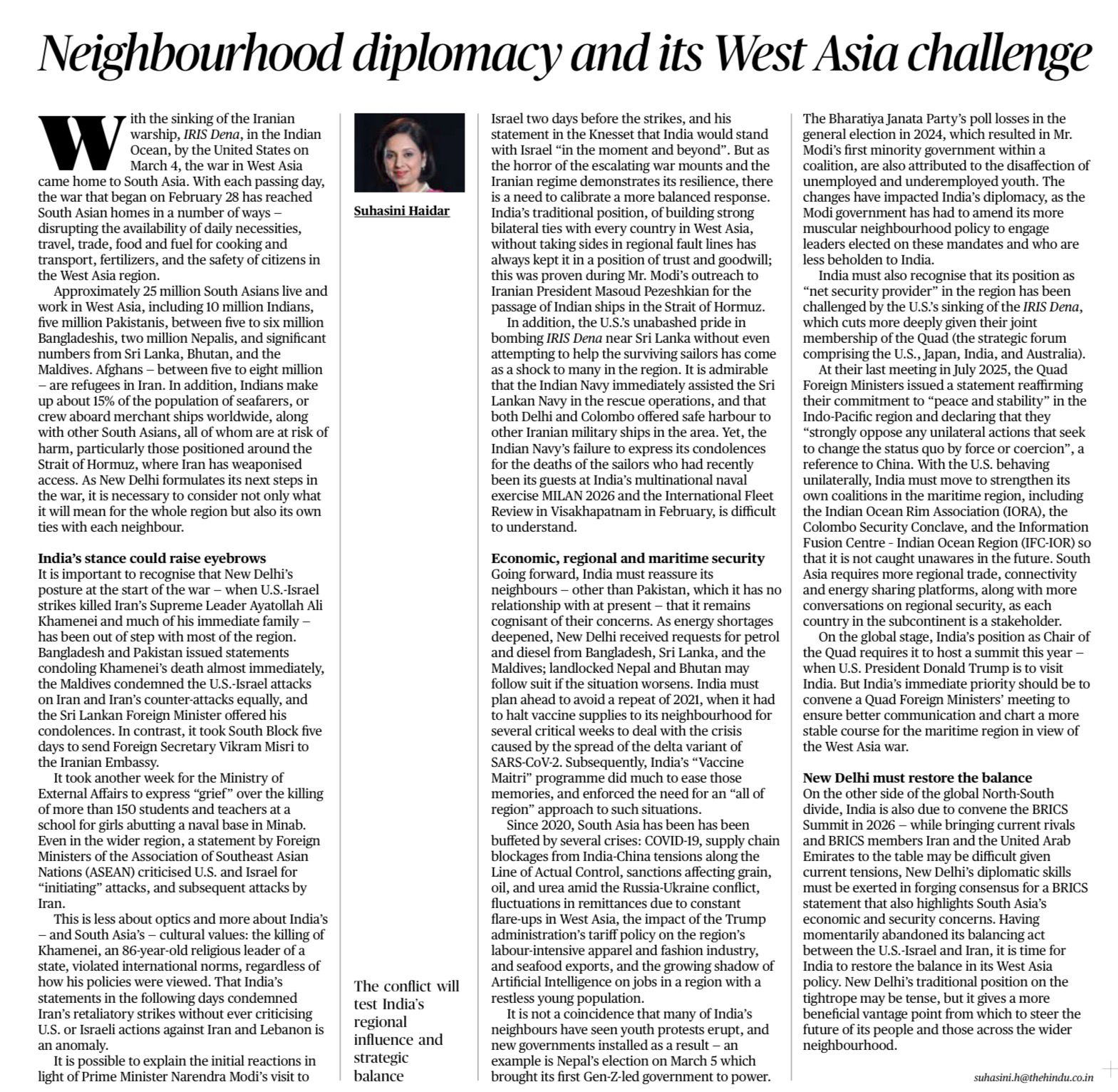
The article argues that India must recalibrate its West Asia policy and restore strategic balance, as the ongoing conflict is testing India’s neighbourhood diplomacy, regional influence and traditional non-aligned approach.
2. Key Points
- War impact reaching South Asia
• West Asia conflict is affecting trade, energy supply, travel and safety of diaspora. - India’s response seen as inconsistent
• India’s initial reactions were delayed and not fully aligned with regional sentiments.
• Other South Asian countries responded more quickly. - Need for balanced diplomacy
• India should avoid taking clear sides and maintain ties with all West Asian countries.
• This has been India’s traditional strength. - Challenge to India’s regional role
• India’s image as a “net security provider” is weakening.
• U.S. actions and regional tensions are reshaping power dynamics. - Neighbourhood pressure increasing
• Countries like Sri Lanka, Bangladesh, Nepal may face economic stress (fuel, food, trade).
• India must support neighbours to maintain influence. - Economic and security risks
• Supply chains, energy imports and remittances are at risk.
• Maritime security (especially near Strait of Hormuz) is crucial. - Need for regional cooperation
• Strengthen groupings like Quad, IORA, Colombo Security Conclave.
• Improve connectivity and energy cooperation in South Asia.
Global diplomacy opportunity
• India can use platforms like BRICS and Quad to push for dialogue and stability.