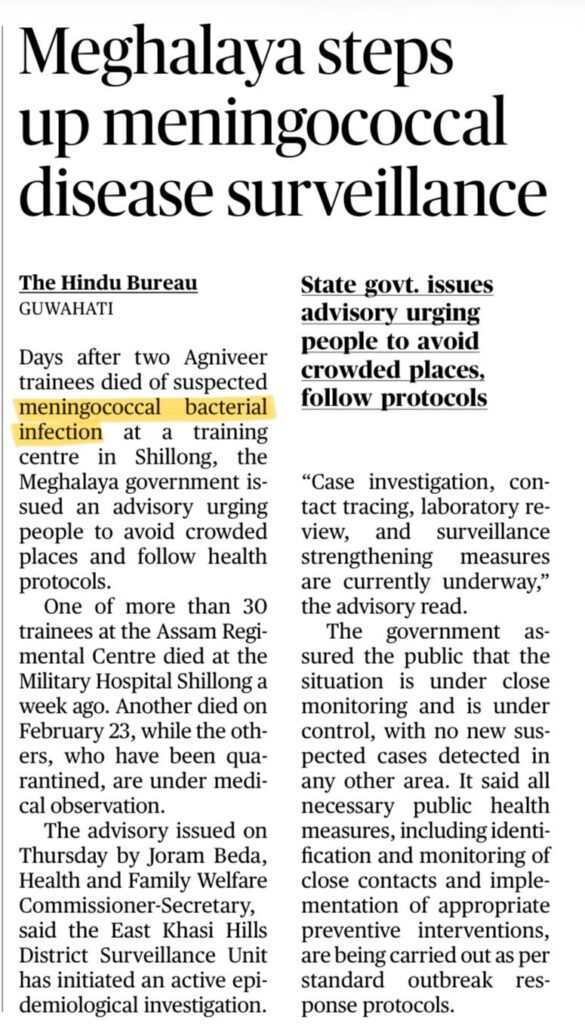

Meningococcal Disease
Causative Agent: Neisseria meningitidis, a bacterium.
Nature of Disease: Causes acute bacterial meningitis and may also lead to septicemia, which can become life-threatening rapidly.
Spread
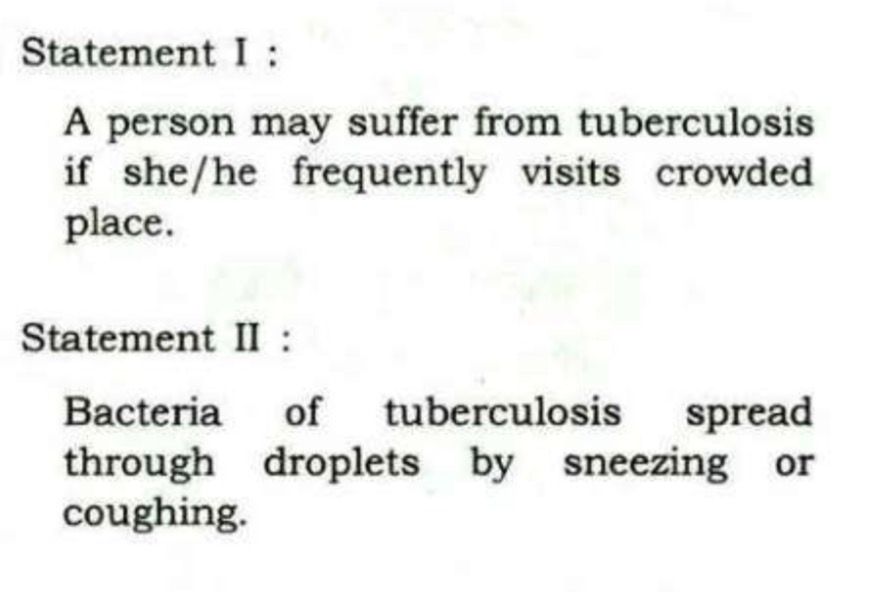
• Transmitted through respiratory droplets released during coughing or sneezing.
• Requires close contact for transmission.
• Spreads faster in crowded settings such as hostels, military barracks and dormitories.
Risk Factors
• Overcrowding increases transmission probability.
• Low immunity makes individuals more vulnerable.
• Unvaccinated populations are at higher risk.
• Seasonal peaks may be observed in outbreaks.
Symptoms
• High fever accompanied by severe headache.
• Neck stiffness, indicating meningeal irritation.
• Vomiting and altered sensorium.
• Purplish rash in septicemic cases.
• Can rapidly progress to shock if untreated.
Treatment
• Early administration of antibiotics is critical for survival.
• Chemoprophylaxis is advised for close contacts to prevent secondary spread.
Vaccination
• MenACWY vaccine available.
• MenB vaccine available.
Important Bacterial Diseases (For Comparison)
Tuberculosis | Typhoid | Cholera | Plague | Diphtheria
Important Viral Diseases
COVID-19 | Measles | Influenza | Dengue | Hepatitis B | Rabies
Key Insight: In densely populated settings, meningococcal disease can spread quickly. Early diagnosis, antibiotic therapy and vaccination significantly reduce mortality rates.