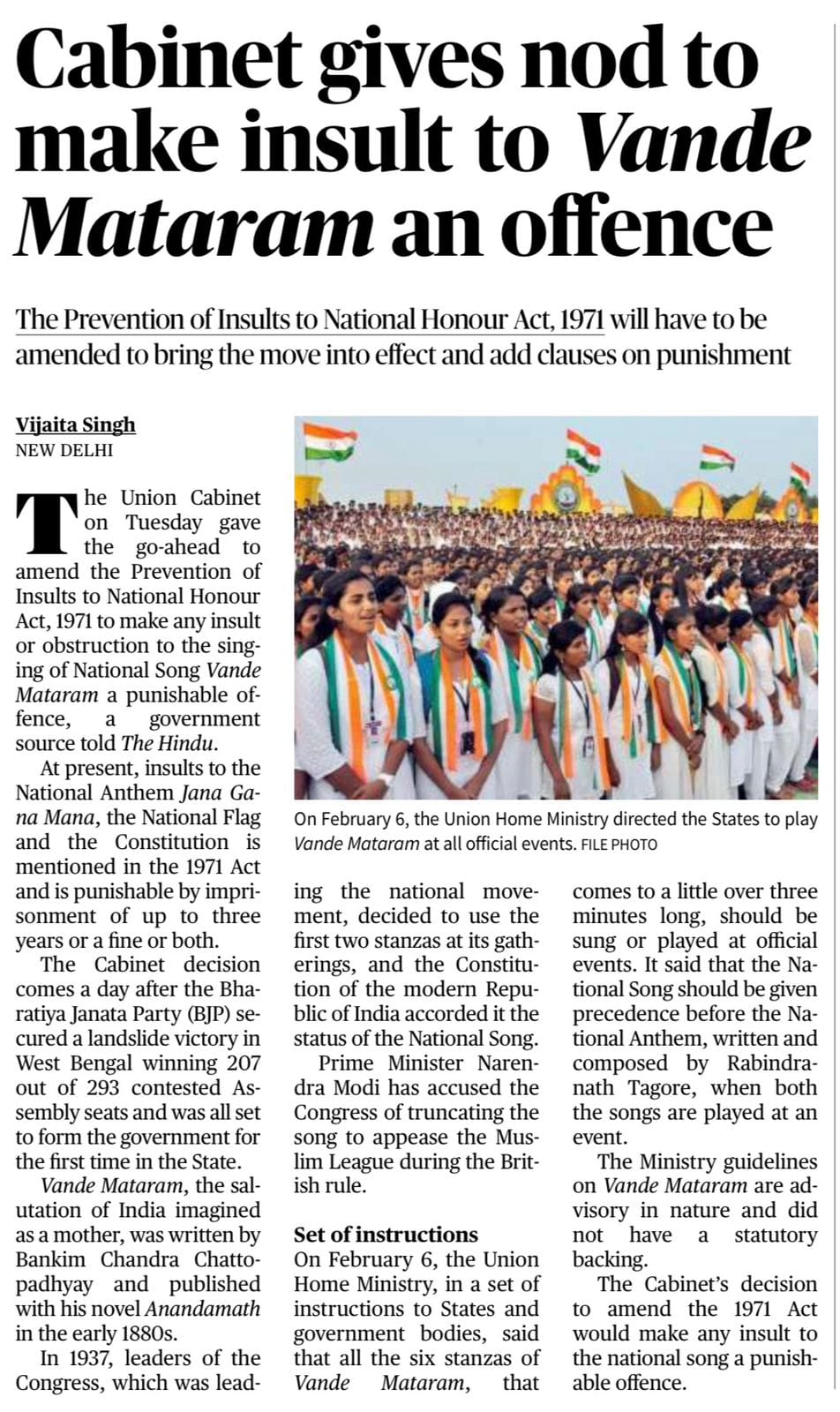
Context: Vande Mataram
Union Cabinet approved amendment to the Prevention of Insults to National Honour Act, 1971 to make insult or obstruction during the singing of Vande Mataram punishable.
Vande Mataram: Basics & Freedom Movement
Author: Bankim Chandra Chattopadhyay | Source: Anandamath (1882) | Language: Sanskritised Bengali
- Became a major slogan during the Swadeshi Movement (1905)
- First sung at the 1896 INC Session by Rabindranath Tagore
Stanzas & Current Status
- Original composition has 6 stanzas
- Since 1937, only the first two stanzas were officially used at public events
- Remaining stanzas were generally avoided due to religious imagery
- In 2026, Union Home Ministry guidelines stated that the official version will include all six stanzas at designated government and school events
Whenever both are played:
- Vande Mataram will precede Jana Gana Mana
Full rendition duration:
- Around 3 minutes 10 seconds
National Song Status
24 January 1950: Constituent Assembly adopted:
- Jana Gana Mana → National Anthem
- Vande Mataram → National Song
Impact of Proposed Amendment
At present, the 1971 Act protects:
- National Anthem
- National Flag
- Constitution of India
After amendment:
- Vande Mataram will also get statutory legal protection
- Insult/disruption during singing may become punishable
- Expands legal protection to National Song as a national symbol