Context: Vikram-1 Rocket
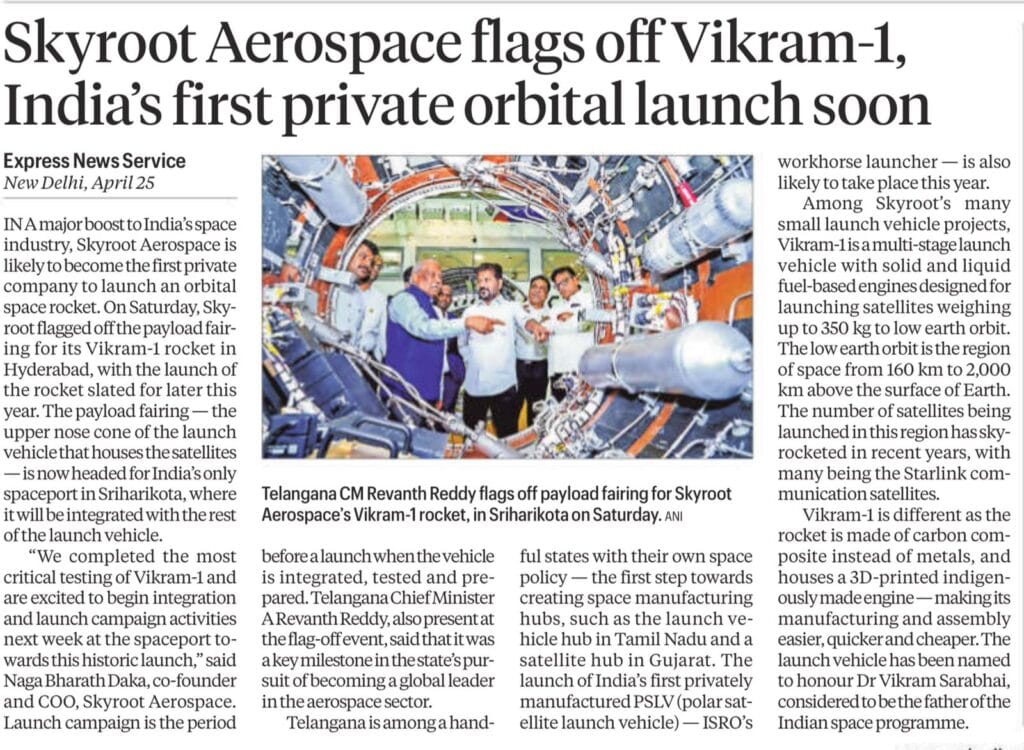
Skyroot Aerospace has begun final integration of its Vikram-1 rocket, which is expected to become India’s first privately developed orbital launch vehicle.
Key Facts
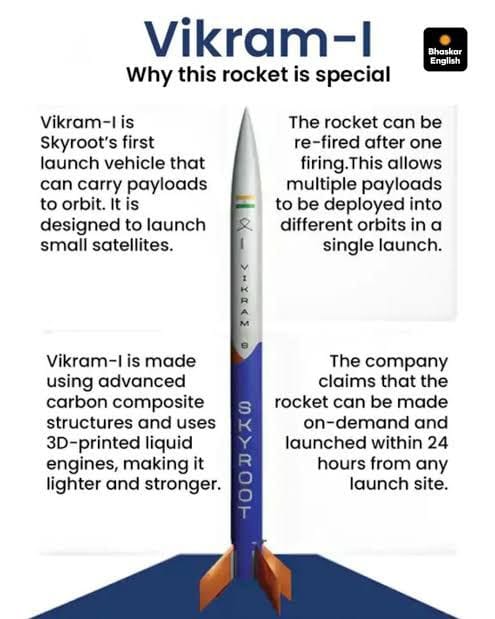
- Vikram-1: Multi-stage launch vehicle (solid + liquid propulsion)
- Payload capacity: ~350 kg to Low Earth Orbit (160–2000 km)
- Payload fairing flagged off from Hyderabad, integration at Sriharikota
- Built using carbon composites and 3D-printed indigenous engine
- Designed for small satellite launches
- Named after Vikram Sarabhai
Summary
- What is happening?
- A private Indian company is preparing to launch an orbital rocket, something earlier done only by ISRO.
- Why is it important?
- It marks a shift to private participation in India’s space sector after recent reforms.
- Opens India to the global small-satellite launch market, which is growing rapidly.
- What makes Vikram-1 special?
- Uses advanced materials and manufacturing (carbon composites, 3D printing).
- Designed to be cost-effective, faster to build, and efficient.
- What is the objective?
- To provide dedicated launch services for small satellites into Low Earth Orbit.
- To build a reliable, indigenous private launch capability.
- Why does it matter for India?
- Strengthens self-reliance in space technology.
- Helps create a space startup ecosystem and manufacturing hubs.
- Improves India’s competitiveness in the global space economy.