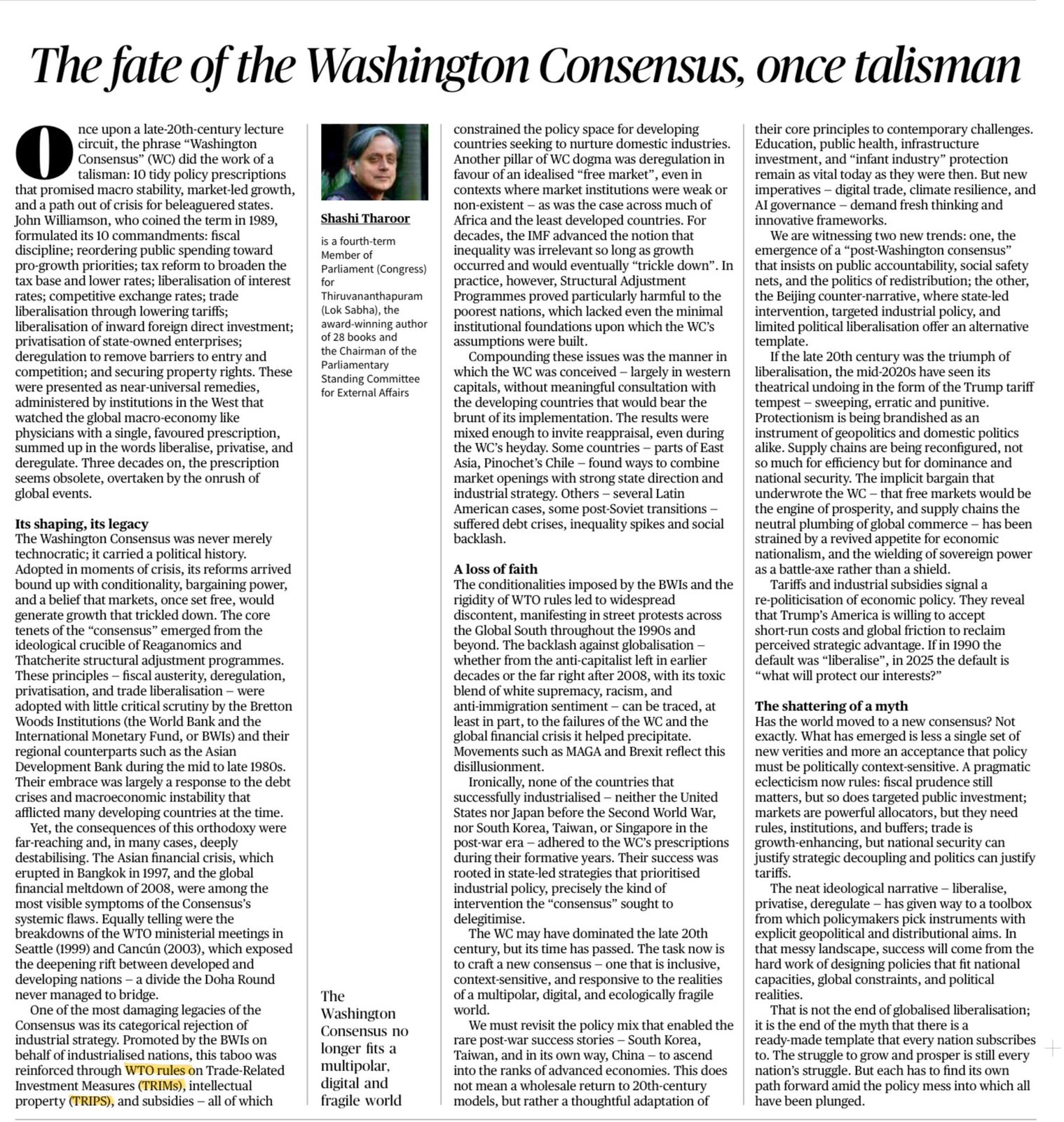

Context (Core Argument)
Washington Consensus prescriptions have lost centrality.
Today’s world demands context-based policy mixing markets, state intervention, and strategic protection.
Key Points
1. Origin (1989)
John Williamson’s 10 reforms:
- Fiscal discipline
- Liberalisation
- Privatisation
- Deregulation
Backed by IMF–World Bank during debt crises.
2. Expansion (1980s–90s)
Structural Adjustment Programmes and WTO-era rules (TRIPS/TRIMS) narrowed industrial policy space in developing states.
3. Backlash (late 1990s–2000s)
- Uneven outcomes.
- East Asia blended state-market models.
- Others faced crises and inequality.
- WTO setbacks:
- Seattle (1999)
- Cancún (2003)
- 2008 financial crisis eroded faith.
4. Shift (2010s–2020s)
Rise of:
- Protectionism
- Nationalism
- Tariffs
- Subsidies
- Supply-chain security
Trade became politically strategic.
5. Present Situation
No single model dominates.
Focus areas now include:
- Welfare
- Industrial policy
- Climate resilience
- Digital governance
- Strategic autonomy
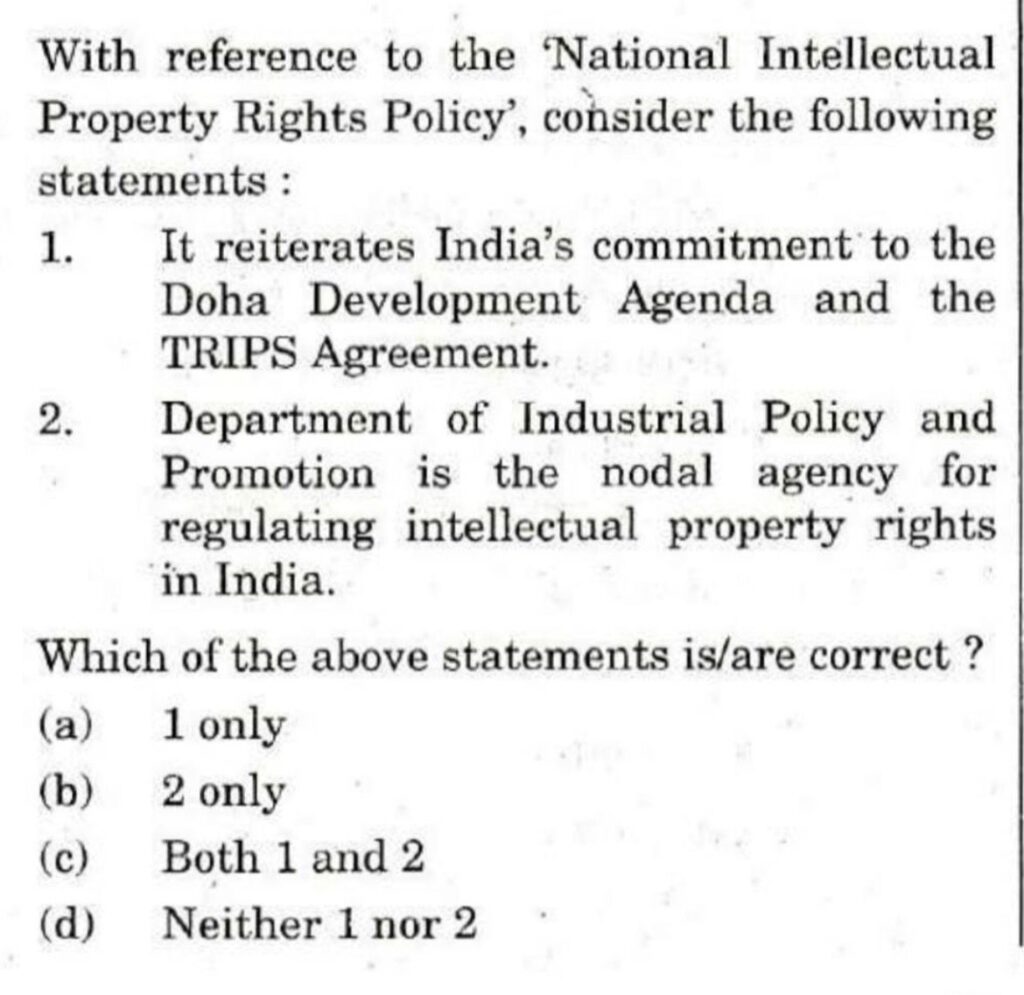
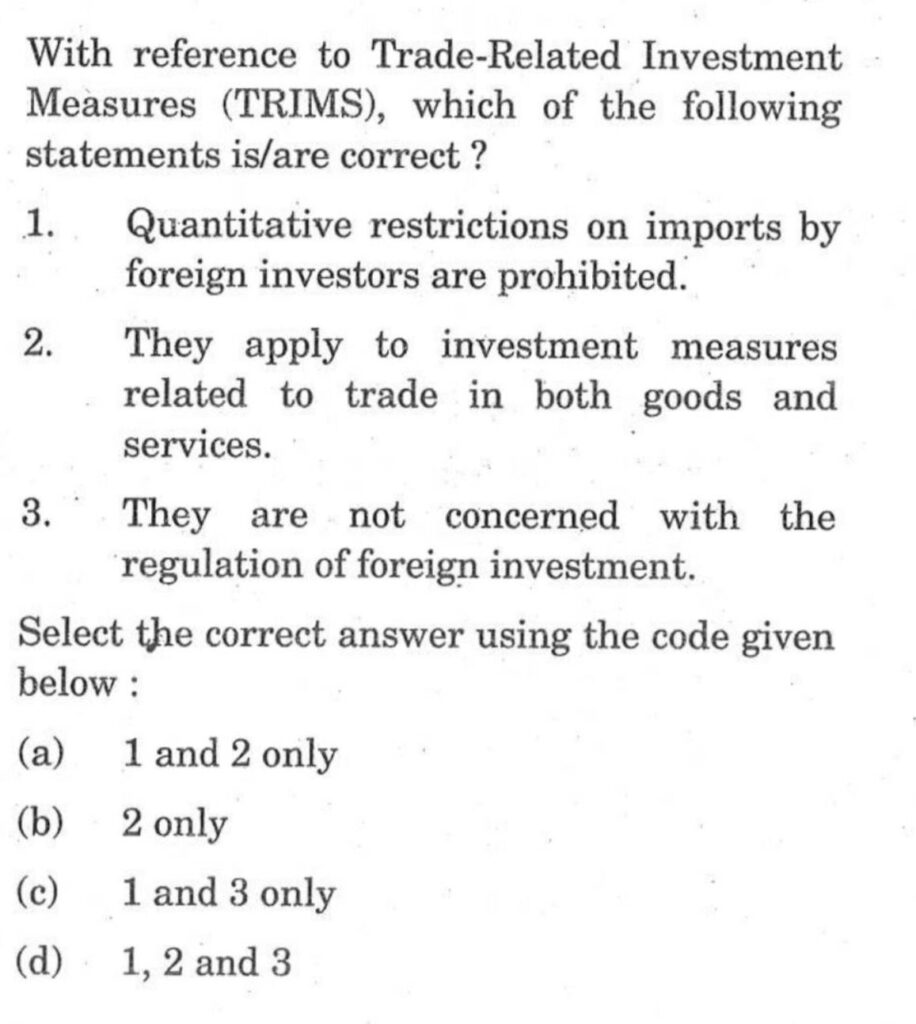
TRIPS & TRIMS
TRIPS
- WTO pact setting minimum global IP standards.
- Includes flexibilities such as compulsory licensing.
TRIMSWTO pact banning trade-distorting investment measures
(e.g., local content requirements, trade-balancing requirements).