Context: West Asia conflict impact
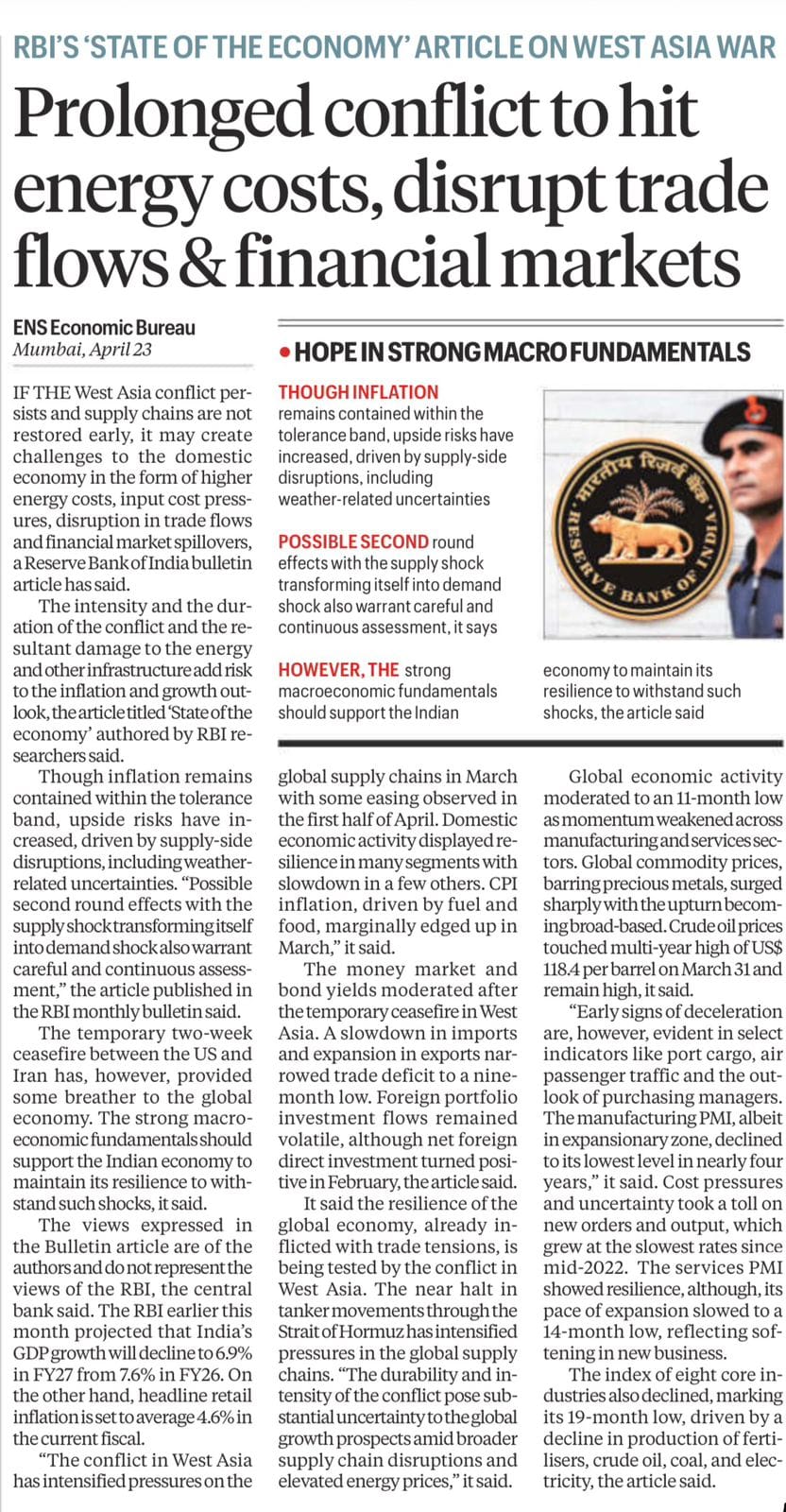
The Reserve Bank of India, in its “State of the Economy” article, has cautioned that a prolonged West Asia conflict could raise energy costs and disrupt trade and financial markets, while noting that India’s strong macroeconomic fundamentals may help absorb such shocks.
Key observations of RBI
- Energy risk: Prolonged conflict may push up crude oil prices, increasing import bills and inflation.
- Inflation outlook: Consumer Price Index (CPI) inflation is within the tolerance band but faces upside risks from supply disruptions.
- Second-round effects: Supply shocks could spill into demand, requiring close monitoring.
- Global slowdown: Economic activity weakening; manufacturing and services showing loss of momentum.
- Trade impact: Disruptions in global supply chains and trade routes (e.g., Strait of Hormuz).
- Financial markets: Potential volatility in capital flows and bond markets.
- Domestic economy: Mixed trends — resilience in some sectors, slowdown in others.
- External sector: Trade deficit narrowed; Foreign Direct Investment (FDI) turned positive, though flows remain volatile.
- Core sector: Index of Eight Core Industries at a 19-month low, indicating slowing industrial activity.
- Overall: Strong macroeconomic fundamentals provide resilience, but risks remain elevated.