Lipulekh Pass dispute: Nepal Objects to Mansarovar Route, India Rejects Claim
Context: Lipulekh Pass dispute
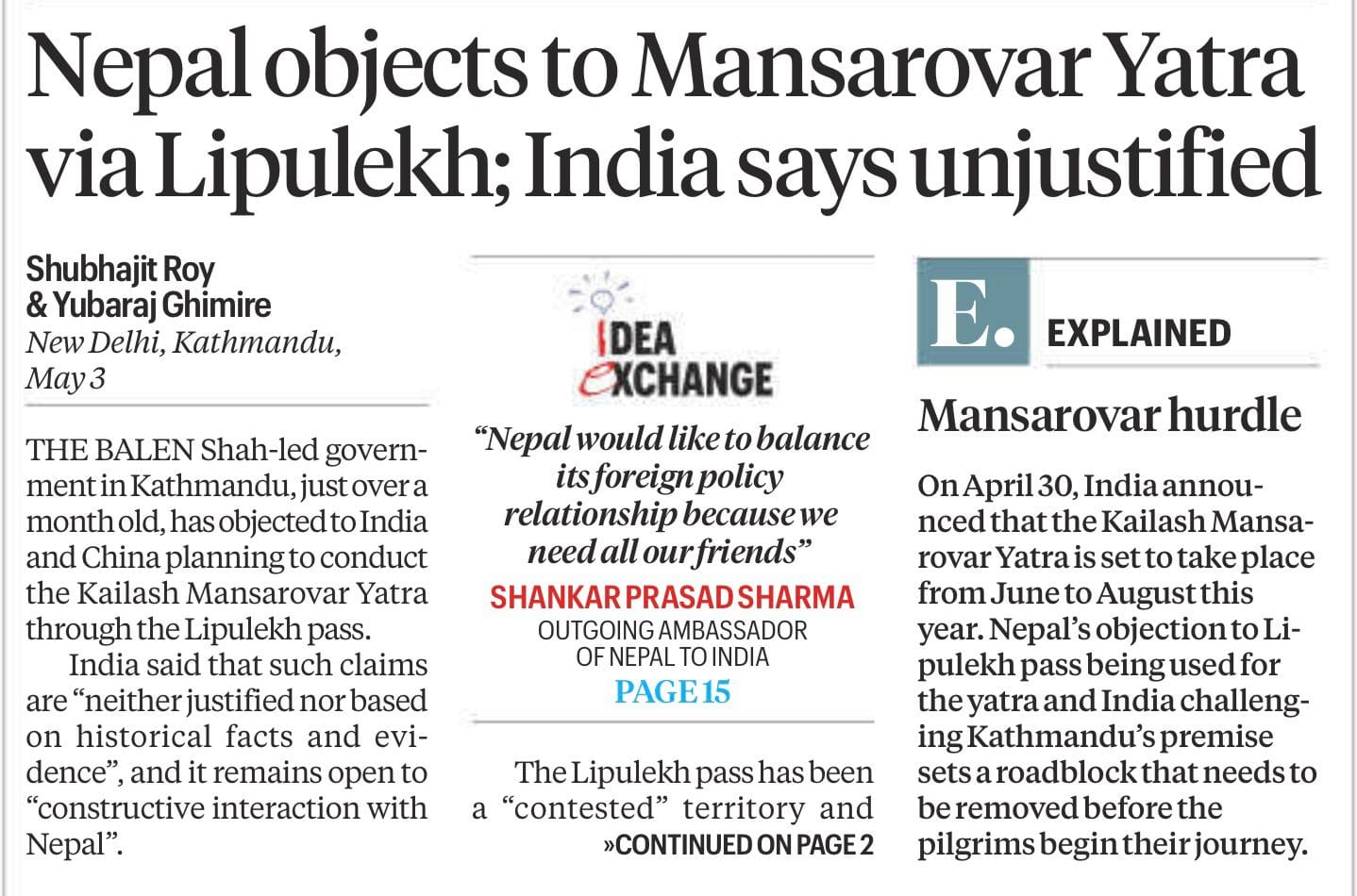
Nepal has objected to the Kailash Mansarovar Yatra via Lipulekh Pass, claiming Lipulekh–Kalapani–Limpiyadhura as Nepali territory; India rejected this as not based on historical facts.
Key Points
1. Why dispute exists
- Rooted in Sugauli Treaty, 1816
- Boundary linked to Mahakali/Kali River
- Dispute: actual source of the river → Limpiyadhura or Kalapani side
2. Nepal’s stand
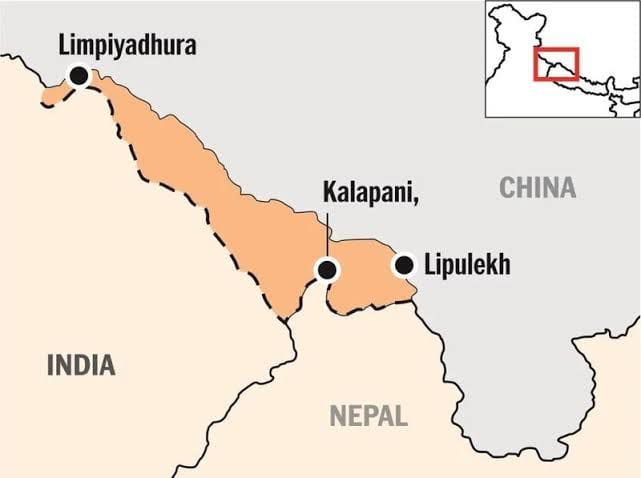
- Claims Limpiyadhura, Lipulekh and Kalapani east of Mahakali as Nepal’s territory
- Opposes India-China activities: road construction, trade, pilgrimage route
- Had issued a new map in 2020 showing these areas within Nepal
3. India’s stand
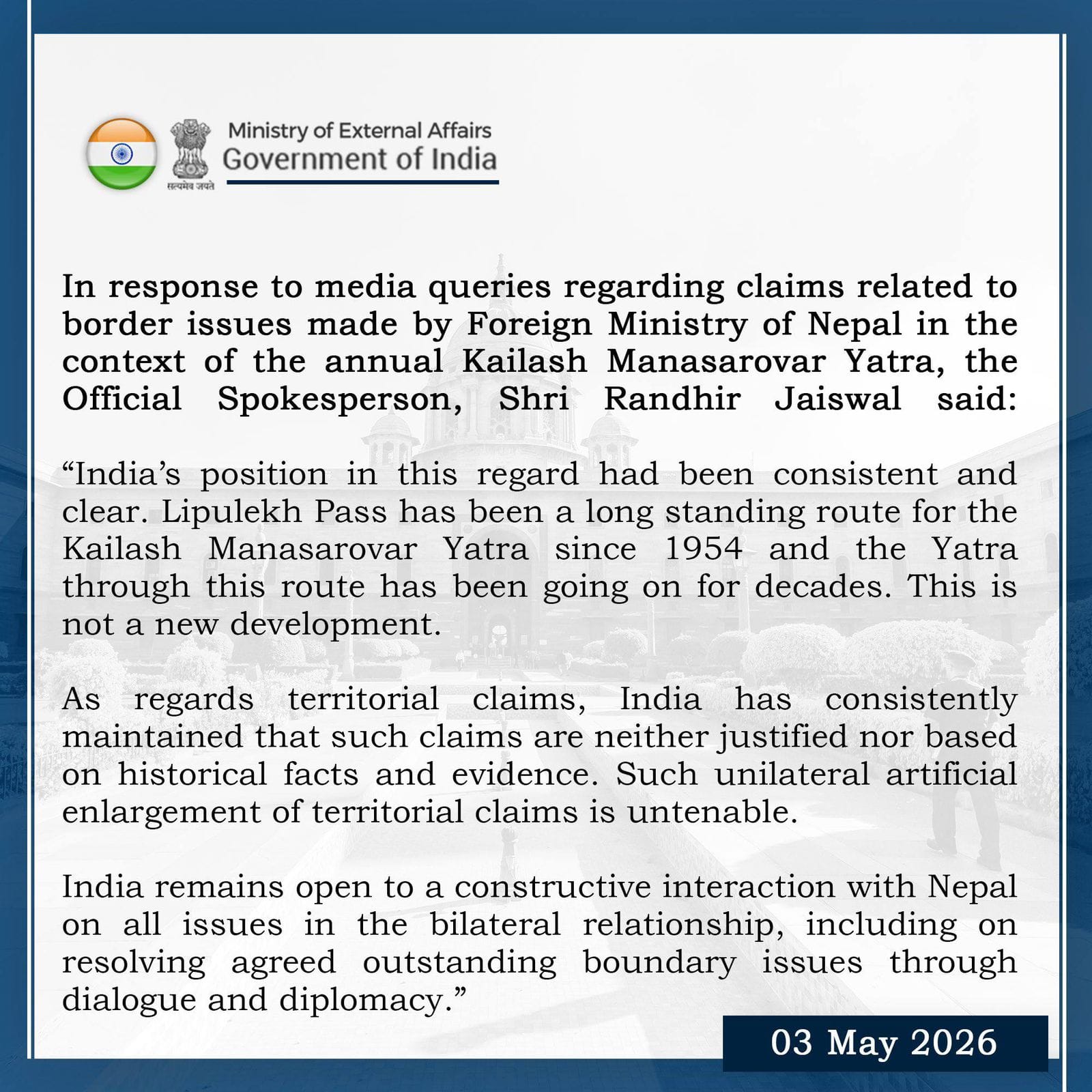
- Says Lipulekh is a long-standing Kailash Mansarovar route since 1954
- Calls Nepal’s claim unjustified and historically unsupported
- Rejects unilateral enlargement of territorial claims
4. Why it matters
- Lipulekh is strategically located near India–Nepal–China tri-junction
- Links religious pilgrimage, border dispute, China factor and neighbourhood diplomacy
5. Ministry of External Affairs response
- India’s position is consistent and clear
- Open to resolving boundary issues through dialogue and diplomacy
- Seeks constructive engagement with Nepal