1. Context
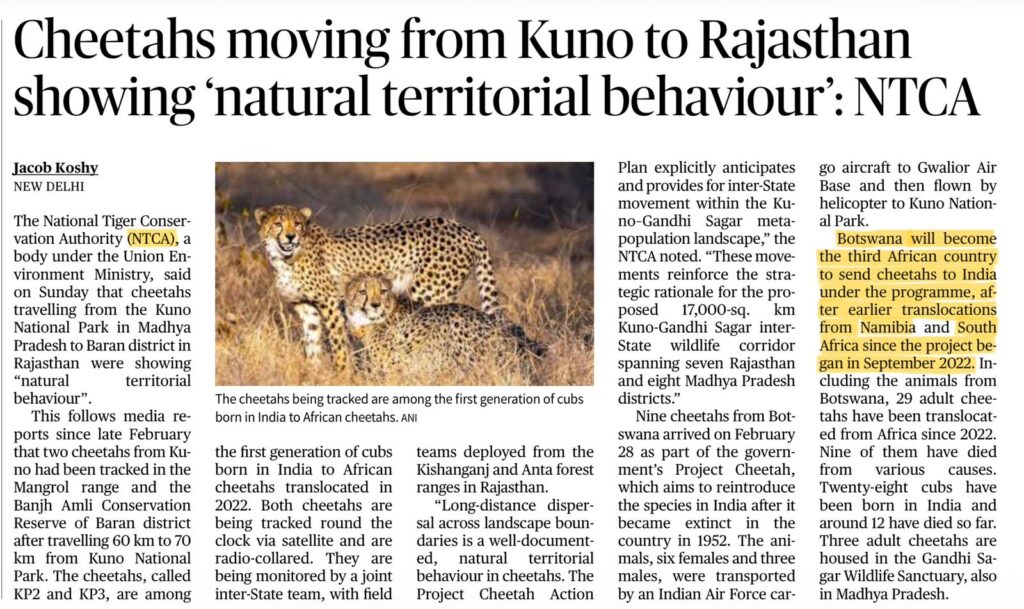
• NTCA noted cheetahs moving from Kuno National Park (Madhya Pradesh) to Baran district (Rajasthan) show natural territorial dispersal.
• Two cheetahs (KP2, KP3), among first cubs born in India to African cheetahs (since 2022 translocation), travelled ~60–70 km.
• Movement aligns with the proposed Kuno–Gandhi Sagar landscape corridor (~17,000 sq km) across MP–Rajasthan.
2. National Tiger Conservation Authority (NTCA)
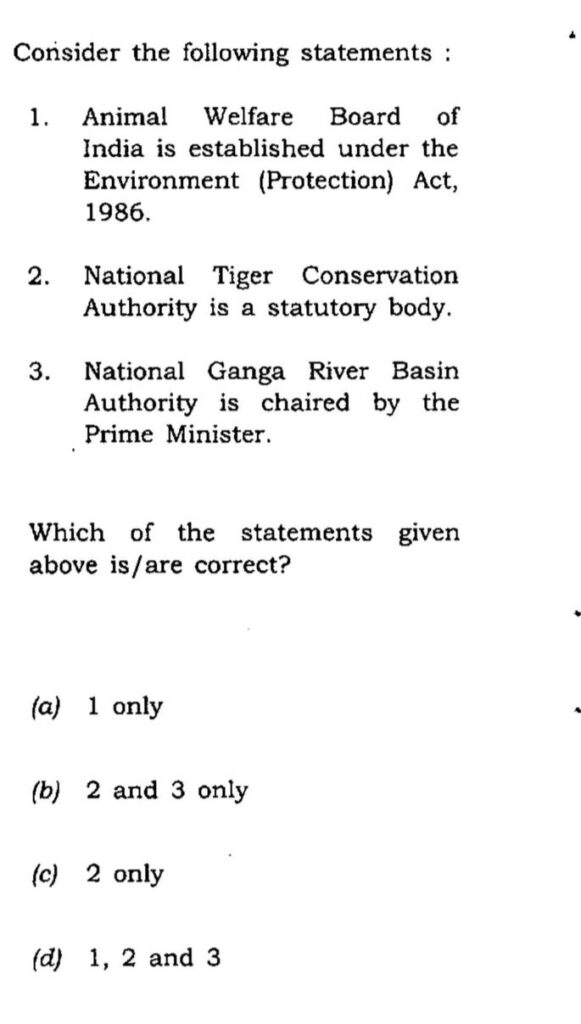
• Statutory body under the Wild Life (Protection) Act, 1972 (amended 2006).
• Under Ministry of Environment, Forest and Climate Change.
Functions:
• Implement Project Tiger.
• Approve tiger reserves.
• Monitor conservation plans.
• Coordinate Centre–State action.
• Now overseeing Project Cheetah.
• Chaired by Union Environment Minister; includes officials, experts and MPs.
3. Project Cheetah
• Aims to reintroduce cheetahs in India after extinction in 1952.
• Began September 2022 with African cheetahs.
• So far:
– ~29 adults translocated
– Several deaths reported
– ~28 cubs born
– ~12 cub deaths noted
• Ongoing monitoring via satellite collars; inter-State dispersal expected in open savanna landscapes.
4. Source Countries (Africa) — Key Points
Namibia
• First batch (2022).
• Strong free-ranging cheetah population; semi-arid savanna habitat.
South Africa
• Managed metapopulation model.
• Fenced reserves aid breeding and genetic management.
Botswana
• Third African country sending cheetahs.
• Hosts one of Africa’s largest wild cheetah populations in the Kalahari ecosystem.
5. African vs Asiatic Cheetah
African cheetah (Acinonyx jubatus jubatus)
• Larger population.
• Found across eastern & southern Africa.
• Adapted to open grasslands.
• Source for India’s reintroduction.
Asiatic cheetah (Acinonyx jubatus venaticus)
• Critically endangered.
• Now confined mainly to Iran.
• Smaller population, lighter coat, more fragmented habitat.