30 April 2026 | Daily Current Affairs

Mekong River pollution from rare earth mining – Impact on ecology and agriculture for UPSC

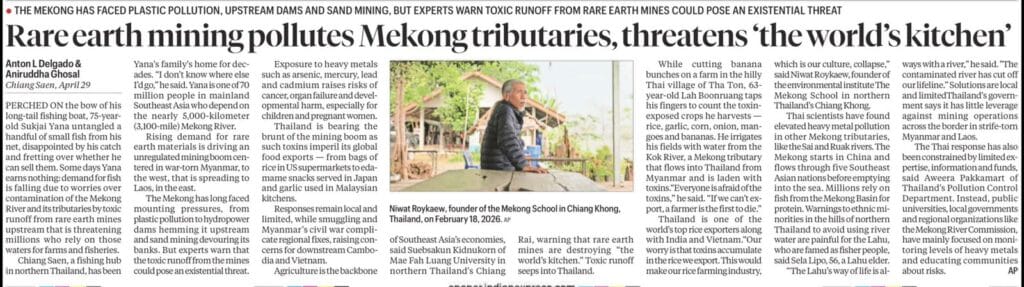
Context: Mekong River pollution

Unregulated rare earth mining in Southeast Asia is contaminating Mekong tributaries, threatening ecosystems, agriculture, and livelihoods across multiple countries.
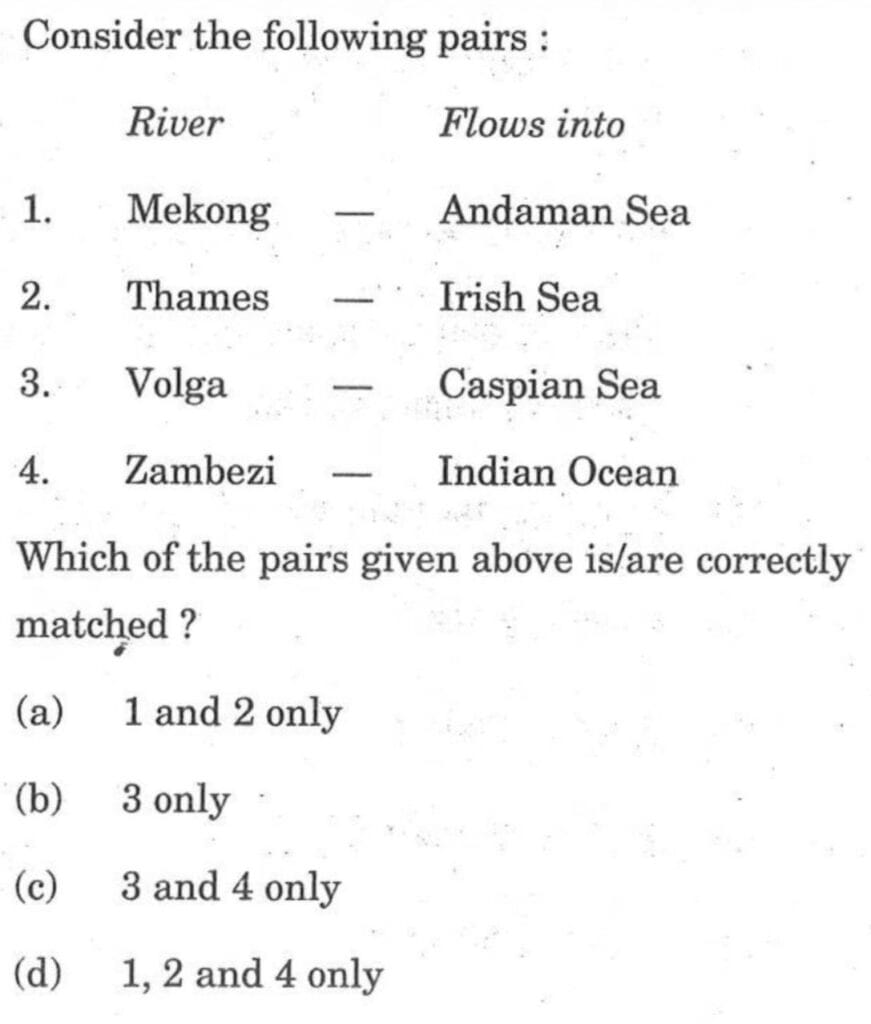
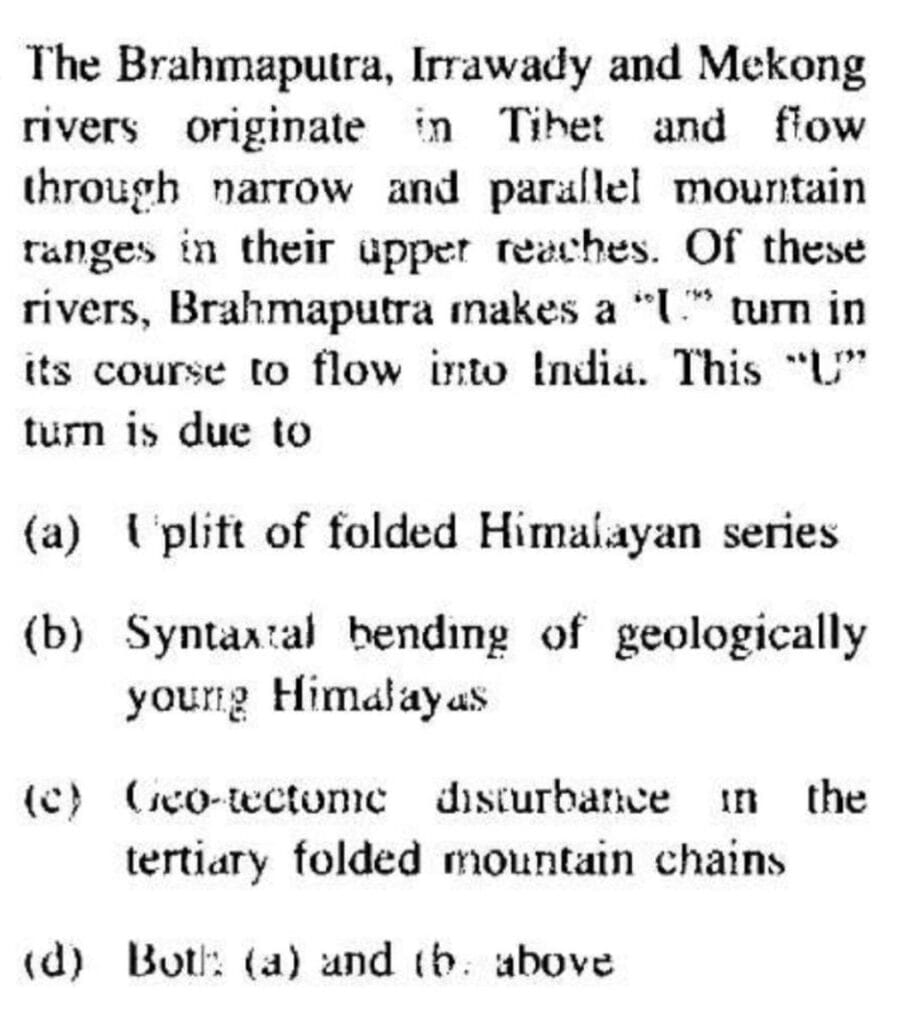
PYQ – 2020, Ans – C
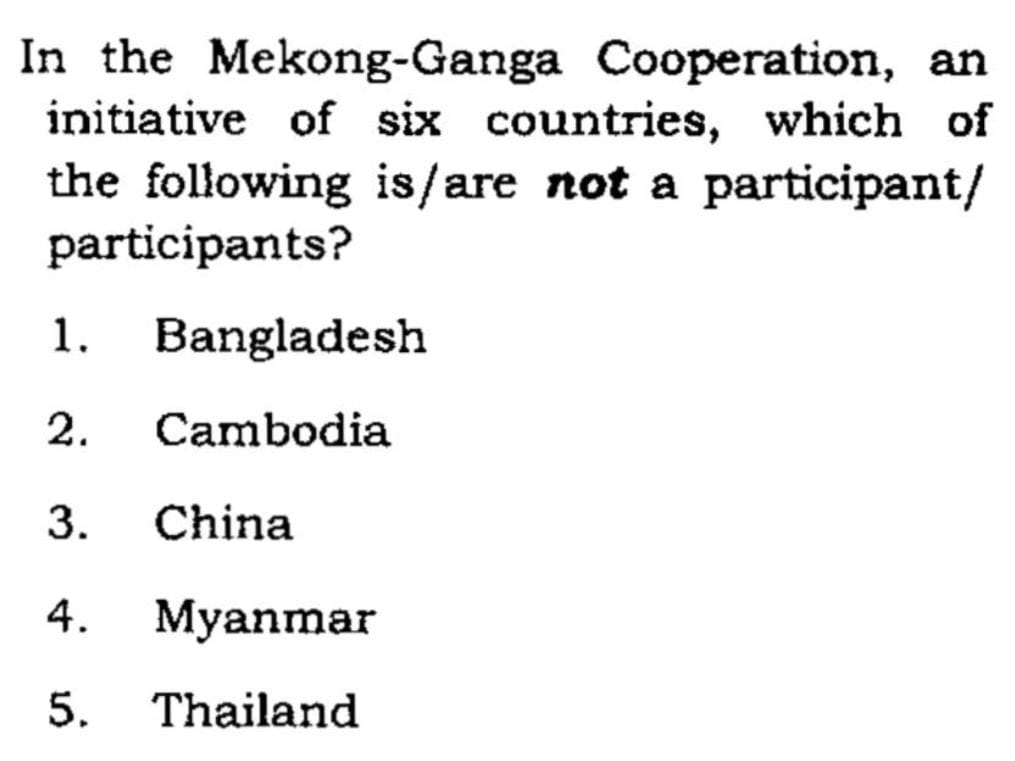
PYQ – 2011, Ans – B
PYQ – 2015, Ans – BONGLADESH & CHINA

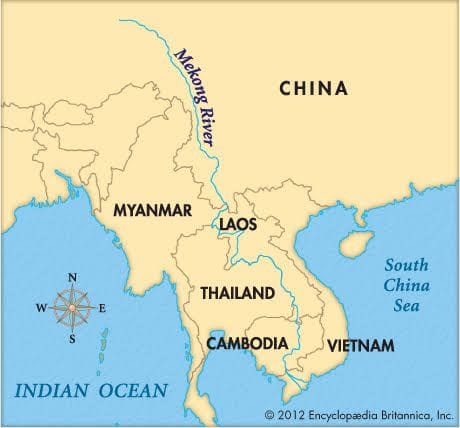
Mekong River — Geography & Importance

  • Origin: Tibetan Plateau (China)
  • Course: China → Myanmar → Laos → Thailand → Cambodia → Vietnam
  • Mouth: Empties into the South China Sea (Mekong Delta, Vietnam)

Significance

  • Supports ~70 million people
  • One of the world’s richest inland fisheries
  • Critical for rice production → known as the “world’s kitchen”

Mekong–Ganga Cooperation (MGC)

  • Launched: 2000
  • Members: India, Thailand, Myanmar, Cambodia, Laos, Vietnam
  • Focus Areas: Tourism, culture, education, connectivity
  • Relevance: Platform for regional cooperation, including sustainable river management

Rare Earth Metals

  • Group of 17 critical elements (e.g., neodymium, lanthanum)
  • Used in electronics, electric vehicles, wind turbines, defence systems
  • Crucial for the green energy transition

Rare Earth Mining — Location & Impact

  • Major hotspot: Northern Myanmar (Kachin region); expanding towards Laos
  • Nature of mining: Largely unregulated, often in conflict zones
  • Key pollutants: Arsenic, mercury, cadmium

Impact

  • Toxic runoff contaminates tributaries (Kok, Sai, Ruak rivers)
  • Pollution spreads downstream across borders
  • Affects agriculture, fisheries, and human health

Mali conflict and demand for Russian withdrawal – Key developments for UPSC

Context: Mali conflict

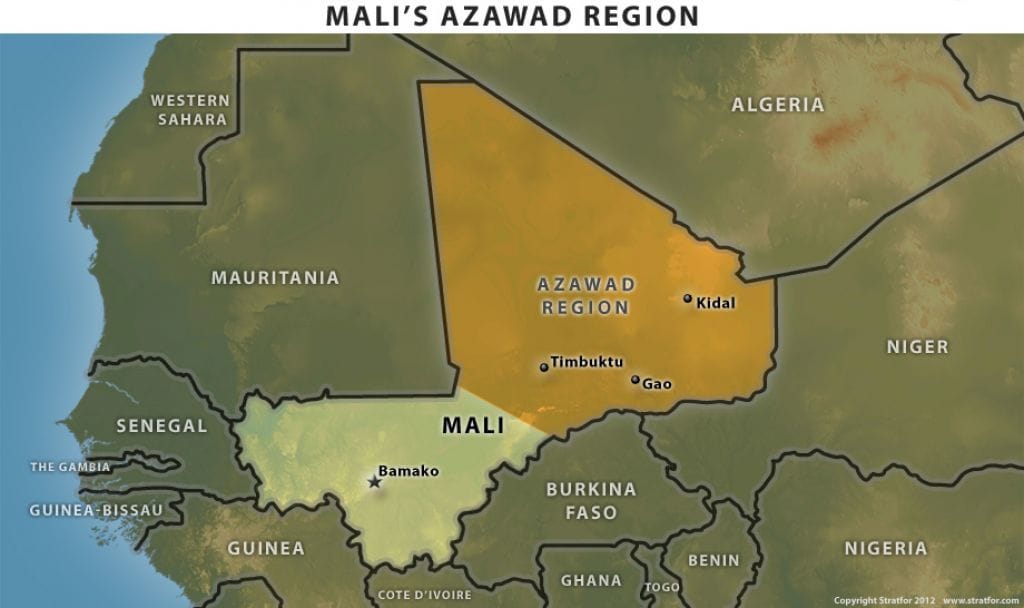
Tuareg rebels in Mali demand the withdrawal of Russian-backed forces amid escalating conflict in the country.

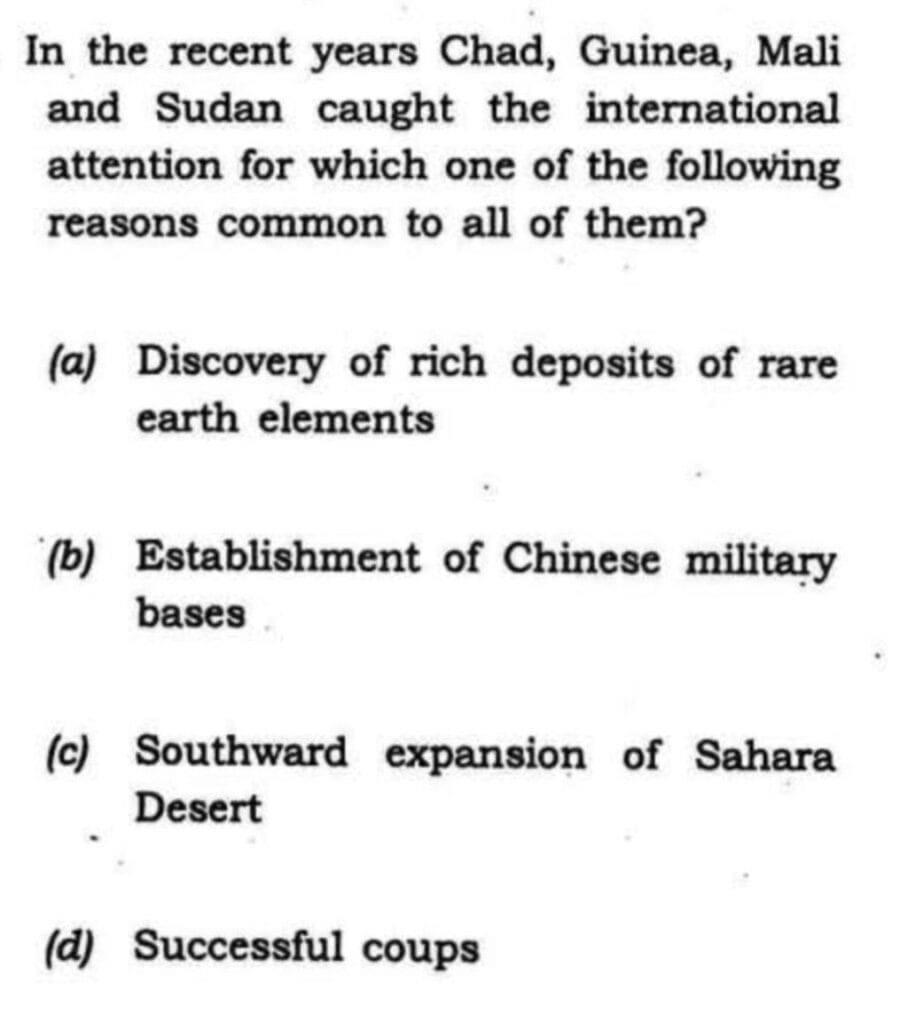
PYQ – 2023, Ans – D

Key Points

  • Mali is unstable after military coups → currently ruled by a military junta
  • Three main actors:
    • Junta (government)
    • Tuareg rebels (seeking autonomy in north – Azawad)
    • Jihadist groups (ISIS/Al-Qaeda linked)
  • France earlier:
    • Led counter-terror operations (Operation Barkhane)
    • Withdrew in 2022 due to tensions with Mali
  • Russia now:
    • Filled the vacuum with paramilitary forces (Africa Corps/Wagner-type)
    • Supports the junta militarily
  • Current issue:
    • Rebels captured key areas (e.g., Kidal)
    • Demand Russia’s withdrawal, accusing it of backing repression

India Sri Lanka naval exercise IN–SLN DIVEX 2026 – Maritime security cooperation for UPSC

Context: India Sri Lanka naval exercise

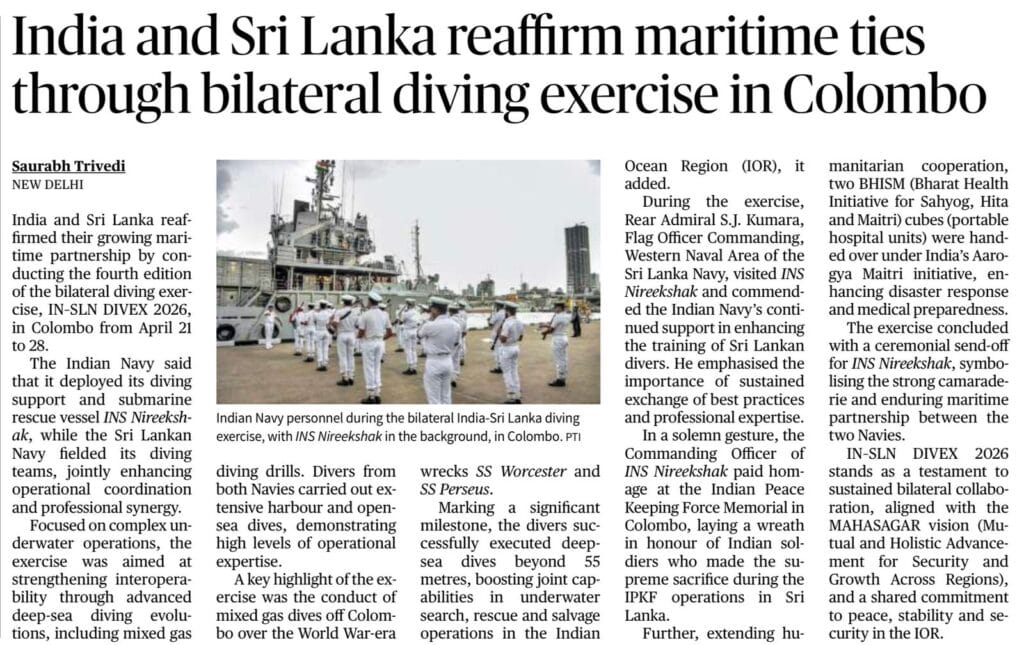
India and Sri Lanka deepened naval cooperation through a specialised diving exercise focused on underwater operations and maritime security.

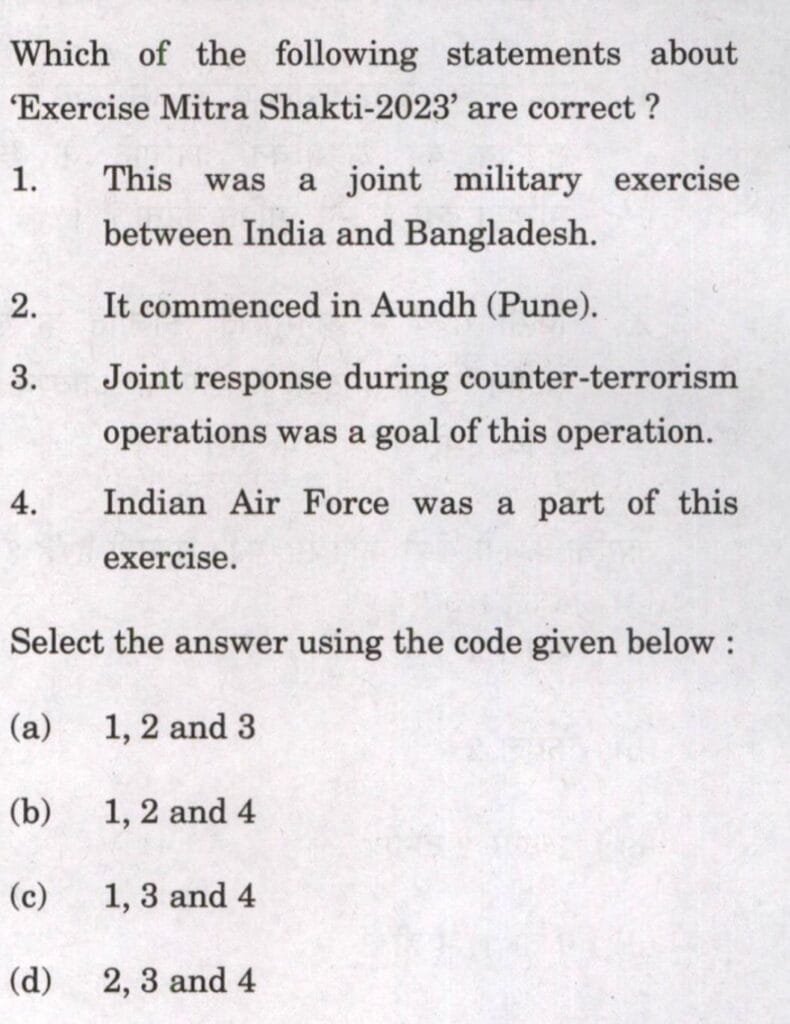
PYQ – 2025, Ans – D

Exercise Details

  • Exercise: IN–SLN DIVEX 2026
  • Countries: India & Sri Lanka
  • Location: Colombo
  • Edition: 4th

Key Points

Operational focus:

  • Advanced underwater operations — search, rescue, salvage
  • Deep-sea diving (>55 m) and mixed gas diving techniques

Platforms involved:

  • India deployed INS Nireekshak (specialised diving & submarine rescue vessel)
  • Sri Lanka contributed trained diving units

Capability building:

  • Enhances interoperability + joint operational readiness
  • India supporting skill development of Sri Lankan divers

Strategic significance:

  • Strengthens maritime security cooperation in Indian Ocean Region (IOR)
  • Reinforces India’s regional approach (MAHASAGAR vision)
  • Builds trust amid increasing strategic competition in IOR

Additional dimension:

  • India provided portable medical units (BHISHM cubes) → disaster & humanitarian readiness

Health insurance in India – NSS 2025 findings on coverage and financial burden for UPSC

Context: Health insurance in India

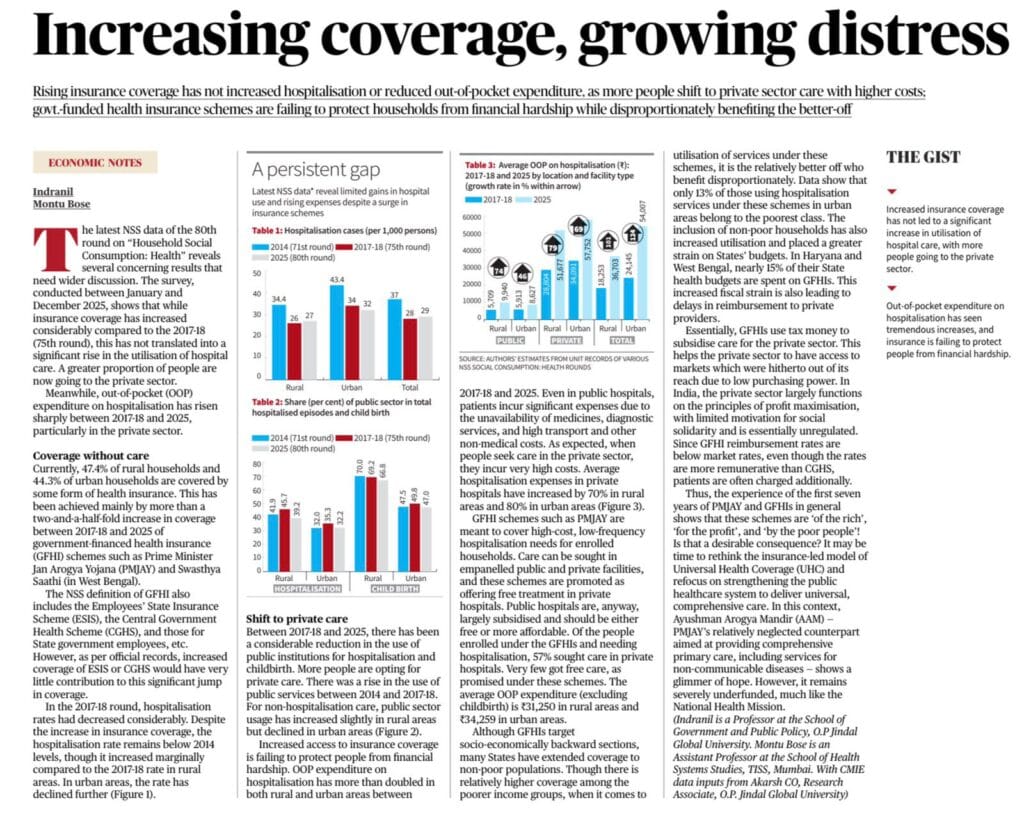
Findings from the 80th Round of the National Sample Survey (NSS) – “Household Social Consumption: Health” (2025) show that higher health insurance coverage has not improved access to care or reduced financial burden.

About National Sample Survey (NSS)

Data-backed Summary

1. Coverage increased, utilisation stagnant

  • Coverage: 47.4% rural (2025), 44.3% urban (2025)
  • Hospitalisation (per 1,000 persons):
    • 37 (2014) → 28 (2017–18) → 29 (2025)

2. Shift towards private healthcare

  • Public sector share in hospitalisation:
    • Rural: 41.9% (2014) → 44.7% (2017–18) → 39.2% (2025)
    • Urban: 32% (2014) → 35.8% (2017–18) → 32.2% (2025)

3. Rising Out-of-Pocket (OOP) expenditure

Public hospitals:

  • Rural: ₹5,709 (2017–18) → ₹9,940 (2025)
  • Urban: ₹6,582 (2017–18) → ₹8,627 (2025)

Private hospitals:

  • Rural: ₹28,655 (2017–18) → ₹51,677 (2025)
  • Urban: ₹34,031 (2017–18) → ₹57,752 (2025)

Total OOP:

  • Rural: ₹18,253 (2017–18) → ₹30,639 (2025)
  • Urban: ₹24,145 (2017–18) → ₹54,007 (2025)

4. Inequitable access

  • Only 13% poorest households (2025, urban) benefit from Government-Funded Health Insurance (GFHI)

5. Fiscal stress and structural issues

  • States like Haryana and West Bengal (~2025) spend ~15% of health budgets on insurance schemes
  • Public healthcare remains underfunded, private sector dominant

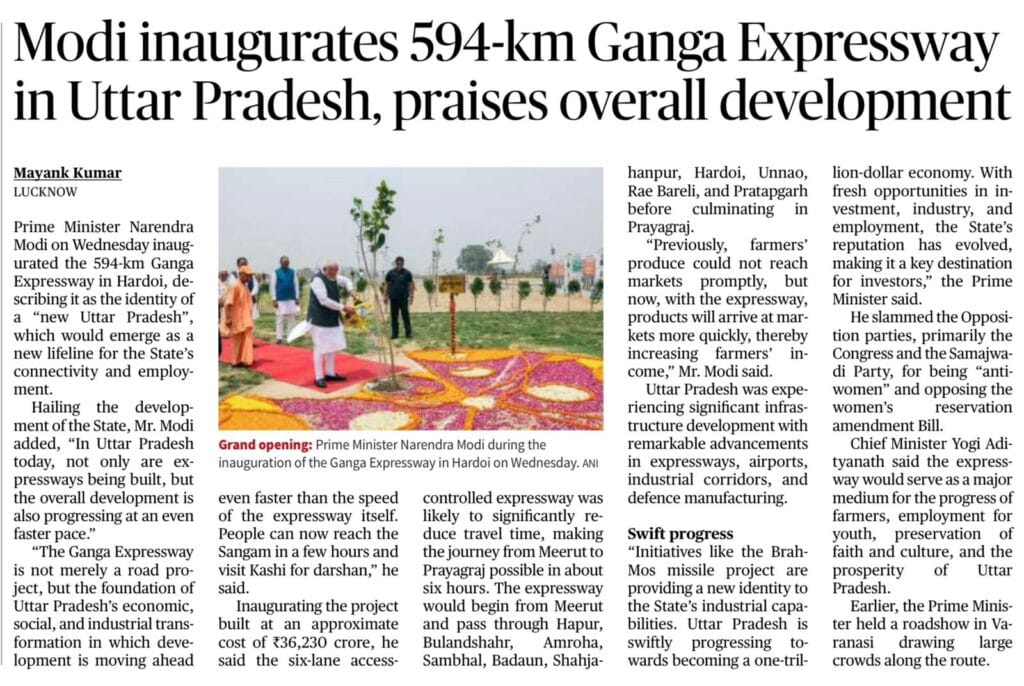
Ganga Expressway 594 km project – Infrastructure and economic impact for UPSC

Context: Ganga Expressway

India’s push for large-scale infrastructure continues with the inauguration of the Ganga Expressway to boost connectivity, logistics, and economic development in Uttar Pradesh.

Ganga Expressway

  • Length: 594 km (one of India’s longest expressways)
  • Route: Meerut → Prayagraj
  • Type: Access-controlled, six-lane (expandable to eight lanes)
  • Estimated Cost: ~₹36,000+ crore
  • Districts Covered: Meerut, Hapur, Bulandshahr, Amroha, Sambhal, Badaun, Shahjahanpur, Hardoi, Unnao, Rae Bareli, Pratapgarh, Prayagraj

Travel Impact

  • Reduces travel time (Meerut–Prayagraj ~6 hours)
  • Improves east–west connectivity in Uttar Pradesh

Significance of Ganga Expressway

  • Boosts logistics efficiency and supply chains
  • Enhances farm-to-market connectivity → better income for farmers
  • Promotes industrial corridors and investment
  • Strengthens regional balance (western–eastern UP integration)
  • Supports defence and emergency mobility (long, straight corridor)
About the UPSC Civil Services Examination (UPSC CSE)

The UPSC Civil Services Examination (CSE) is one of the most competitive and esteemed examinations in India, conducted by the Union Public Service Commission to recruit officers for services such as the Indian Administrative Service (IAS), Indian Police Service (IPS), Indian Foreign Service (IFS), and others. The exam comprises three stages — Prelims, Mains, and the Personality Test (Interview) — designed to test a candidate’s knowledge, aptitude, decision-making, and leadership skills.


How to Prepare Effectively for UPSC CSE

Cracking the UPSC CSE requires a deep understanding of the syllabus, consistent revision, structured answer writing, and smart test-taking strategies. The Prelims test analytical and conceptual clarity, the Mains focuses on critical thinking, articulation, and subject mastery, while the Interview assesses presence of mind, ethical judgment, and personality traits relevant to public service.

At UnderStand UPSC, we empower aspirants with a personalized and focused approach to each stage of the exam.


Why Choose UnderStand UPSC?

UnderStand UPSC is a mentorship-driven platform offering a clear, clutter-free strategy to tackle the Civil Services Examination. Our programs like Transform (for beginners and intermediate learners) and Conquer (for advanced mains preparation) provide structured study plans, syllabus-wise video content, interactive live sessions, and answer writing support.

We emphasize:

  • Concept clarity through topic-wise lectures

  • Test series designed around real UPSC standards

  • Personalized mentorship in small groups

  • Regular performance tracking and peer benchmarking

  • Doubt-clearing sessions, current affairs analysis, and monthly magazines


Join the UnderStand UPSC Learning Community

Our mission is to make UPSC preparation less overwhelming and more strategic. We combine mentorship, discipline, and academic rigor to help you clear CSE with confidence. Whether you’re preparing from Delhi, Mumbai, Bangalore, or a remote village — our online-first model ensures quality guidance reaches every corner of India.

Join the thousands of aspirants who trust UnderStand UPSC to guide their journey toward becoming civil servants.

Stay connected with us through our Telegram, YouTube, and Instagram channels for daily tips, strategies, and updates.

Copyright © 2026 USARAMBHA EDUCATION (UnderStand UPSC). All Rights Reserved.

Join the Success Journey!


Fill the form and our Team will reach out to you soon


Fill the form and our Team will reach out to you soon