Carbon Capture and Utilisation Technologies – Hard-to-Abate Sectors & India’s Net Zero Plan for UPSC

Carbon Capture, Hard-to-Abate Sectors & EU Bioeconomy Strategy

1) Context

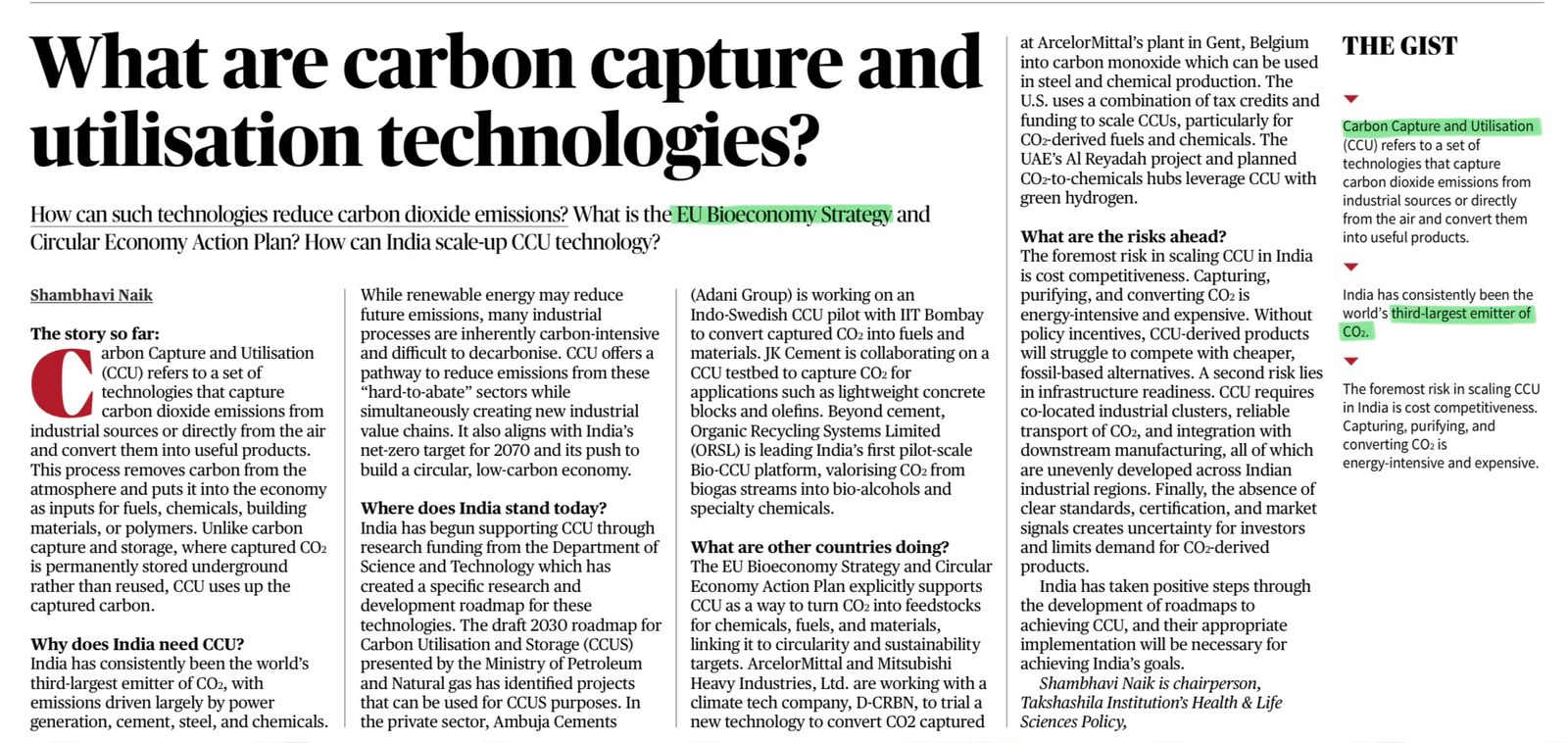
India, the world’s third-largest CO₂ emitter, faces rising industrial emissions from cement, steel, power and chemicals. Since these sectors cannot be rapidly decarbonised through renewables alone, Carbon Capture and Utilisation (CCU) is being examined as a transition tool alongside India’s 2070 net-zero target.

2) Carbon Capture & Utilisation (CCU)

CCU captures CO₂ from industrial sources (or directly from air) and converts it into fuels, chemicals, construction materials or other products.

• CCS: storage underground.
• CCU: reuse in economic value chains.

3) What are Hard-to-Abate Sectors?

Industries where emissions arise from chemical processes or high-temperature operations, not just fuel use:

• Cement (limestone calcination),
• Steel (coke in blast furnaces),
• Chemicals & fertilisers (fossil feedstock),
• Refineries.

These emissions are structurally difficult to eliminate without capture technologies.

4) India’s Position

• R&D support and draft CCUS roadmap (2030).
• Pilot projects in cement and bio-CCU.
• Key constraints: high cost, energy intensity, infrastructure and policy support gaps.

5) EU Bioeconomy Strategy

The EU Bioeconomy Strategy promotes replacing fossil-based systems with bio-based and circular production. It supports using captured CO₂ as feedstock for fuels, chemicals and materials, linking climate action with industrial transformation under the EU Circular Economy framework.
Carbon Capture and Utilisation Technologies
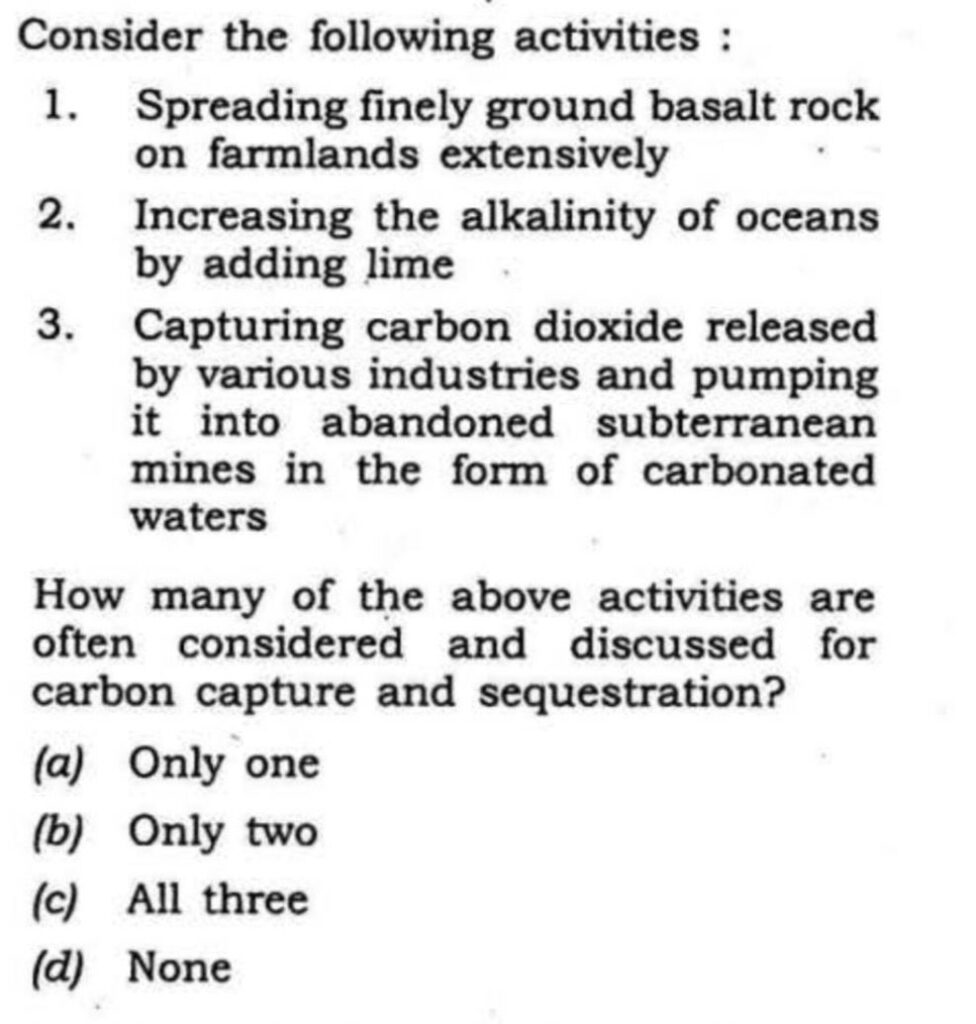
PYQ – 2023, Ans – C
About the UPSC Civil Services Examination (UPSC CSE)

The UPSC Civil Services Examination (CSE) is one of the most competitive and esteemed examinations in India, conducted by the Union Public Service Commission to recruit officers for services such as the Indian Administrative Service (IAS), Indian Police Service (IPS), Indian Foreign Service (IFS), and others. The exam comprises three stages — Prelims, Mains, and the Personality Test (Interview) — designed to test a candidate’s knowledge, aptitude, decision-making, and leadership skills.


How to Prepare Effectively for UPSC CSE

Cracking the UPSC CSE requires a deep understanding of the syllabus, consistent revision, structured answer writing, and smart test-taking strategies. The Prelims test analytical and conceptual clarity, the Mains focuses on critical thinking, articulation, and subject mastery, while the Interview assesses presence of mind, ethical judgment, and personality traits relevant to public service.

At UnderStand UPSC, we empower aspirants with a personalized and focused approach to each stage of the exam.


Why Choose UnderStand UPSC?

UnderStand UPSC is a mentorship-driven platform offering a clear, clutter-free strategy to tackle the Civil Services Examination. Our programs like Transform (for beginners and intermediate learners) and Conquer (for advanced mains preparation) provide structured study plans, syllabus-wise video content, interactive live sessions, and answer writing support.

We emphasize:

  • Concept clarity through topic-wise lectures

  • Test series designed around real UPSC standards

  • Personalized mentorship in small groups

  • Regular performance tracking and peer benchmarking

  • Doubt-clearing sessions, current affairs analysis, and monthly magazines


Join the UnderStand UPSC Learning Community

Our mission is to make UPSC preparation less overwhelming and more strategic. We combine mentorship, discipline, and academic rigor to help you clear CSE with confidence. Whether you’re preparing from Delhi, Mumbai, Bangalore, or a remote village — our online-first model ensures quality guidance reaches every corner of India.

Join the thousands of aspirants who trust UnderStand UPSC to guide their journey toward becoming civil servants.

Stay connected with us through our Telegram, YouTube, and Instagram channels for daily tips, strategies, and updates.

Copyright © 2026 USARAMBHA EDUCATION (UnderStand UPSC). All Rights Reserved.

Join the Success Journey!


