Context: Delimitation and Women Reservation
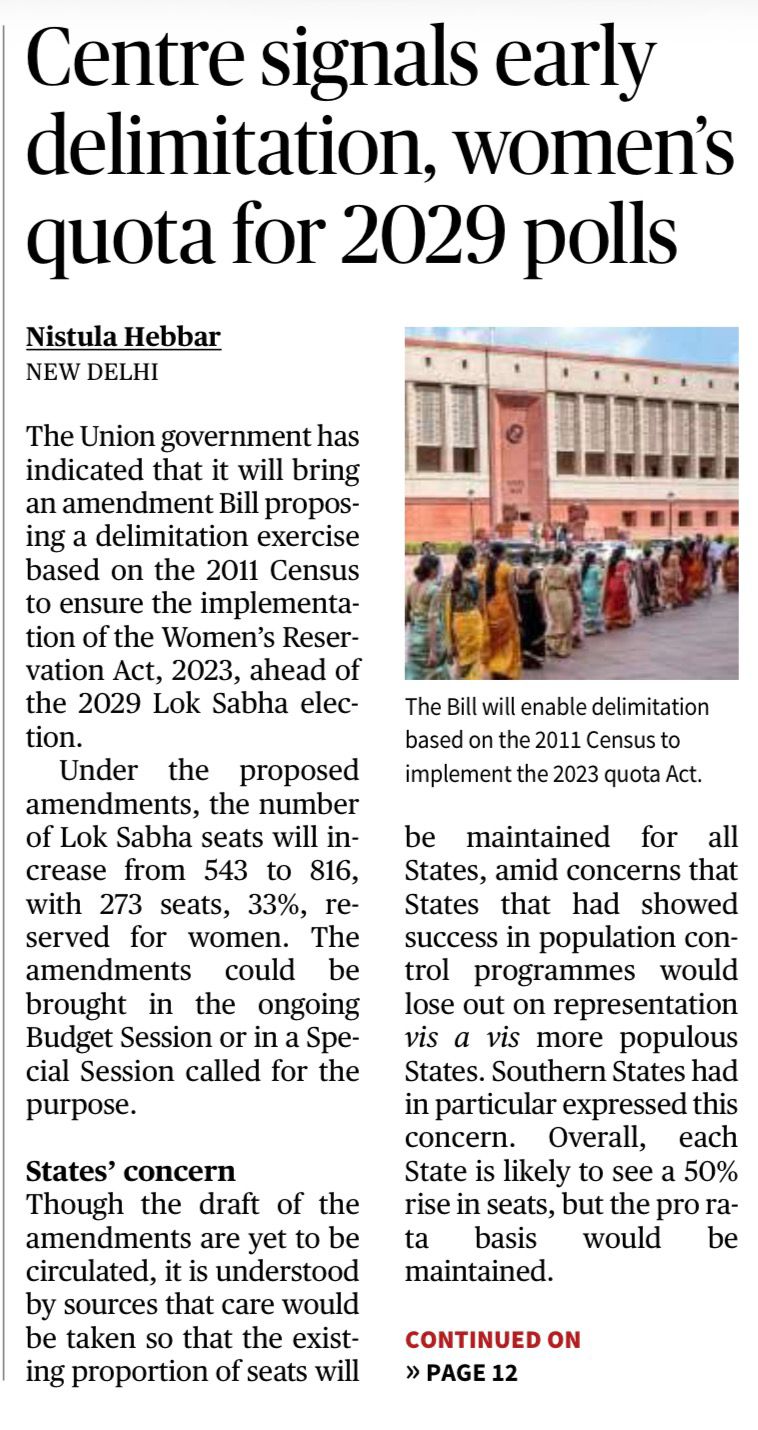
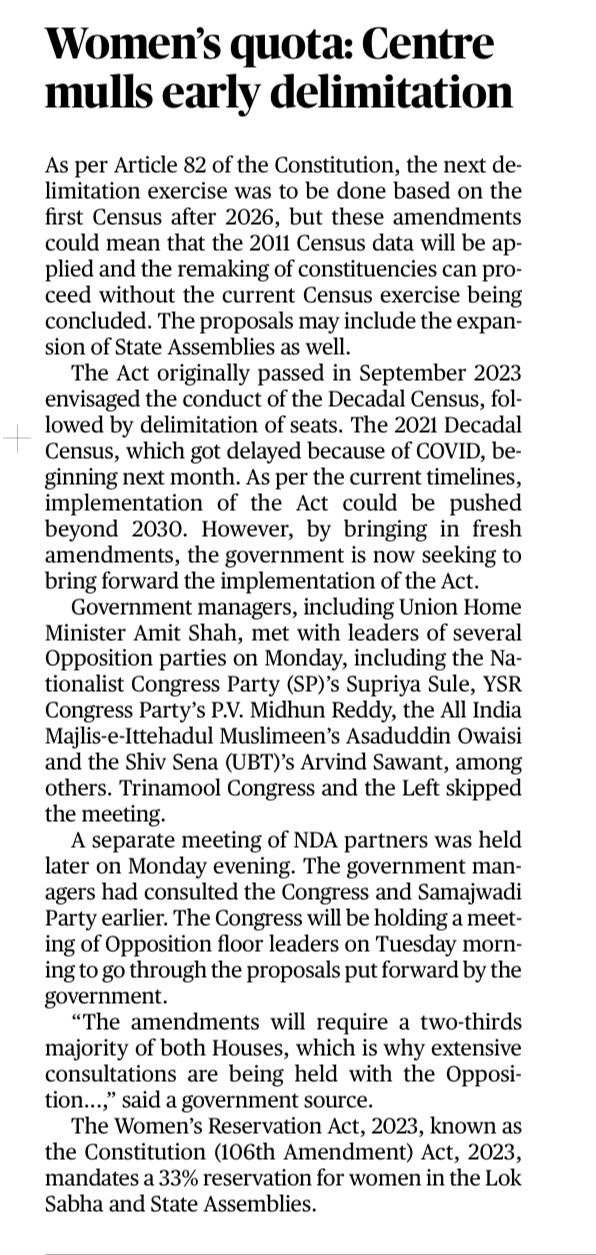
The Union government is considering early delimitation based on 2011 Census to implement the Women’s Reservation Act, 2023 before the 2029 Lok Sabha elections instead of waiting for the post-2026 Census cycle.
1) Constitutional Design
- Article 82 → Parliament enacts a Delimitation Act after every Census
- Article 170 → Readjustment of seats in State Assemblies
- Article 327 → Parliament’s power to regulate elections including delimitation
2) Delimitation Commission
• Composition: Retired Supreme Court Judge (Chairperson) | Chief Election Commissioner or nominee | State Election Commissioners
• Nature: Independent | Quasi-judicial | Not subject to executive control
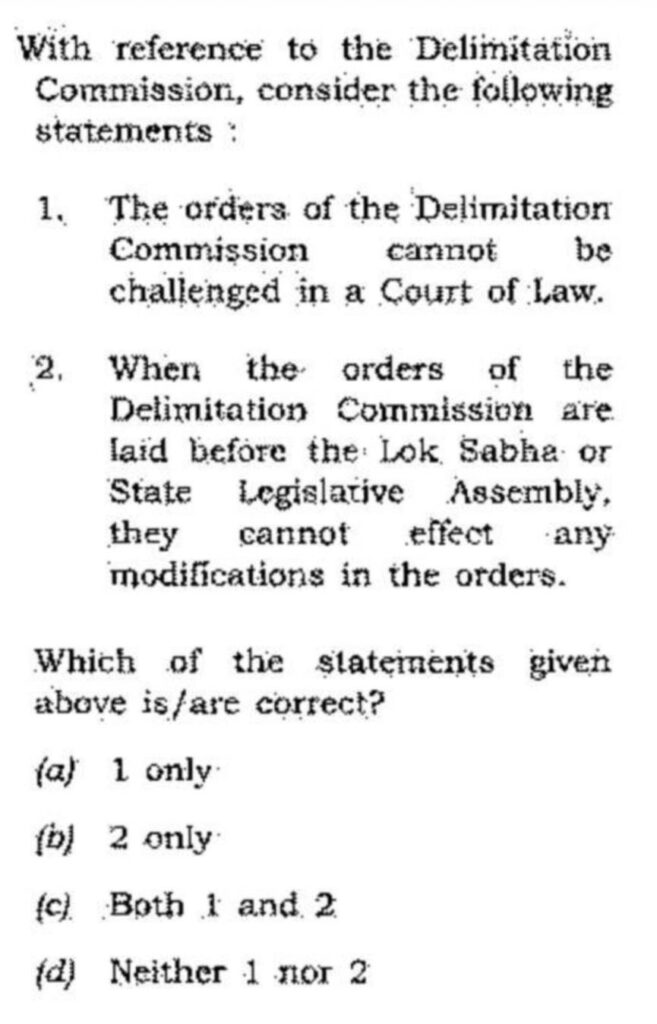
• Powers: Final orders | Force of law | Not challengeable in any court
• Functions: Redraw constituencies | Allocate seats | Identify reserved seats for SCs/STs | Ensure population parity
• Process: Draft proposal → Public sittings → Objections considered → Final order notified
• Significance: Ensures electoral equality | Prevents gerrymandering | Maintains federal balance
3) How Delimitation Happens
- Parliament passes Delimitation Act
- Delimitation Commission is constituted
- Commission redraws constituencies and allocates seats using Census data
- Final orders have force of law and cannot be challenged in court
4) Delimitation History + Freeze on Seats
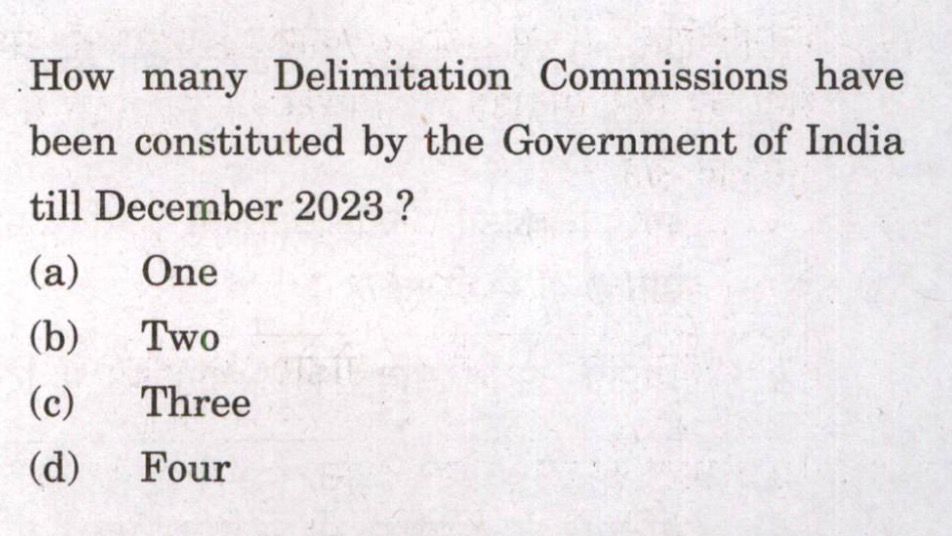
• Commissions:
1952 → 1951 Census | 1963 → 1961 Census | 1973 → 1971 Census | 2002 → 2001 Census with only boundary changes
• Constitutional Freeze:
42nd Amendment 1976 → Freeze till 2001
84th Amendment 2001 → Extended till 2026
87th Amendment 2003 → Boundary change allowed but no increase in seats
Result
• Lok Sabha seats fixed at 543 despite population growth
• Triggered North–South representation debate
5) Present Legal Position
• Next delimitation to occur after first Census post-2026
• Women’s Reservation Act implementation originally linked to this future exercise
6) Current Government Plan
• Use 2011 Census instead of waiting
• Conduct early delimitation
• Target implementation by 2029 Lok Sabha elections
7) Two Core Changes
7.1 Increase in Seats
• Lok Sabha seats likely to increase from 543 to around 816
• Reflects population growth
• Likely retention of existing inter-state proportional share
7.2 Women’s Reservation
• Constitution 106th Amendment Act, 2023 provides 33 percent reservation
• Applies to Lok Sabha and State Assemblies
• Earlier delayed due to Census requirement
• Now expected by 2029 after early delimitation
• Around 273 seats likely reserved
8) Federal Concerns
- Southern States → fear reduced share due to population control success
- Northern States → likely gain due to higher population
- Policy response → increase total seats while maintaining proportional balance