Context: River pollution religious practices
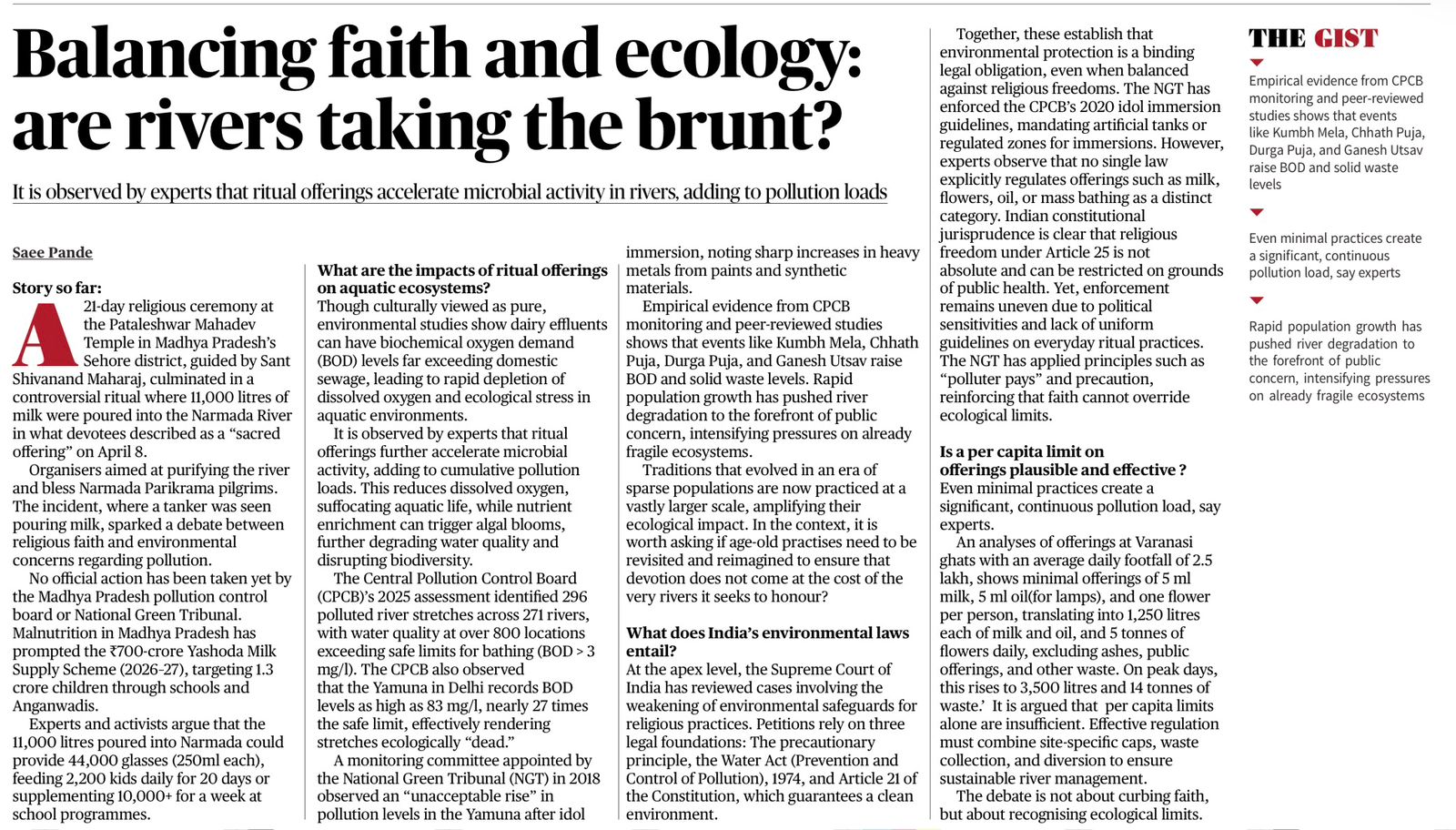
A recent incident in Sehore (Madhya Pradesh), where 11,000 litres of milk were poured into the Narmada River during a religious ritual, has reignited the debate on environmental impact of faith-based practices on rivers.
Key Points
Environmental Impact
• Offerings like milk, oil, flowers increase Biochemical Oxygen Demand (BOD) → reduce oxygen in water.
• Leads to aquatic stress, algal blooms, biodiversity loss.
Data Evidence
CPCB (Central Pollution Control Board):
• 296 polluted river stretches (17 rivers)
• Safe limit: BOD < 3 mg/L
• Yamuna: up to 83 mg/L (≈27× limit)
• Festivals (Kumbh, Durga Puja, Ganesh Utsav) → spike in pollution.
Legal Position
• Article 21 → Right to clean environment
• Article 25 → Religious freedom (not absolute)
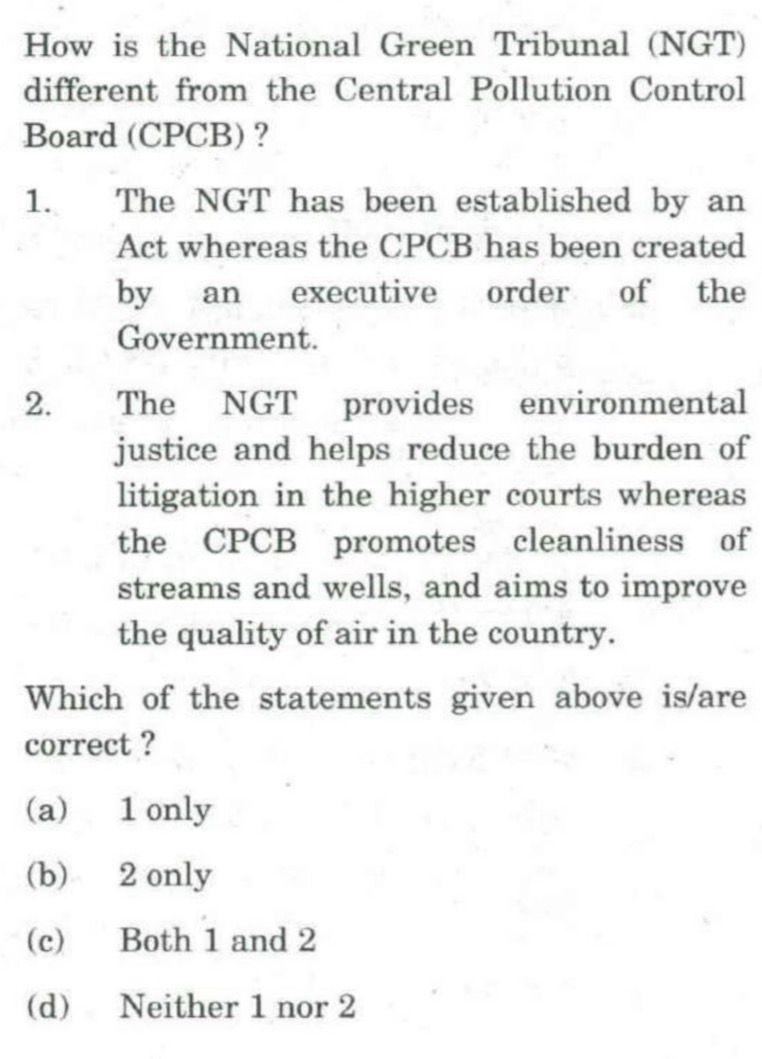
• Water Act, 1974 + NGT enforce norms
• Gap: No specific law regulating ritual offerings
Core Issue
• Faith vs Ecology conflict
• Small individual acts → large cumulative pollution
• Rapid population growth → greater ecological pressure
Way Forward
• Regulated immersion zones / artificial tanks
• Waste management + eco-friendly rituals
• Stronger enforcement (not just advisories)