Context: Sabarimala Article 17 issue
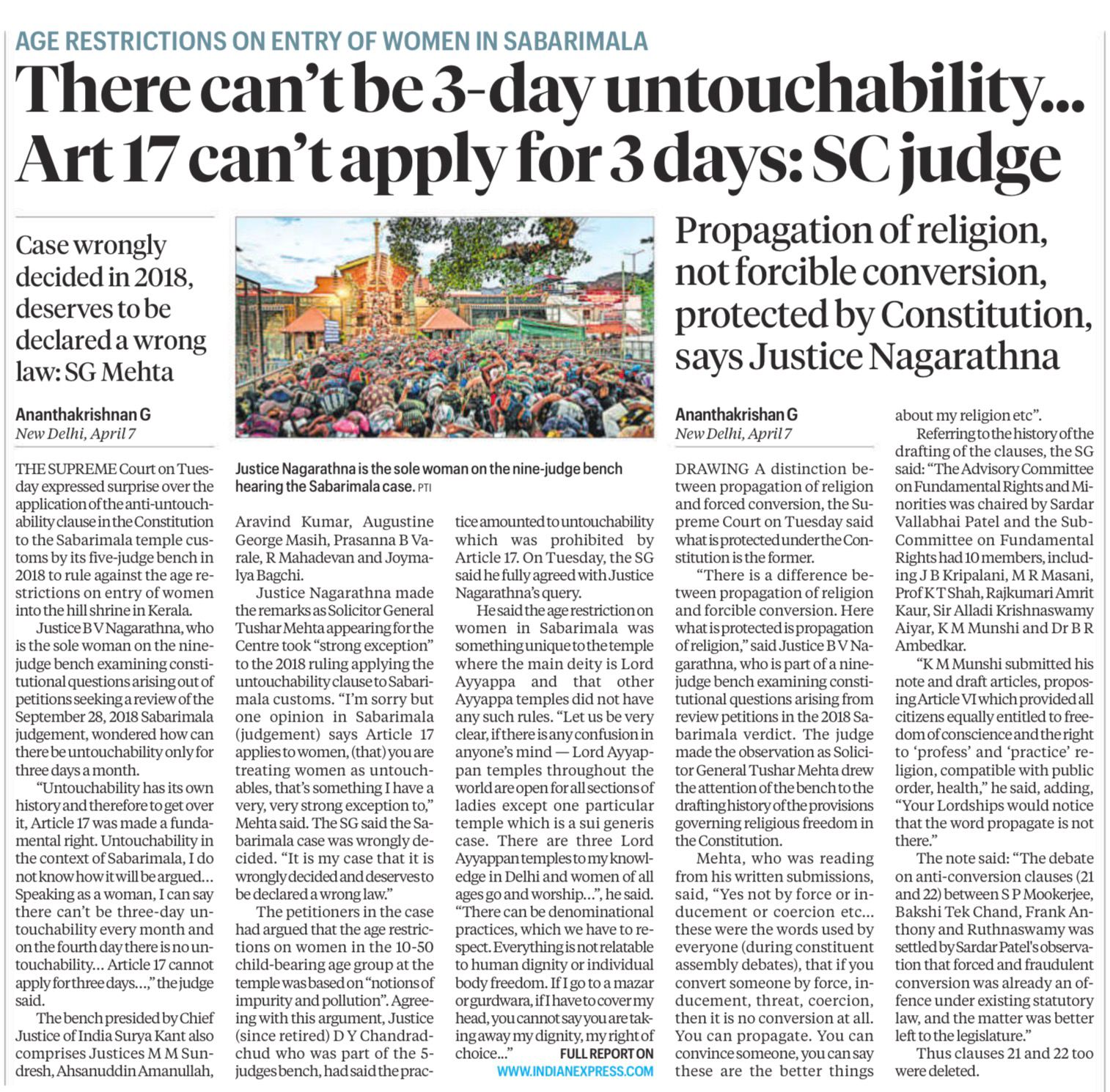
Supreme Court (9-judge bench) while hearing Sabarimala review issues questioned whether menstruation-based exclusion can be treated as “untouchability” under Article 17, with remarks that untouchability cannot exist for “only a few days”.
Evolution of Sabarimala judgments
2018 (5-judge bench)
• Entry ban on women (10–50 yrs) struck down (4:1)
• Grounds: Equality (Art 14), non-discrimination (Art 15), dignity, freedom of religion (Art 25)
Held:
• Not an essential religious practice
• Ayyappa devotees not a separate denomination
• One reasoning linked exclusion to Article 17 (untouchability-like exclusion)
2019 Review stage
• Judgment not stayed
• Issues referred to larger 9-judge bench
Focus shifted to broader questions:
• Scope of religious freedom
• Essential practices doctrine
• Validity of exclusion in other religions also
Present (9-judge bench stage)
• Re-examining constitutional reasoning of 2018
• Key doubt: Is Article 17 applicable to such exclusion?
Article 17 and its connection
Article 17
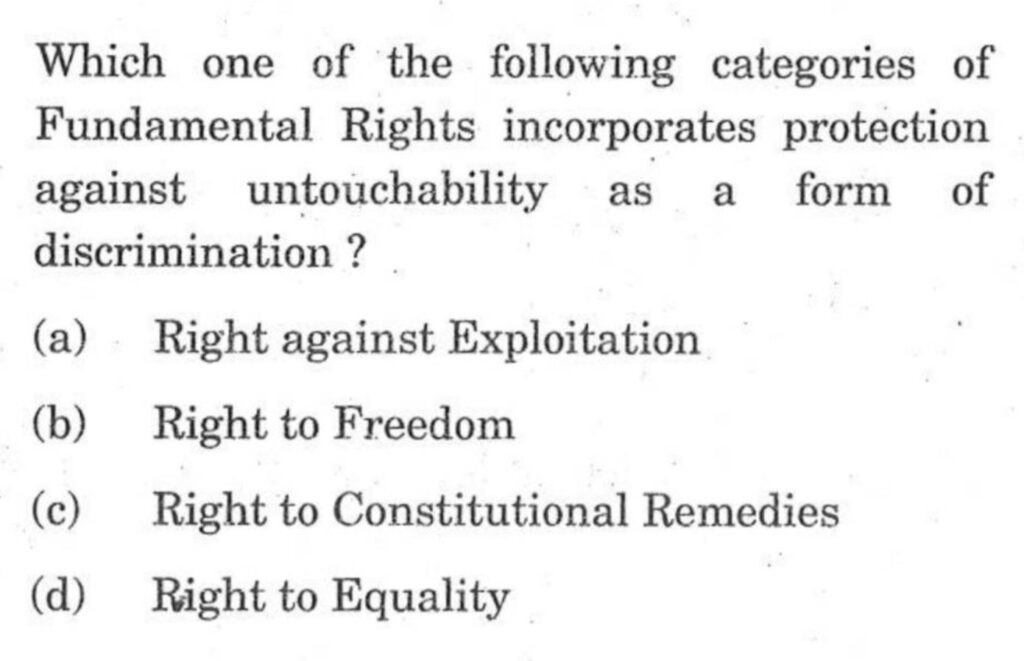
• Abolishes untouchability and forbids its practice
• Traditionally linked to caste-based exclusion
2018 linkage
• Exclusion based on “impurity” (menstruation) seen as similar to social exclusion
→ Hence, brought under Article 17 logic