1. Context
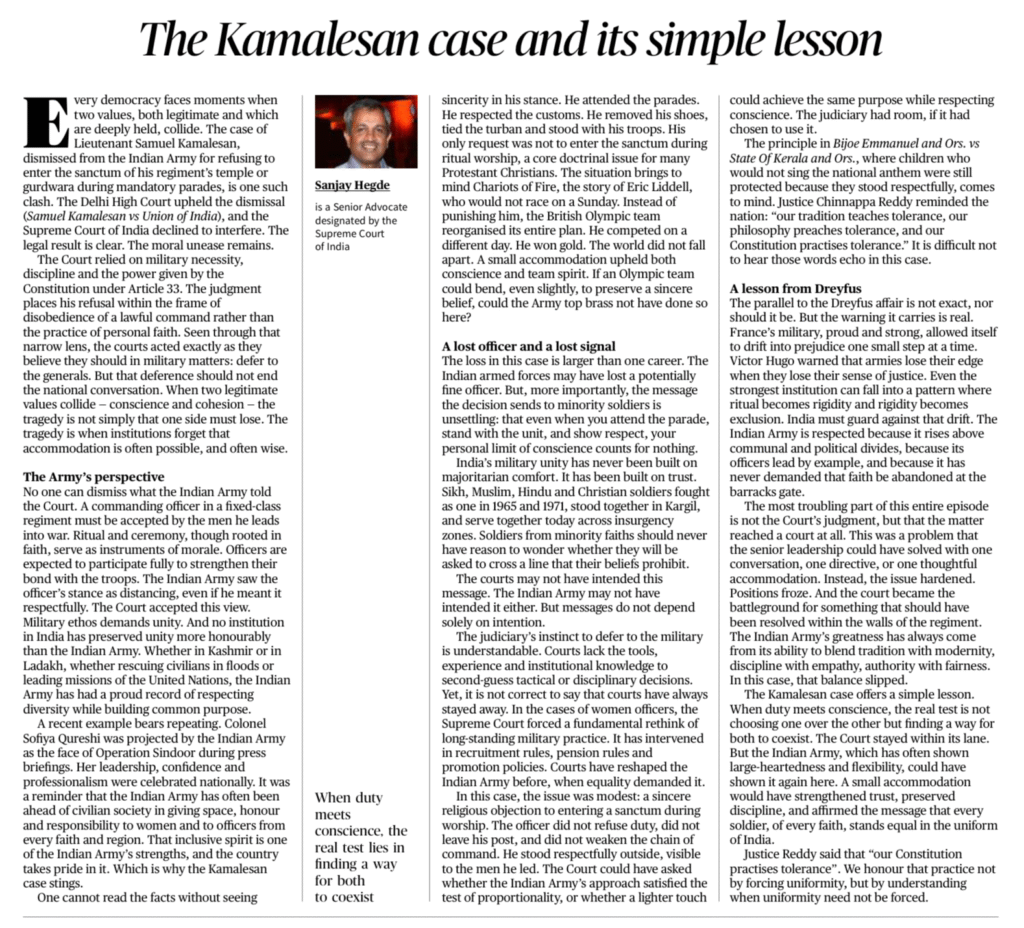
• Army soldier Samuel Kamalesan dismissed for refusing to remove shoes and enter a regimental temple during a mandatory parade.
• Delhi HC upheld dismissal; SC refused to interfere.
• Issue: Military discipline vs. individual conscience.
2. Central Argument
• Discipline is essential in the Army, but the institution should also show reasonable accommodation for sincere matters of conscience.
• The case sends an unfortunate signal that the Army may not value religious diversity and personal beliefs.
3. Key Points
• Soldier attended parade, obeyed commands, but objected only to temple entry due to conscience.
• Military is historically pluralistic (Sikh, Muslim, Hindu, Christian soldiers fight together).
• A small adjustment (allowing him not to enter temple sanctum) would not break discipline but preserve dignity.
4. Supreme Court Value Add (cases)
• Bijoe Emmanuel (1986): Conscientious objection must be respected if not harming others.
• Chinnappa Reddy J.: “Tolerance is our constitutional tradition.”
• Lesson: Institutions must balance discipline + tolerance.
5. Why It Matters
Rigid interpretation may erode:
• Unit cohesion in diverse forces
• Trust between soldiers and command
• The real test is finding a way for duty and conscience to coexist.
Case Study
Ravi Kumar, a soldier in a multi-faith Army regiment, was directed to participate in a regimental ceremony that involved entering a temple as part of unit tradition. Ravi followed all parade instructions but respectfully declined to enter the temple sanctum due to his personal religious beliefs. He was dismissed from service for disobedience.
The High Court upheld his dismissal, and the Supreme Court declined to intervene.
Answer the following:
(a) Identify the ethical issues involved in this case. (150 words)
(b) Evaluate whether the punishment given to Ravi was proportionate.
(c) Suggest ethically sound alternatives that balance military discipline with respect for individual conscience.