11 March 2026 | Daily Current Affairs

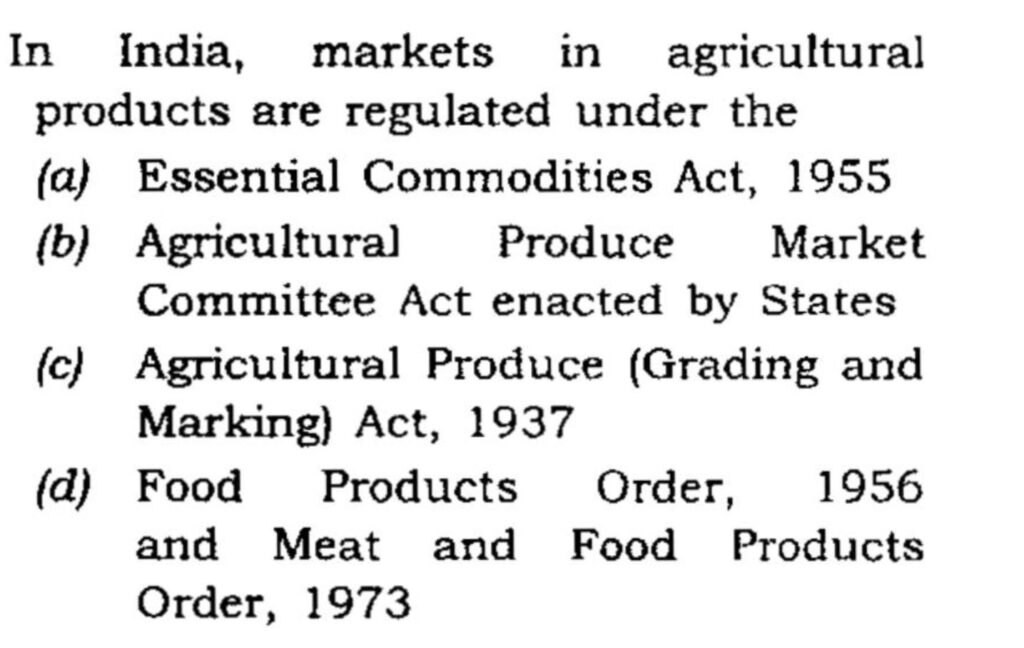
Essential Commodities Act Invoked for Natural Gas Allocation in India

Context
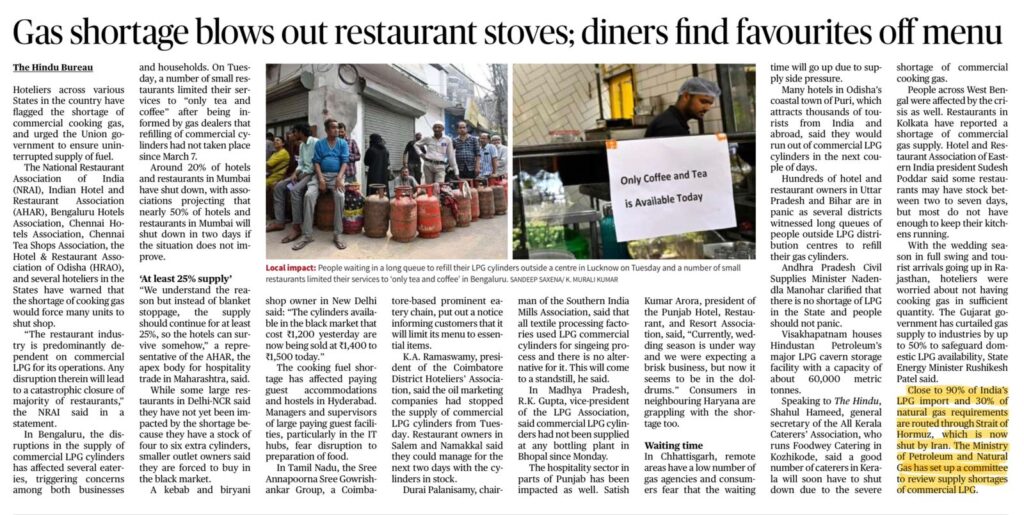
Due to shortages of commercial natural gas, the Government of India invoked provisions of the Essential Commodities Act, 1955 to ensure supply to priority sectors.

Essential Commodities Act

Objective

  • The Act aims to ensure availability of essential commodities at fair prices.
  • It also seeks to prevent hoarding, black marketing and artificial shortages, especially during supply disruptions.

Section 3 of the Act

  • Section 3 empowers the Central Government to regulate:
    • Production of essential goods
    • Supply and distribution
    • Movement of commodities
    • Pricing mechanisms
  • It also allows the government to divert supplies and prioritize allocation during emergencies or shortages.

Application in Current Situation

  • The government used these powers to redirect domestic natural gas supply to priority sectors such as:
    • PNG (Piped Natural Gas)
    • CNG (Compressed Natural Gas)
    • LPG production
    • Fertiliser and manufacturing industries

Vulnerabilities and Impact

  • Shortage of commercial LPG particularly affected restaurants and hospitality businesses.
  • Some services experienced temporary disruptions due to limited fuel availability.

PYQ – 2015, Ans – B

India–Bangladesh Friendship Pipeline: India Supplies Diesel to Bangladesh

Context
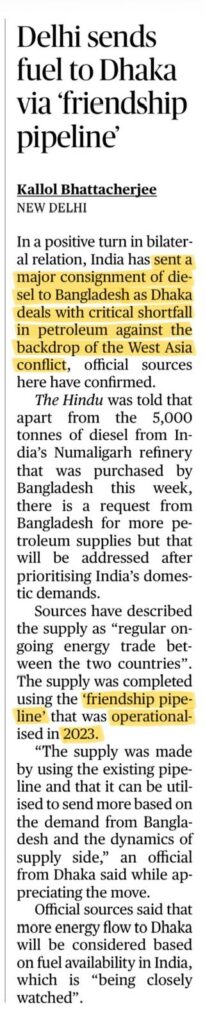
India began supplying diesel to Bangladesh through the India–Bangladesh Friendship Pipeline, strengthening regional energy cooperation.

India–Bangladesh Friendship Pipeline

  • The pipeline connects Numaligarh Refinery in Assam to Parbatipur in Bangladesh.
  • It is designed to transport high-speed diesel from India to Bangladesh.
  • The project enhances cross-border energy trade and infrastructure cooperation.

Strategic Significance

  • Strengthens India–Bangladesh bilateral relations.
  • Improves energy security for Bangladesh.
  • Demonstrates India’s role in regional connectivity and energy integration.

Chinese Investments in India Allowed Case-by-Case After Cabinet Rule Changes

Context
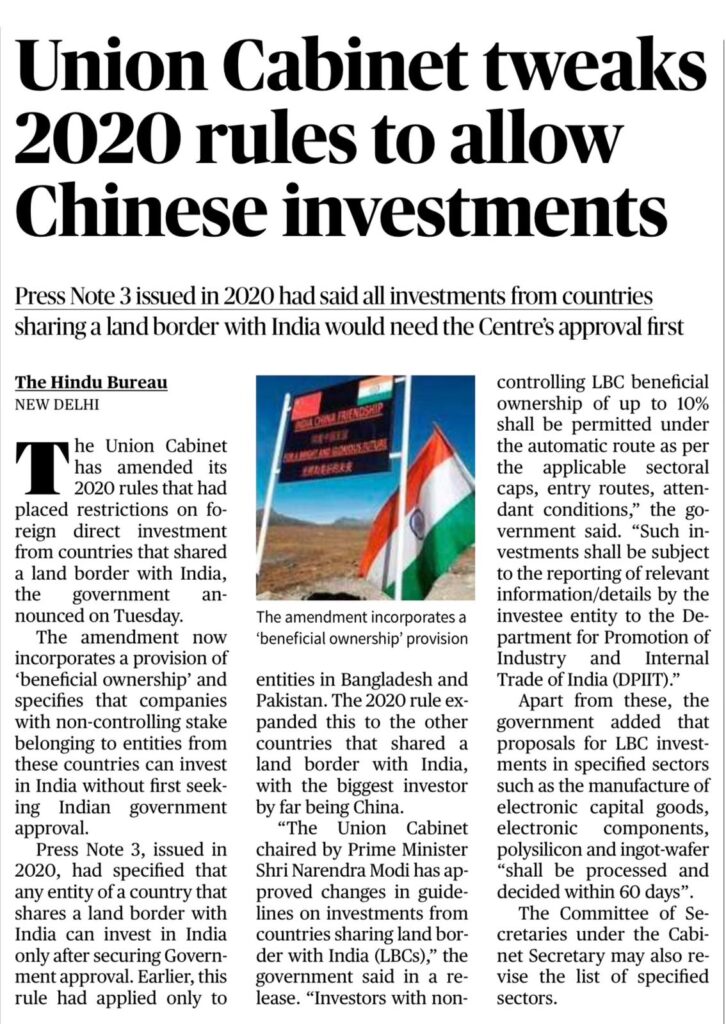
The Union Cabinet introduced changes to allow controlled Chinese investments in certain sectors, particularly where technology or capital is required.

Background

  • After the India–China border tensions in 2020, India introduced strict rules under the FDI policy.
  • Investments from countries sharing land borders with India require government approval.

Current Development

  • The new adjustments allow case-by-case approvals for Chinese investments.
  • The focus is on balancing national security concerns with economic and technological needs.

Significance

  • Helps attract capital and technology in critical sectors.

Maintains strategic oversight while enabling investment flows.

Jal Jeevan Mission Extended to Expand Rural Tap Water Coverage

Context
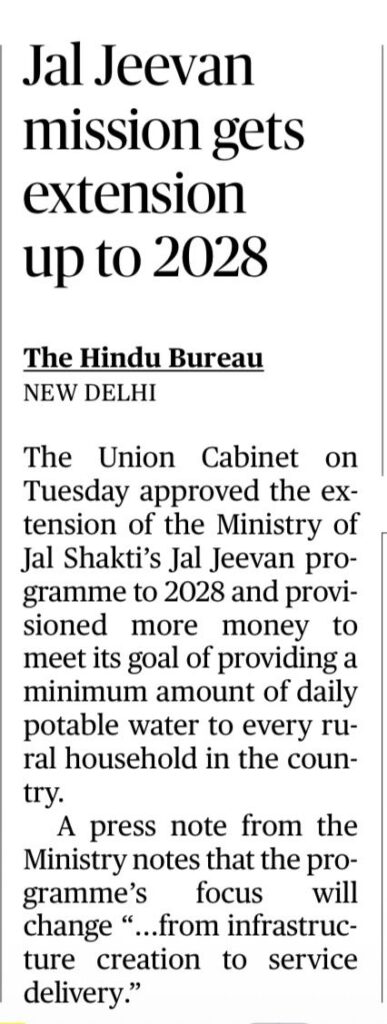
The government has extended the timeline of the Jal Jeevan Mission to accelerate rural drinking water coverage.

Jal Jeevan Mission

  • Launched in 2019, the mission aims to provide Functional Household Tap Connections (FHTCs) to every rural household.
  • It focuses on safe and adequate drinking water supply through individual household taps.

Key Features

  • Ensures 55 litres of water per person per day.
  • Emphasises community participation and local water management.
  • Encourages source sustainability and groundwater conservation.

Significance

  • Improves public health and sanitation outcomes.

Reduces the burden on women and children who traditionally collect water.

Asteroid 2024 YR4: NASA Confirms No Moon Impact Risk in 2032

Context
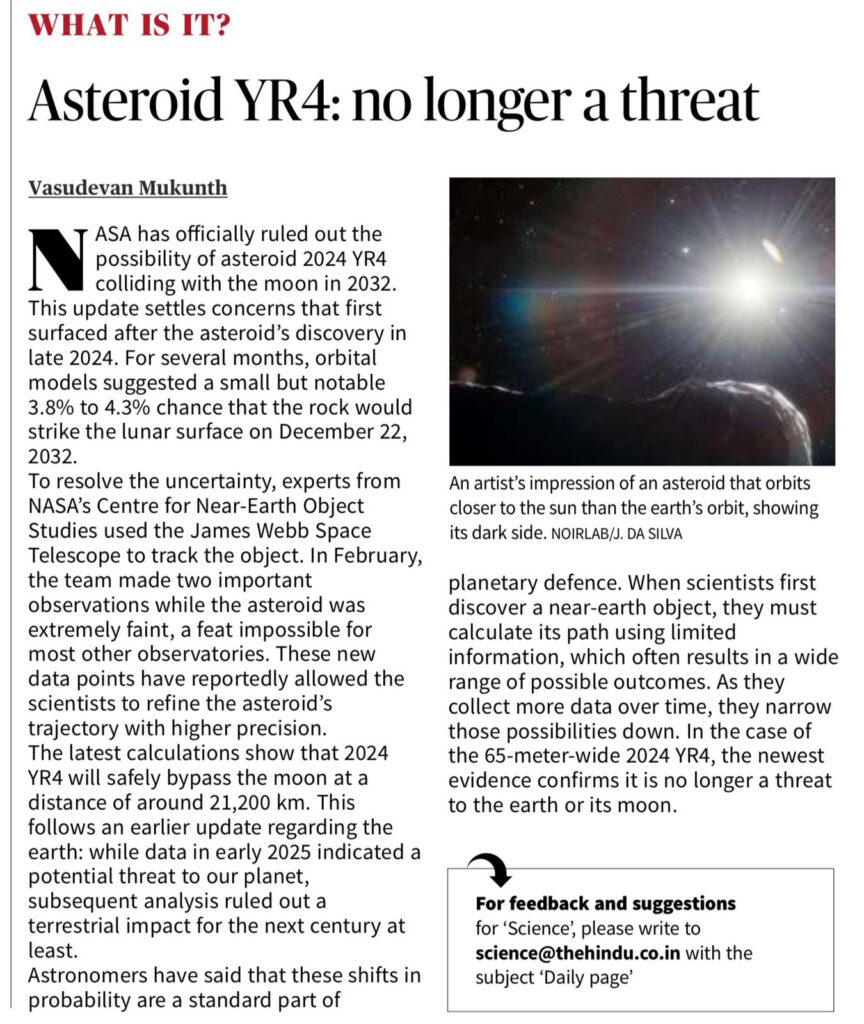
NASA confirmed that asteroid 2024 YR4 will not collide with the Moon in 2032, resolving earlier concerns raised by initial orbital calculations that suggested a small impact probability.

Asteroids vs Comets

Asteroids

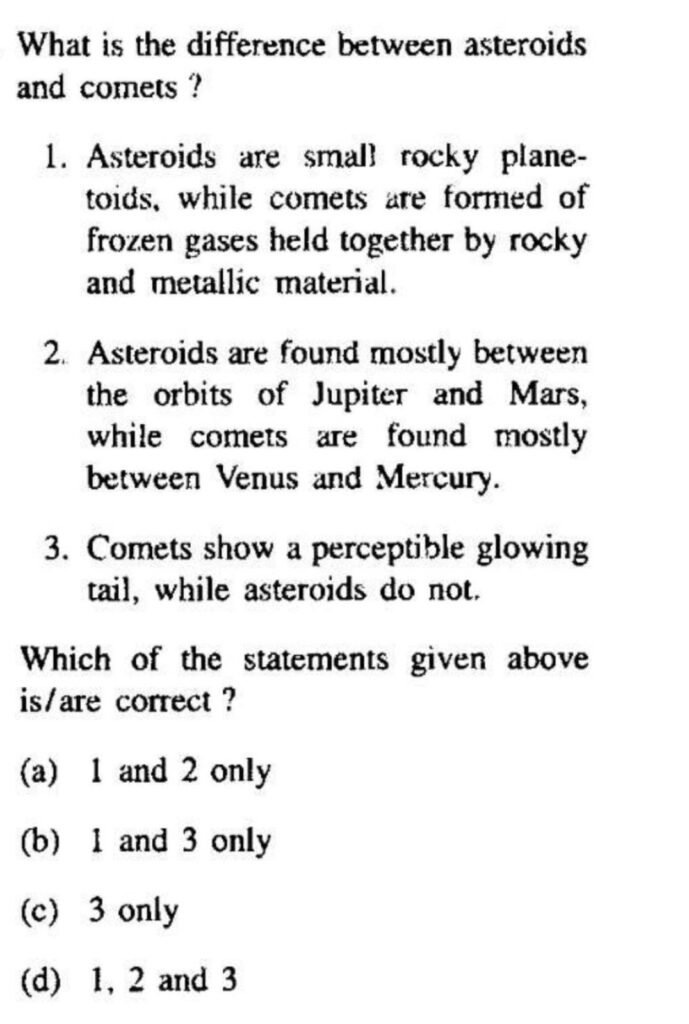
  • Asteroids are rocky or metallic celestial bodies that mostly exist in the asteroid belt between Mars and Jupiter.
  • They generally move in stable and less elongated orbits around the Sun.
  • Unlike comets, asteroids do not develop visible tails.

Comets

  • Comets are composed mainly of ice, dust and gases, which is why they are often called dirty snowballs.”
  • They originate from distant regions of the solar system such as the Kuiper Belt and the Oort Cloud.
  • When comets approach the Sun, heat causes sublimation of ice, creating a bright coma and long tail.

Current Development

  • Early orbital models suggested a 3.8–4.3% probability of a lunar impact on December 22, 2032.
  • NASA used the James Webb Space Telescope (JWST) to obtain more precise trajectory data.
  • Updated calculations now show the asteroid will pass safely about 21,200 km away from the Moon.
  • Scientists have also ruled out any risk of Earth impact for at least the next century.
PYQ – 2011, Ans – B

Chandigarh Declared Fully Literate Union Territory in India

Context
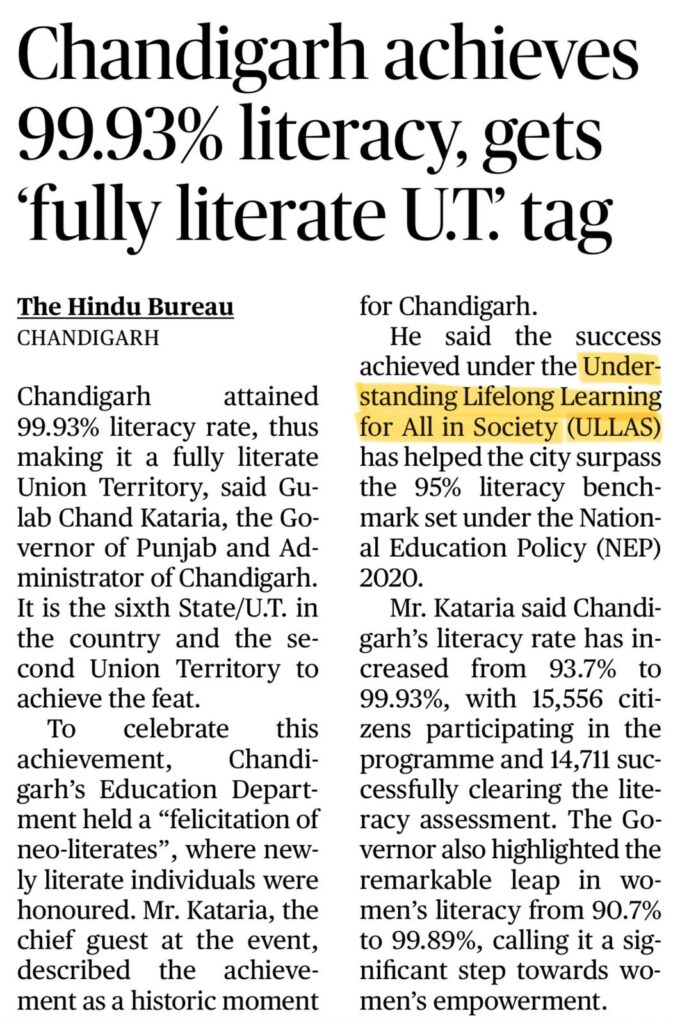
Chandigarh has been declared a fully literate Union Territory, marking a significant achievement in education.

Meaning of Fully Literate Status

  • A region is considered fully literate when nearly all adults possess basic reading and writing skills.
  • Literacy initiatives focus on adult education and foundational learning.

Significance

  • Improves human capital and employment prospects.
  • Strengthens social development indicators.
  • Reflects the success of education and literacy programmes implemented by the government.
About the UPSC Civil Services Examination (UPSC CSE)

The UPSC Civil Services Examination (CSE) is one of the most competitive and esteemed examinations in India, conducted by the Union Public Service Commission to recruit officers for services such as the Indian Administrative Service (IAS), Indian Police Service (IPS), Indian Foreign Service (IFS), and others. The exam comprises three stages — Prelims, Mains, and the Personality Test (Interview) — designed to test a candidate’s knowledge, aptitude, decision-making, and leadership skills.


How to Prepare Effectively for UPSC CSE

Cracking the UPSC CSE requires a deep understanding of the syllabus, consistent revision, structured answer writing, and smart test-taking strategies. The Prelims test analytical and conceptual clarity, the Mains focuses on critical thinking, articulation, and subject mastery, while the Interview assesses presence of mind, ethical judgment, and personality traits relevant to public service.

At UnderStand UPSC, we empower aspirants with a personalized and focused approach to each stage of the exam.


Why Choose UnderStand UPSC?

UnderStand UPSC is a mentorship-driven platform offering a clear, clutter-free strategy to tackle the Civil Services Examination. Our programs like Transform (for beginners and intermediate learners) and Conquer (for advanced mains preparation) provide structured study plans, syllabus-wise video content, interactive live sessions, and answer writing support.

We emphasize:

  • Concept clarity through topic-wise lectures

  • Test series designed around real UPSC standards

  • Personalized mentorship in small groups

  • Regular performance tracking and peer benchmarking

  • Doubt-clearing sessions, current affairs analysis, and monthly magazines


Join the UnderStand UPSC Learning Community

Our mission is to make UPSC preparation less overwhelming and more strategic. We combine mentorship, discipline, and academic rigor to help you clear CSE with confidence. Whether you’re preparing from Delhi, Mumbai, Bangalore, or a remote village — our online-first model ensures quality guidance reaches every corner of India.

Join the thousands of aspirants who trust UnderStand UPSC to guide their journey toward becoming civil servants.

Stay connected with us through our Telegram, YouTube, and Instagram channels for daily tips, strategies, and updates.

Copyright © 2026 USARAMBHA EDUCATION (UnderStand UPSC). All Rights Reserved.

Join the Success Journey!