28 Nov, 2025

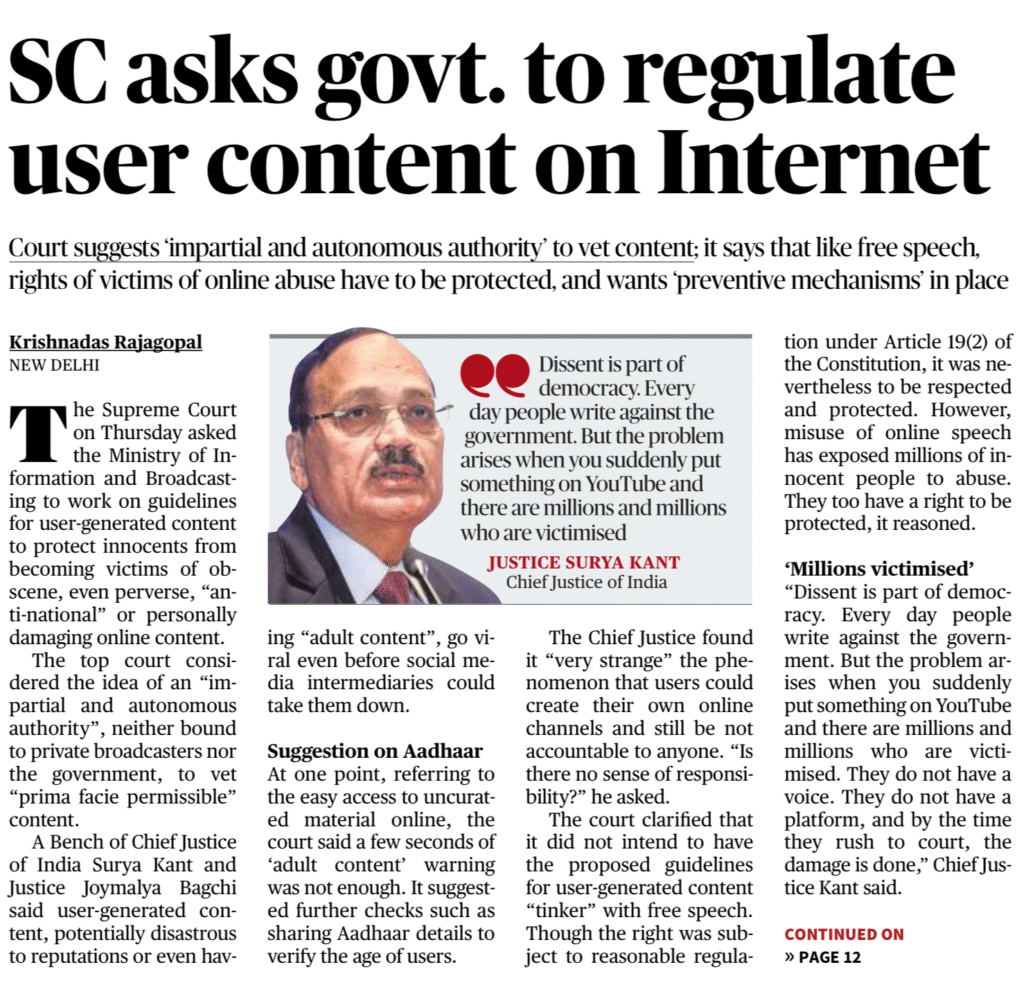
SC asks govt. to regulate user content on Internet

Context
The Supreme Court has raised concern over the unchecked spread of harmful, obscene, anti-national, and personally damaging user-generated content online. It noted that millions of innocent people become victims of online abuse, yet there is no clear regulatory mechanism to vet such content. Hence, the Court asked the Ministry of Information & Broadcasting to frame guidelines for user-generated content.

Important Articles

1. Article 19(1)(a)
Right to Freedom of Speech and Expression
• Protects citizens’ right to express opinions, including online speech.

2. Article 19(2)
Reasonable Restrictions on Free Speech
• Allows the State to impose reasonable restrictions in the interests of:
• Sovereignty & integrity of India
• Security of the State
• Public order
• Decency or morality
• Contempt of court
• Defamation
• Incitement to an offence
• This is the core constitutional basis for regulating harmful user-generated content.
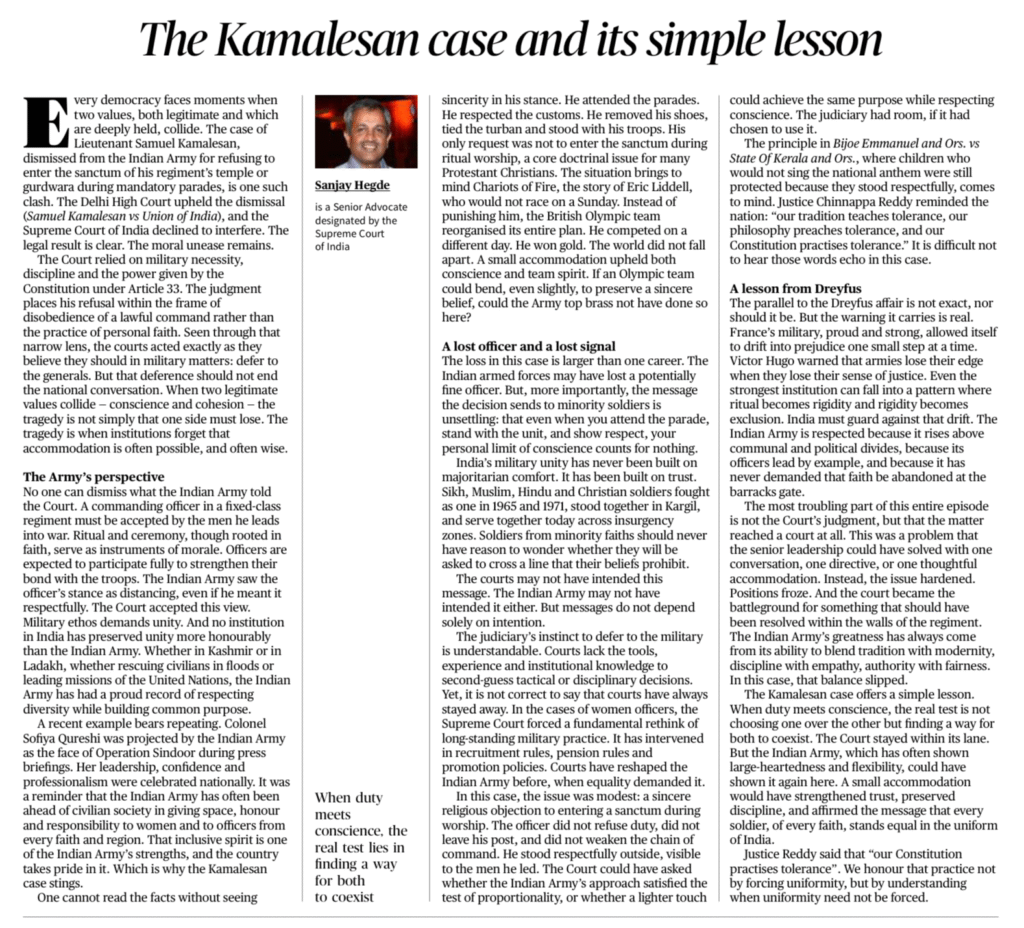
The Kamalesan case and its simple lesson

1. Context
• Army soldier Samuel Kamalesan dismissed for refusing to remove shoes and enter a regimental temple during a mandatory parade.
• Delhi HC upheld dismissal; SC refused to interfere.
• Issue: Military discipline vs. individual conscience.

2. Central Argument
• Discipline is essential in the Army, but the institution should also show reasonable accommodation for sincere matters of conscience.
• The case sends an unfortunate signal that the Army may not value religious diversity and personal beliefs.

3. Key Points
• Soldier attended parade, obeyed commands, but objected only to temple entry due to conscience.
• Military is historically pluralistic (Sikh, Muslim, Hindu, Christian soldiers fight together).
• A small adjustment (allowing him not to enter temple sanctum) would not break discipline but preserve dignity.

4. Supreme Court Value Add (cases)
Bijoe Emmanuel (1986): Conscientious objection must be respected if not harming others.
• Chinnappa Reddy J.: “Tolerance is our constitutional tradition.”
• Lesson: Institutions must balance discipline + tolerance.

5. Why It Matters
Rigid interpretation may erode:
• Unit cohesion in diverse forces
• Trust between soldiers and command
• The real test is finding a way for duty and conscience to coexist.

Case Study
Ravi Kumar, a soldier in a multi-faith Army regiment, was directed to participate in a regimental ceremony that involved entering a temple as part of unit tradition. Ravi followed all parade instructions but respectfully declined to enter the temple sanctum due to his personal religious beliefs. He was dismissed from service for disobedience.
The High Court upheld his dismissal, and the Supreme Court declined to intervene.

Answer the following:
(a) Identify the ethical issues involved in this case. (150 words)
(b) Evaluate whether the punishment given to Ravi was proportionate.
(c) Suggest ethically sound alternatives that balance military discipline with respect for individual conscience.

India and Indonesia make progress on BrahMos deal at Defence Ministers’ Dialogue

BrahMos?
• Supersonic cruise missile jointly developed by India (DRDO) and Russia (NPOM).
• Name = Brahmaputra + Moskva rivers.
• Speed: ~Mach 2.8–3.0 (3 times the speed of sound).
• Range: Initially 290 km → now extended to 450–500 km (and being tested up to 800 km).
• Launch platforms: Land, Air, Sea, and Submarine-launched versions.

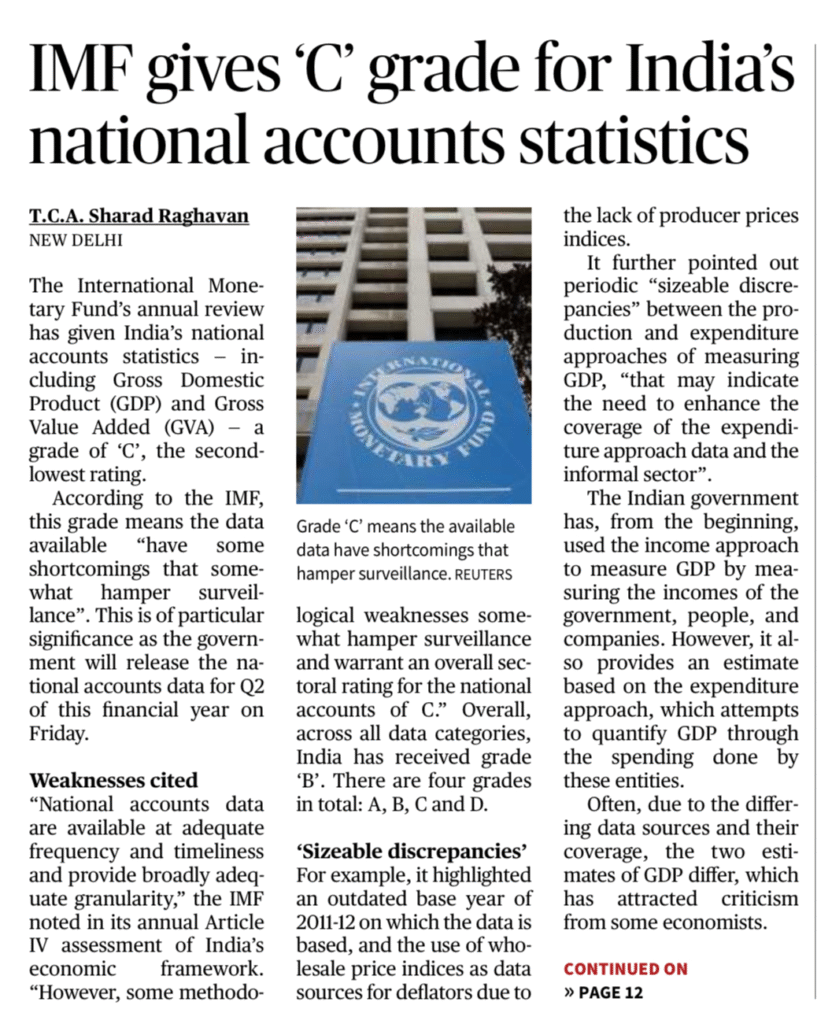
IMF gives ‘C’ grade for India’s national accounts statistics

Context
• The IMF’s annual Article IV review has rated India’s national accounts statistics (GDP & GVA data quality) at a ‘C’ grade, which is the second-lowest rating.
• This grade means India’s GDP data has methodological weaknesses and discrepancies that “hamper surveillance” i.e., they make it harder for IMF and policymakers to correctly assess India’s real economic health.
• The article comes at a time when India is preparing to release its Q2 national accounts data, making this assessment even more sensitive.

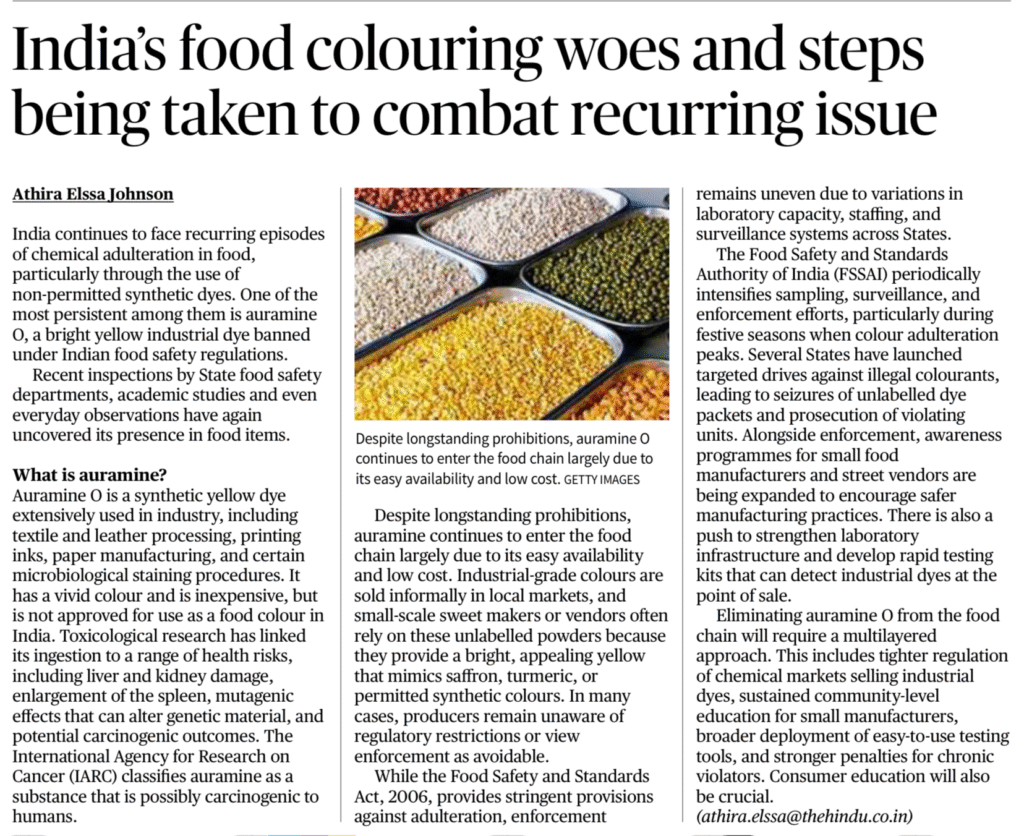
India’s food colouring woes and steps being taken to combat recurring issue

What is Auramine O?
• Auramine O is a synthetic yellow industrial dye, widely used in:
• textile & leather processing
• printing inks
• paper manufacturing
• microbiological staining
• It has a bright yellow colour and is cheap, which is why it is misused in food.

Why is it dangerous?
• Not approved for use in food in India.
Linked with:
• liver & kidney damage
• enlargement of spleen
• mutagenic effects (genetic damage)
• potential carcinogenic outcomes
• Classified by IARC as possibly carcinogenic to humans.

What is FSSAI?
• FSSAI = Food Safety and Standards Authority of India
• It is a statutory body created under the Food Safety and Standards Act, 2006.FSSAI: Under Which Ministry?
• FSSAI works under the Ministry of Health and Family Welfare (MoHFW), Government of India.

About the UPSC Civil Services Examination (UPSC CSE)

The UPSC Civil Services Examination (CSE) is one of the most competitive and esteemed examinations in India, conducted by the Union Public Service Commission to recruit officers for services such as the Indian Administrative Service (IAS), Indian Police Service (IPS), Indian Foreign Service (IFS), and others. The exam comprises three stages — Prelims, Mains, and the Personality Test (Interview) — designed to test a candidate’s knowledge, aptitude, decision-making, and leadership skills.


How to Prepare Effectively for UPSC CSE

Cracking the UPSC CSE requires a deep understanding of the syllabus, consistent revision, structured answer writing, and smart test-taking strategies. The Prelims test analytical and conceptual clarity, the Mains focuses on critical thinking, articulation, and subject mastery, while the Interview assesses presence of mind, ethical judgment, and personality traits relevant to public service.

At Understand UPSC, we empower aspirants with a personalized and focused approach to each stage of the exam.


Why Choose Understand UPSC?

Understand UPSC is a mentorship-driven platform offering a clear, clutter-free strategy to tackle the Civil Services Examination. Our programs like Transform (for beginners and intermediate learners) and Conquer (for advanced mains preparation) provide structured study plans, syllabus-wise video content, interactive live sessions, and answer writing support.

We emphasize:

  • Concept clarity through topic-wise lectures

  • Test series designed around real UPSC standards

  • Personalized mentorship in small groups

  • Regular performance tracking and peer benchmarking

  • Doubt-clearing sessions, current affairs analysis, and monthly magazines


Join the Understand UPSC Learning Community

Our mission is to make UPSC preparation less overwhelming and more strategic. We combine mentorship, discipline, and academic rigor to help you clear CSE with confidence. Whether you’re preparing from Delhi, Mumbai, Bangalore, or a remote village — our online-first model ensures quality guidance reaches every corner of India.

Join the thousands of aspirants who trust Understand UPSC to guide their journey toward becoming civil servants.

Stay connected with us through our Telegram, YouTube, and Instagram channels for daily tips, strategies, and updates.

Copyright © 2025 USARAMBHA EDUCATION (UnderStand UPSC). All Rights Reserved.

Join the Success Journey!