8 April 2026 | Daily Current Affairs

India maritime strategy Gulf: Shift Towards Maritime Focus Explained

Context: India maritime strategy Gulf

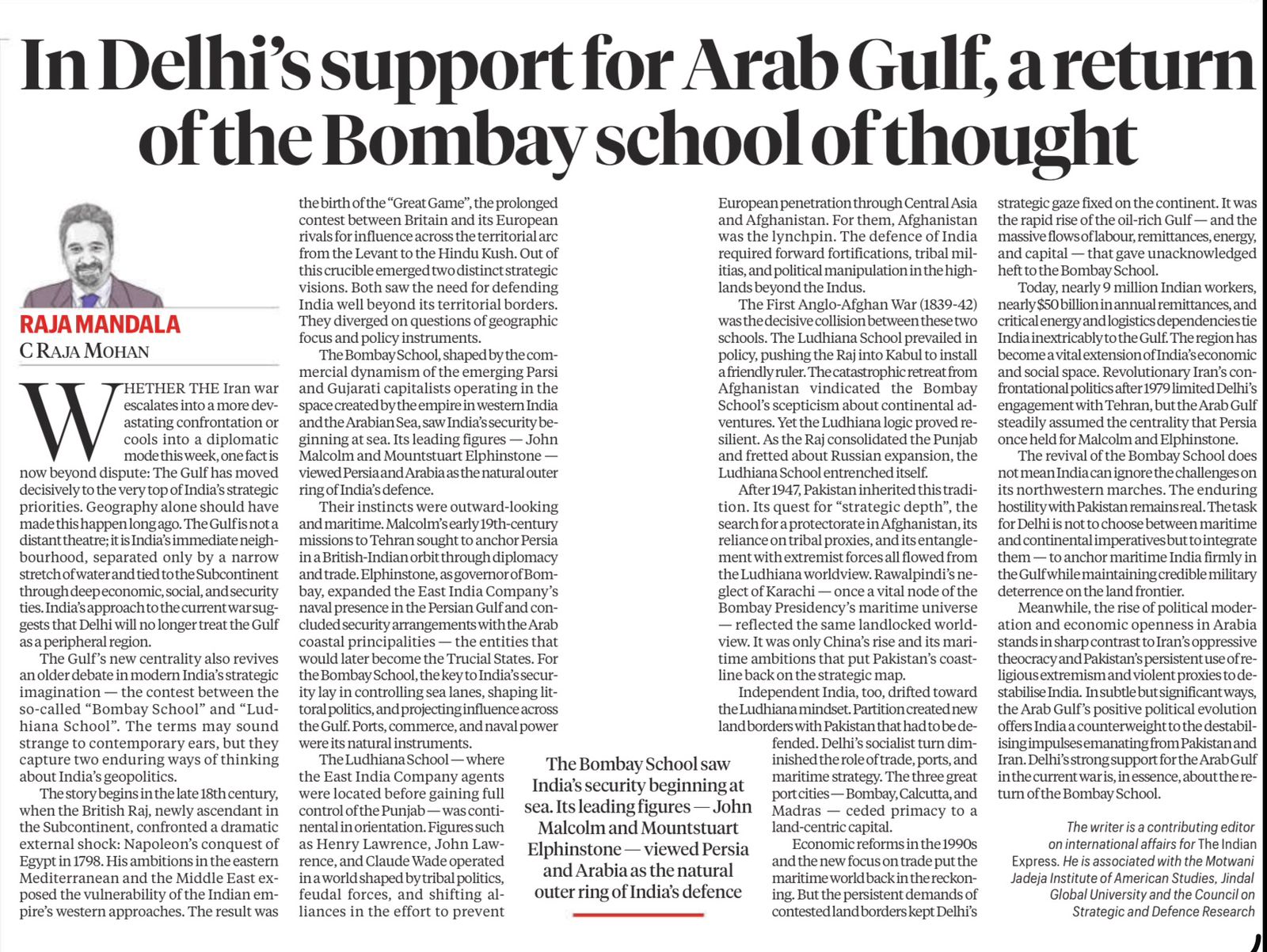
Amid West Asia tensions, India’s strong engagement with the Arab Gulf reflects a shift in strategic thinking, reviving the maritime-oriented Bombay School over the land-focused Ludhiana School.

Two strategic approaches

Bombay School
• Security begins at sea
• Focus on Arabian Sea–Persian Gulf, trade routes, naval power, ports
• Outward-looking, commerce-driven

Ludhiana School
• Security through land frontiers
• Focus on Afghanistan, Central Asia, buffer zones
• Driven by invasion threats from northwest

Historical shift
• Colonial period saw both approaches competing
• Post-independence India prioritised continental security due to Pakistan and China
• After 1990s reforms, maritime importance re-emerge

Why Gulf is central today
• Nearly 9 million Indians in Gulf
• Around $50 billion remittances annually
• Critical energy dependence
• Strong trade and logistics linkages

Key argument of the article
• Gulf is no longer peripheral, it is central to India’s strategic space
• India’s current policy reflects a clear tilt towards maritime priorities

Caution highlighted
• Continental threats have not disappeared
• Pakistan hostility and land borders still matter
• India must balance maritime expansion with land deterrence
India maritime strategy Gulf

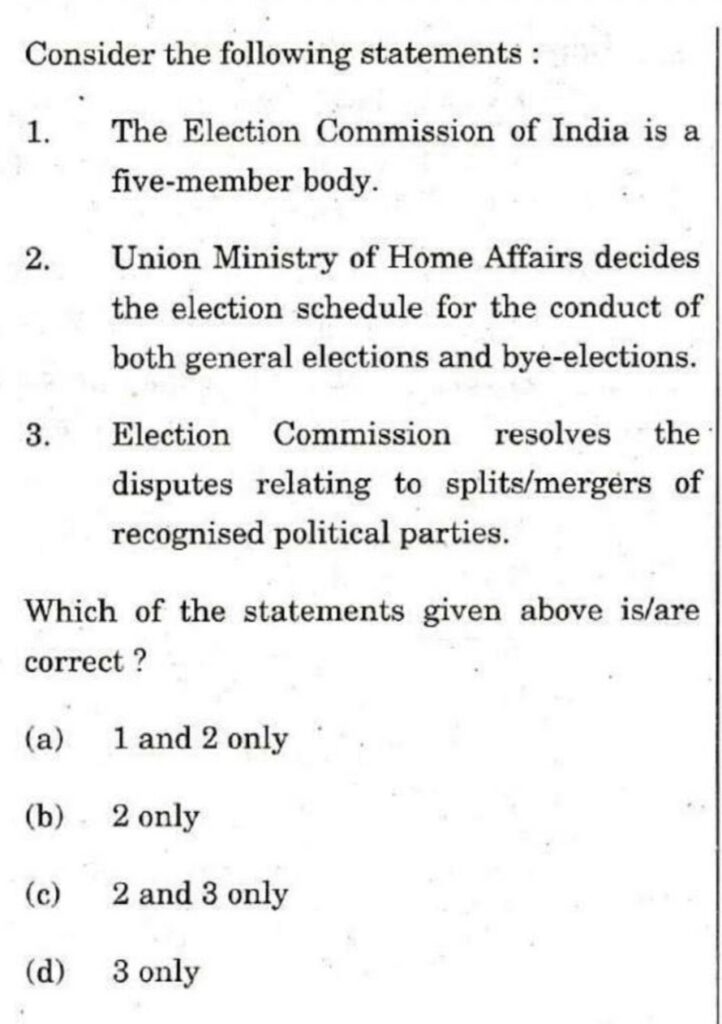
CEC removal procedure: Pleas Rejected Due to Lack of Evidence

Context: CEC removal procedure

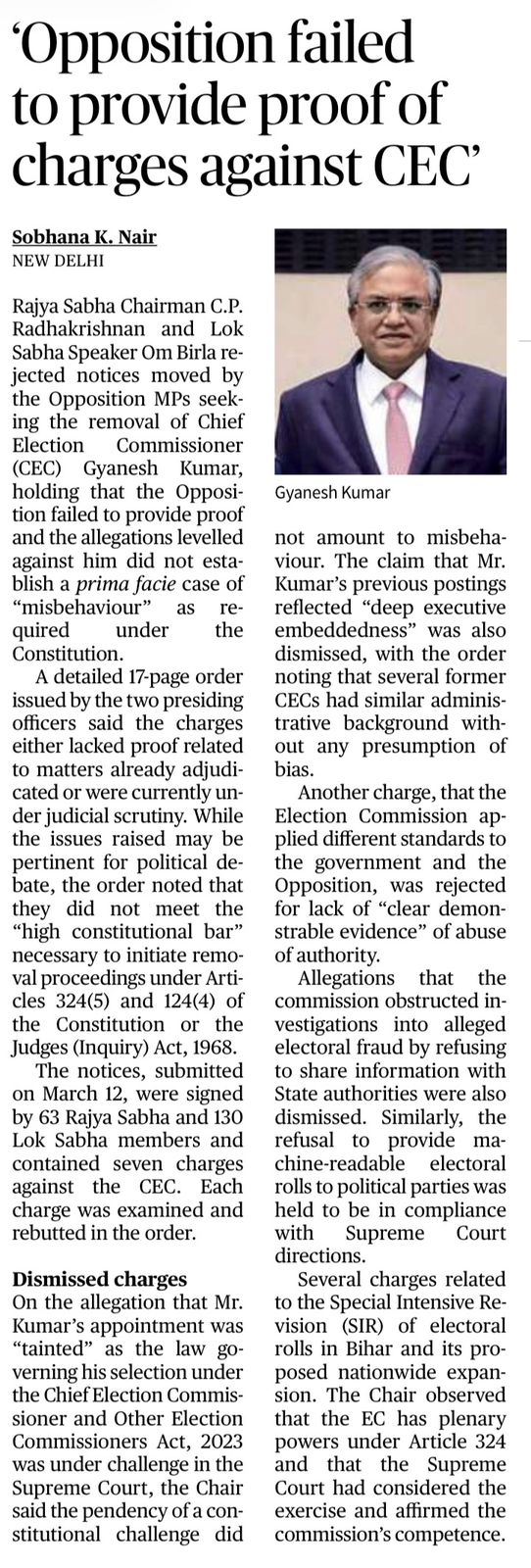
Opposition notices seeking removal of the Chief Election Commissioner (CEC) were rejected by the Rajya Sabha Chairman and Lok Sabha Speaker.

Constitutional provisions & law (Removal mechanism)

  1. Article 324(5)
    • CEC can be removed in the same manner as a Supreme Court judge.
  2. Article 124(4)
    • Removal requires:
    • Proved misbehaviour or incapacity
    • Special majority in Parliament
    (majority of total membership + 2/3rd of members present & voting)
  3. Judges (Inquiry) Act, 1968
    • Provides procedure:
    • Motion → Inquiry committee → Proof of charges → Parliamentary vote

Why the plea was rejected

  1. No prima facie misbehaviour
    • Notices failed to show even initial proof.
  2. High constitutional bar not met
    • Allegations did not satisfy strict standard under Art 324(5) + 124(4).
  3. Lack of evidence
    • Claims were not backed by concrete proof.
  4. Sub judice / already examined issues
    • Some matters were pending before courts or already adjudicated.
  5. Within EC’s constitutional powers
    • Actions fell under Article 324 and aligned with Supreme Court directions.
CEC removal procedure
PYQ – 2017, Ans – D

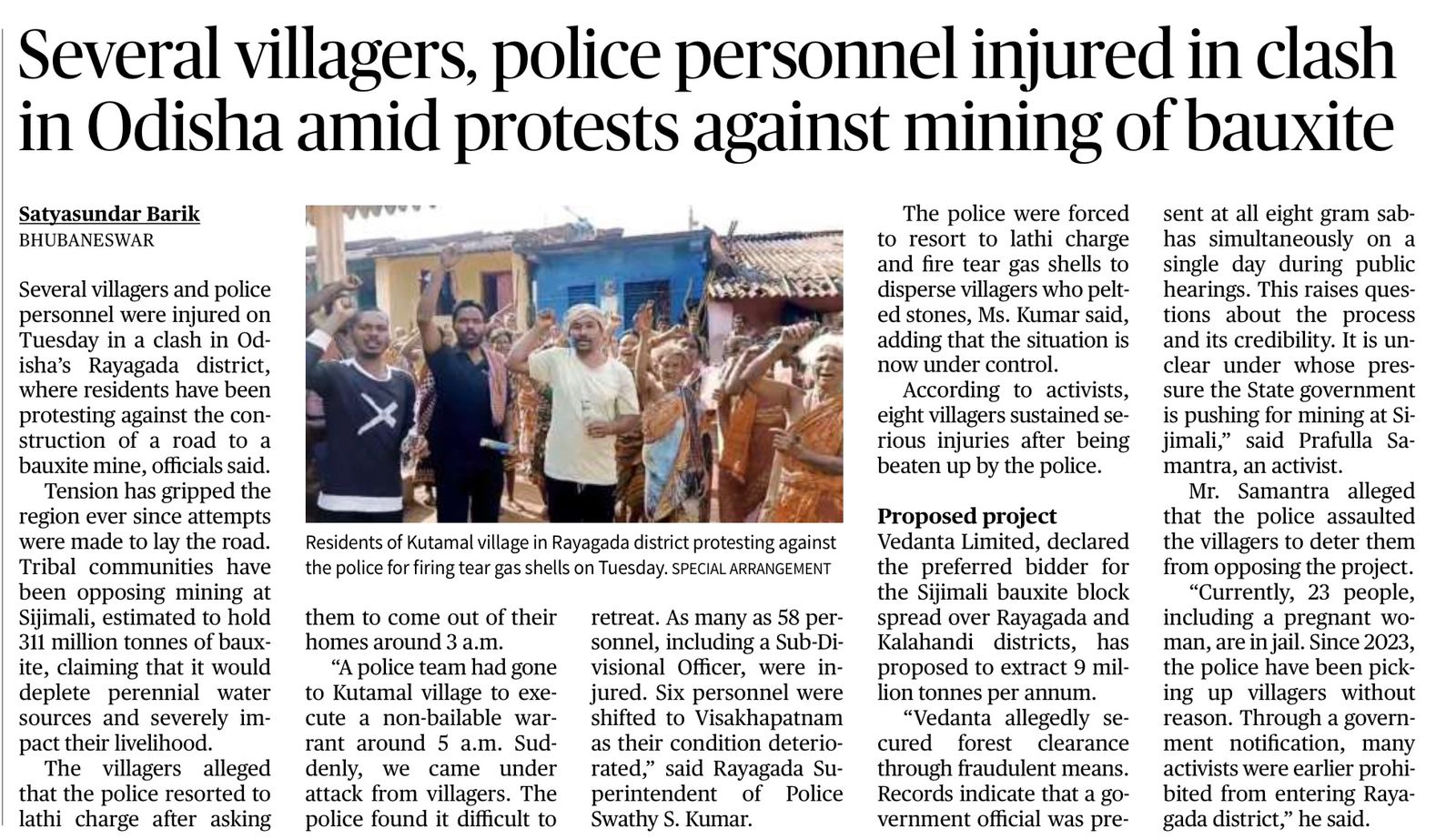
Odisha bauxite mining protests: Tribal Clashes Over Sijimali Project

Context: Odisha bauxite mining protests

Clashes in Odisha’s Rayagada district during protests by tribal communities against proposed bauxite mining (Sijimali) reflect conflict between mining development and tribal livelihood/environment concerns.

Odisha’s position (Bauxite)
• Largest producer in India (~45–50%) | Key districts: Koraput, Kalahandi, Rayagada | Deposits in Eastern Ghats

India’s position (Global)
• Among top 5–6 producers | ~5% global share | Backbone of aluminium industry

Top 3 bauxite producing states (India)
Odisha | Gujarat | Jharkhand

Top 3 bauxite producing countries (World)
Australia | Guinea | China

Important ores and elements
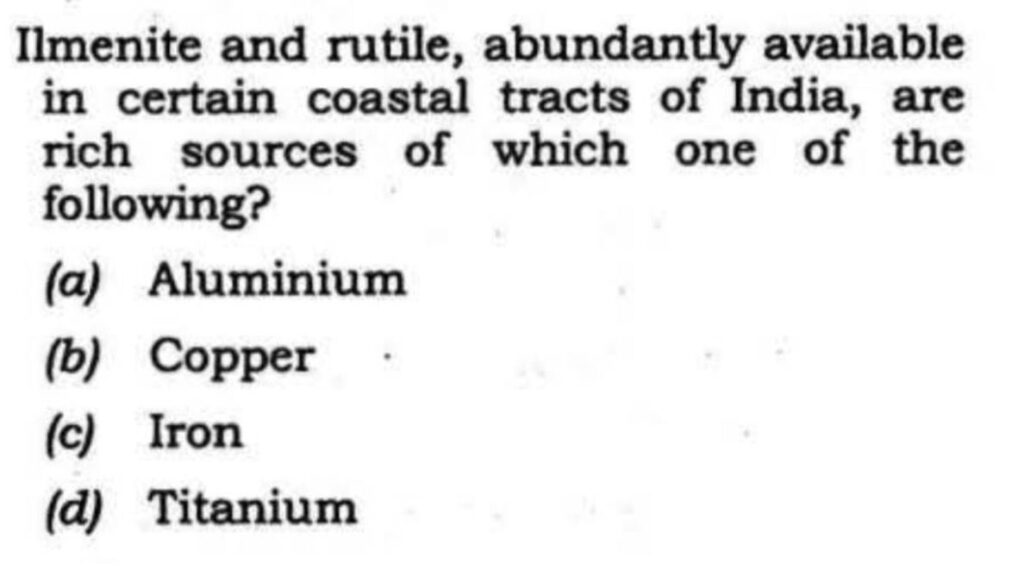
Bauxite → Aluminium | Hematite/Magnetite → Iron | Chalcopyrite → Copper | Galena → Lead | Sphalerite → Zinc | Cassiterite → Tin | Cinnabar → Mercury | Pitchblende → Uranium | Dolomite → Magnesium/Calcium | Gypsum → Calcium | Ilmenite → Titanium

Odisha bauxite mining protests
PYQ – 2023, Ans – D

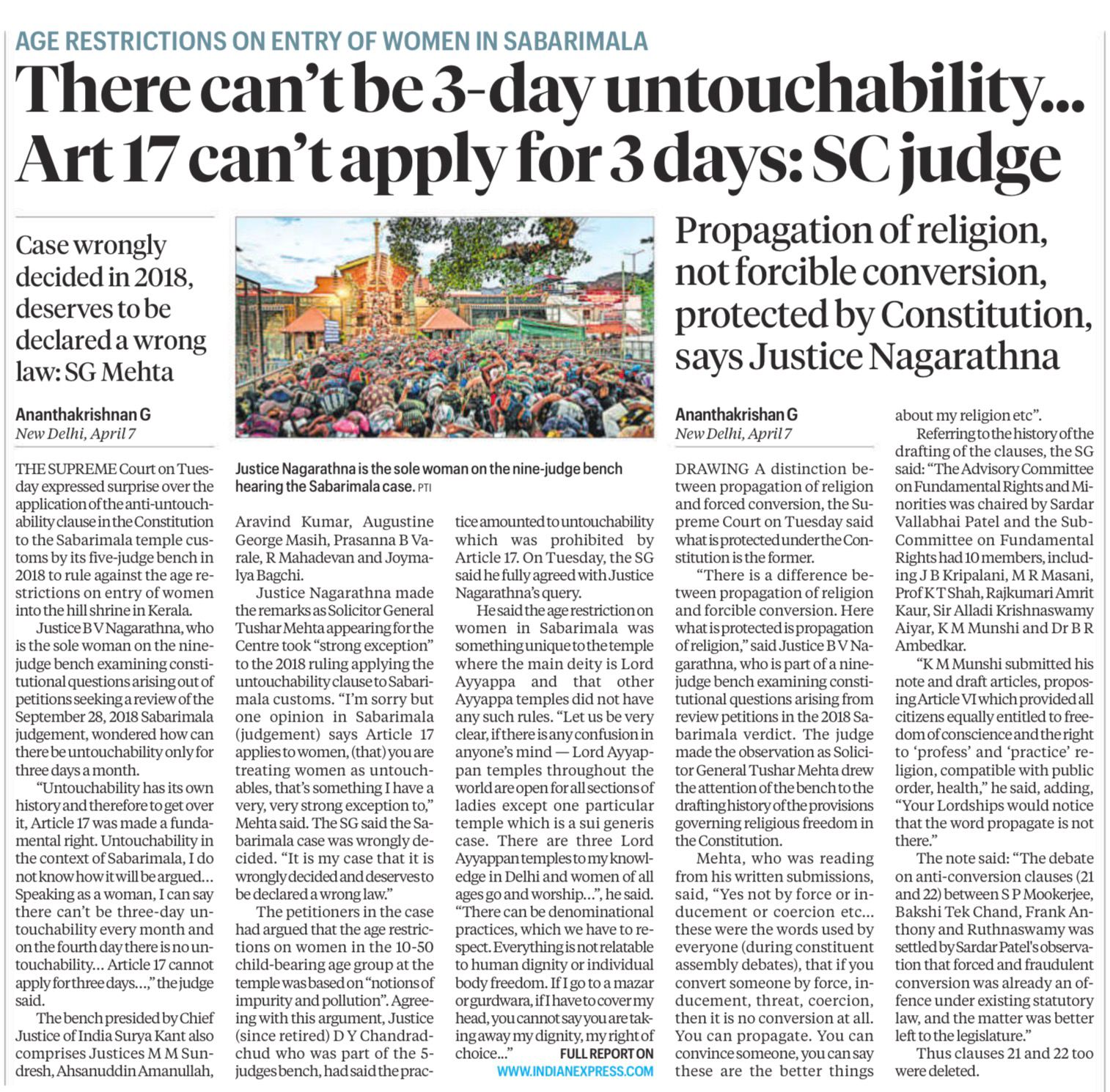
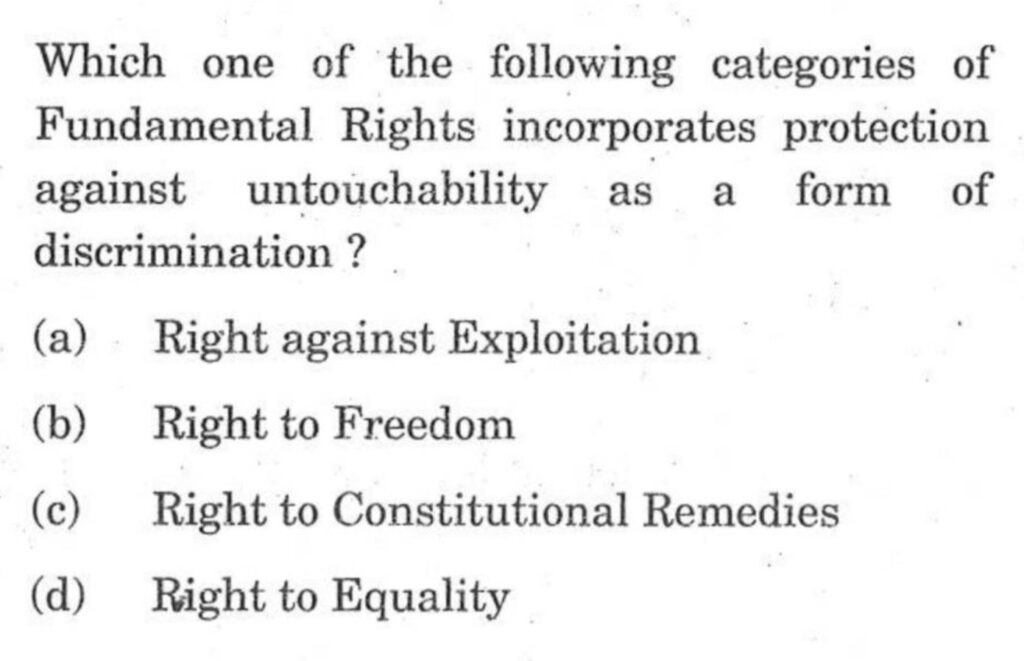
Sabarimala Article 17 issue: SC Questions Link with Untouchability

Context: Sabarimala Article 17 issue

Supreme Court (9-judge bench) while hearing Sabarimala review issues questioned whether menstruation-based exclusion can be treated as “untouchability” under Article 17, with remarks that untouchability cannot exist for “only a few days”.

Evolution of Sabarimala judgments

2018 (5-judge bench)
• Entry ban on women (10–50 yrs) struck down (4:1)
• Grounds: Equality (Art 14), non-discrimination (Art 15), dignity, freedom of religion (Art 25)

Held:
• Not an essential religious practice
• Ayyappa devotees not a separate denomination
• One reasoning linked exclusion to Article 17 (untouchability-like exclusion)

2019 Review stage
• Judgment not stayed
• Issues referred to larger 9-judge bench

Focus shifted to broader questions:
• Scope of religious freedom
• Essential practices doctrine
• Validity of exclusion in other religions also

Present (9-judge bench stage)
• Re-examining constitutional reasoning of 2018
• Key doubt: Is Article 17 applicable to such exclusion?

Article 17 and its connection

Article 17
• Abolishes untouchability and forbids its practice
• Traditionally linked to caste-based exclusion

2018 linkage
• Exclusion based on “impurity” (menstruation) seen as similar to social exclusion
→ Hence, brought under Article 17 logic

Sabarimala Article 17 issue
PYQ – 2020, Ans – D

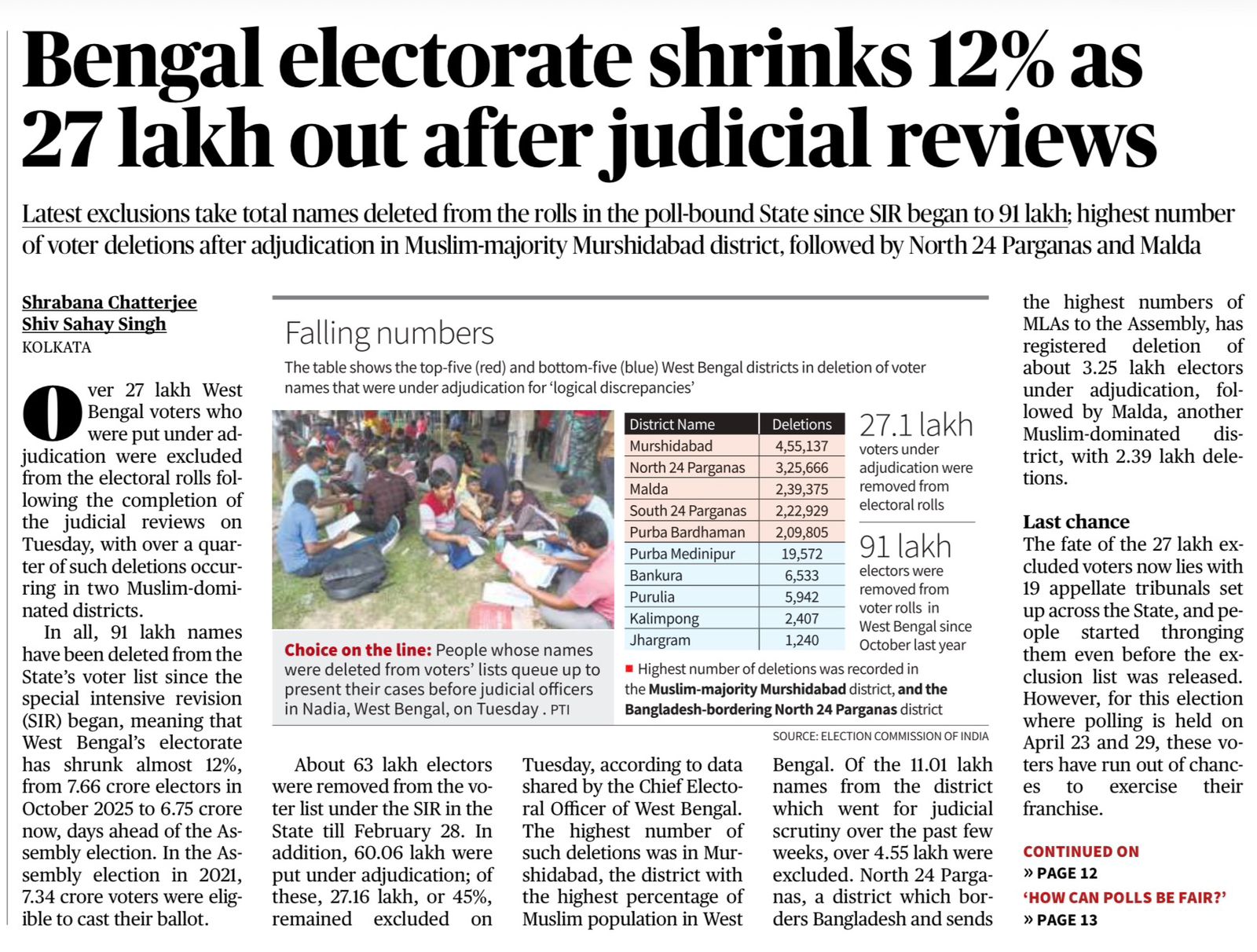
voter roll revision West Bengal: 27 Lakh Names Removed

Context: voter roll revision West Bengal

Over 27 lakh voters excluded in West Bengal after judicial review under Special Intensive Revision, leading to ~12% fall in electorate (7.66 cr → 6.75 cr); total deletions since SIR began: 91 lakh.

Special Intensive Revision
• Complete re-verification of electoral rolls
• Triggered by large discrepancies / doubtful entries

Constitutional provisions
Article 324 → ECI control over elections
• Article 325 → No exclusion on discriminatory grounds
Article 326 → Adult suffrage

Key laws, sections and rules

RPA 1950
• Sec 21 → Revision of rolls
• Sec 22 → Correction of entries
• Sec 23 → Inclusion of names

Registration of Electors Rules, 1960
• Rule 13 → Preparation of electoral rolls
• Rule 21A → Deletion of names
• Rule 26 → Correction of entries

Supreme Court safeguards
• Prior notice before deletion
• Opportunity of hearing
• Right to appeal

voter roll revision West Bengal
About the UPSC Civil Services Examination (UPSC CSE)

The UPSC Civil Services Examination (CSE) is one of the most competitive and esteemed examinations in India, conducted by the Union Public Service Commission to recruit officers for services such as the Indian Administrative Service (IAS), Indian Police Service (IPS), Indian Foreign Service (IFS), and others. The exam comprises three stages — Prelims, Mains, and the Personality Test (Interview) — designed to test a candidate’s knowledge, aptitude, decision-making, and leadership skills.


How to Prepare Effectively for UPSC CSE

Cracking the UPSC CSE requires a deep understanding of the syllabus, consistent revision, structured answer writing, and smart test-taking strategies. The Prelims test analytical and conceptual clarity, the Mains focuses on critical thinking, articulation, and subject mastery, while the Interview assesses presence of mind, ethical judgment, and personality traits relevant to public service.

At UnderStand UPSC, we empower aspirants with a personalized and focused approach to each stage of the exam.


Why Choose UnderStand UPSC?

UnderStand UPSC is a mentorship-driven platform offering a clear, clutter-free strategy to tackle the Civil Services Examination. Our programs like Transform (for beginners and intermediate learners) and Conquer (for advanced mains preparation) provide structured study plans, syllabus-wise video content, interactive live sessions, and answer writing support.

We emphasize:

  • Concept clarity through topic-wise lectures

  • Test series designed around real UPSC standards

  • Personalized mentorship in small groups

  • Regular performance tracking and peer benchmarking

  • Doubt-clearing sessions, current affairs analysis, and monthly magazines


Join the UnderStand UPSC Learning Community

Our mission is to make UPSC preparation less overwhelming and more strategic. We combine mentorship, discipline, and academic rigor to help you clear CSE with confidence. Whether you’re preparing from Delhi, Mumbai, Bangalore, or a remote village — our online-first model ensures quality guidance reaches every corner of India.

Join the thousands of aspirants who trust UnderStand UPSC to guide their journey toward becoming civil servants.

Stay connected with us through our Telegram, YouTube, and Instagram channels for daily tips, strategies, and updates.

Copyright © 2026 USARAMBHA EDUCATION (UnderStand UPSC). All Rights Reserved.

Join the Success Journey!