
Context: Constitutional Position of Chief Minister
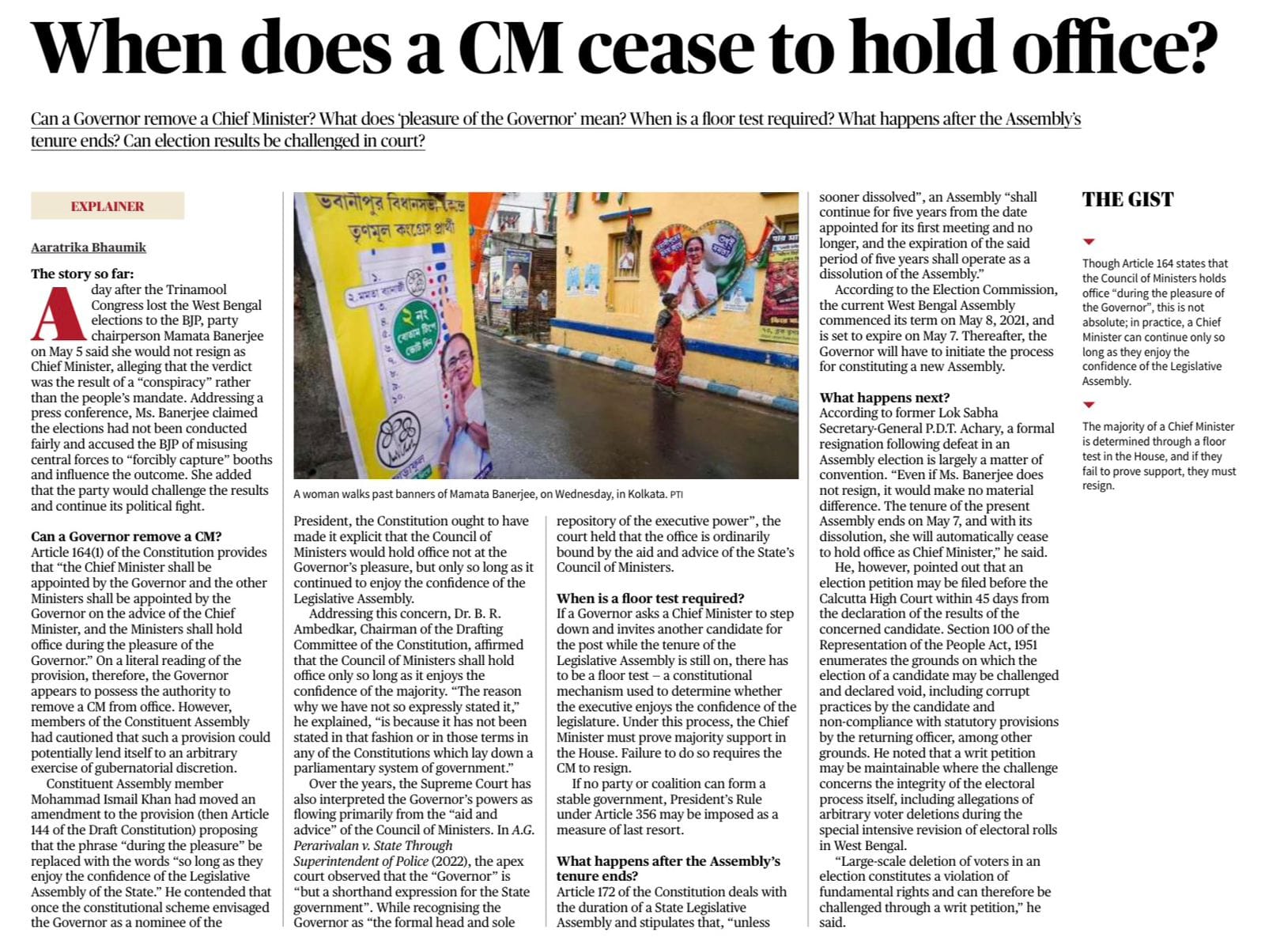
After the 2026 West Bengal Assembly election results, CM Mamata Banerjee said she would not resign, reviving debate on when a Chief Minister ceases to hold office.
Constitutional Position of CM
- Article 164(1) — CM appointed by Governor
- CM and Council of Ministers hold office “during the pleasure of Governor”
- In practice, CM remains in office only while enjoying majority support in Assembly
If CM Resigns
- CM submits resignation to Governor
- Entire Council of Ministers resigns automatically
Governor may:
- Invite another leader with majority support
- Continue outgoing CM as caretaker till new government formed
If CM Does Not Resign
- Governor can order a Floor Test to check majority
- If CM fails floor test → must resign
- Supreme Court: majority should be tested on floor of House
Important Cases
- S.R. Bommai v. Union of India — Floor test principle
- Nabam Rebia v. Deputy Speaker — Governor’s powers not absolute
After Assembly Tenure Ends
- Article 172 — Assembly term = 5 years unless dissolved earlier
- CM continues as caretaker till formation of new government
If No Party Gets Majority
Governor may invite:
- Largest party
- Coalition with majority support
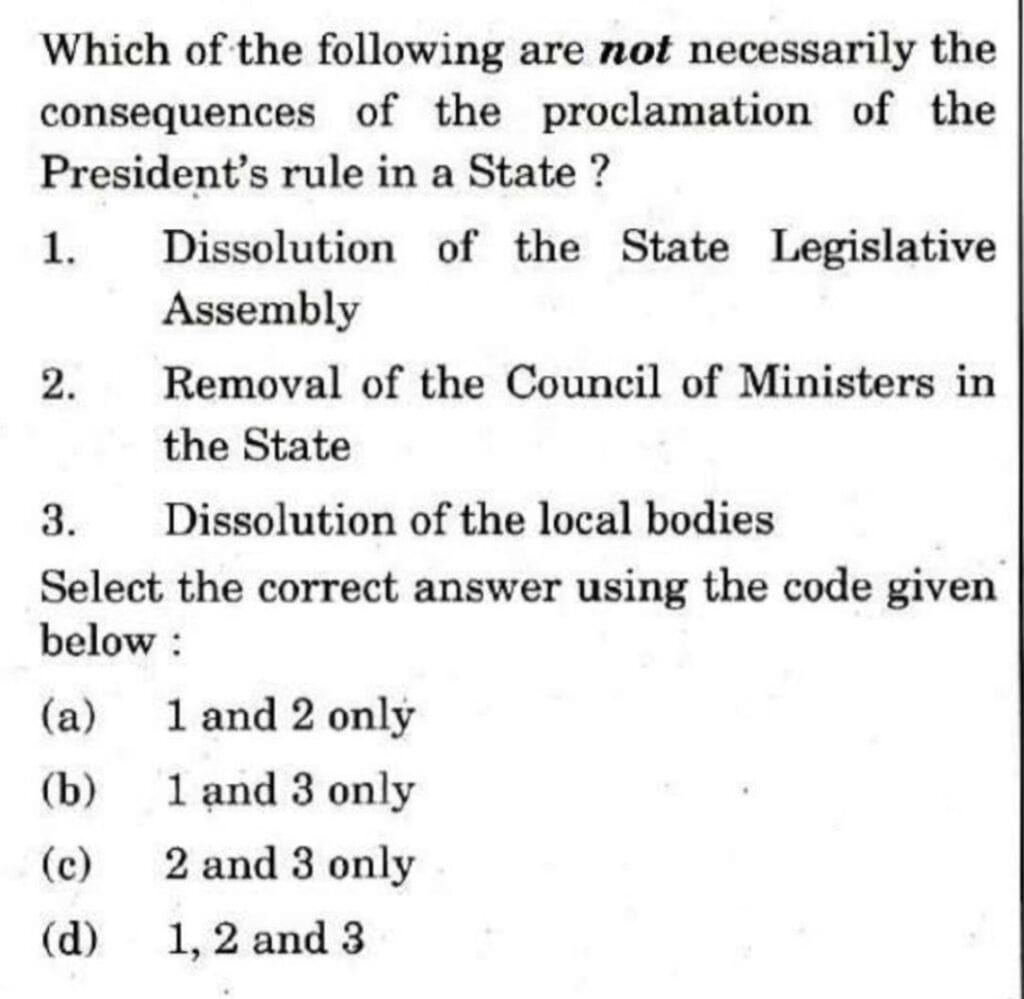
- If no stable government possible → Article 356 (President’s Rule)







