Context: Green methanol
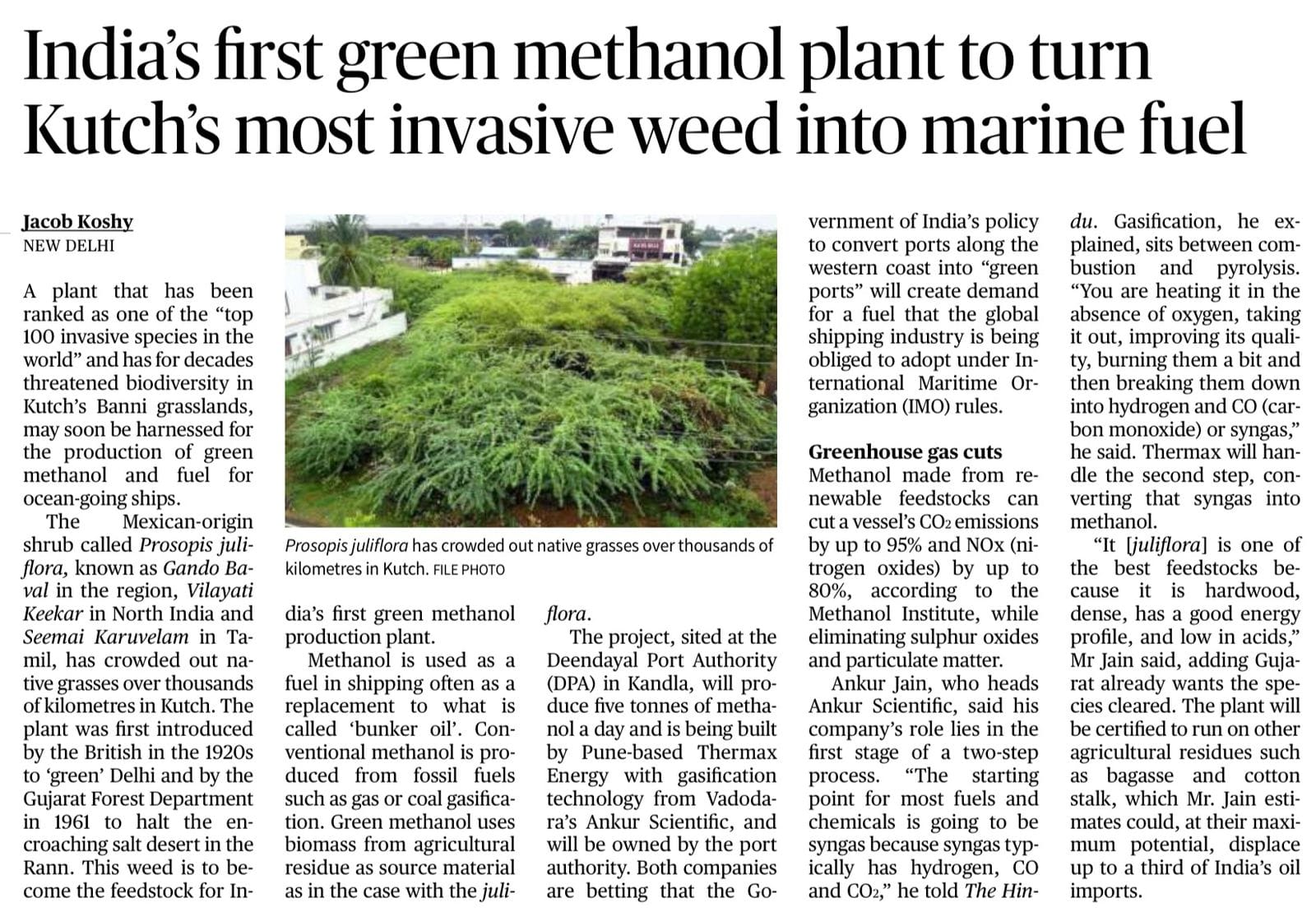
India plans to convert Prosopis juliflora, among the world’s top 100 invasive species, into green methanol for marine fuel, linking ecological control with clean energy.
Species in News – Prosopis juliflora
- Origin: Mexico
- Local names: Gando Baval, Vilayati Keekar, Seemai Karuvelam
- Status: Among top 100 invasive species globally
- Introduced: Colonial period for afforestation
Issues
- Highly invasive and fast spreading
- Replaces native grasses in Banni grassland
- Threat to biodiversity in Kutch
Utility
Dense hardwood, high calorific value → suitable biomass feedstock
Green Methanol and Environmental Significance
- Green methanol: Produced from biomass/renewable sources
- Use: Alternative to bunker fuel in shipping
Environmental benefits
CO₂ ↓ up to 95% | NOx ↓ up to 80% | eliminates SOx and particulate matter | supports IMO norms
Process
Gasification → biomass to syngas (H₂ + CO)
Conversion → syngas to methanol
Banni Grassland
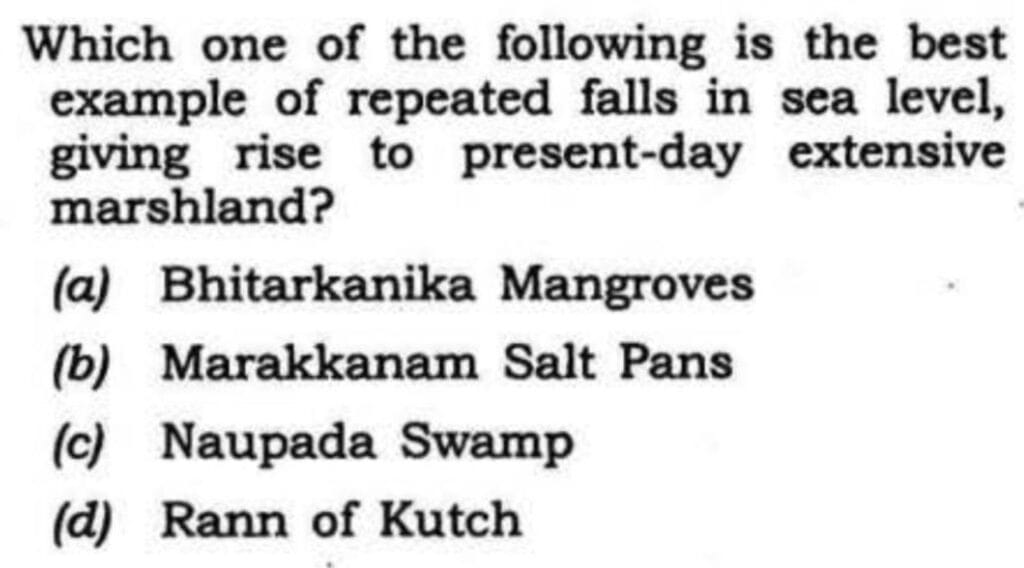
- Location: Rann of Kachchh, Gujarat
- Asia’s largest tropical grassland
- Threat: invasion by Prosopis juliflora
Community
Maldharis pastoralists depend on it
Implications
- Converts invasive species into economic resource
- Supports clean shipping and energy transition
- Reduces oil import dependence
- Helps restore native grassland ecosystem