
Context
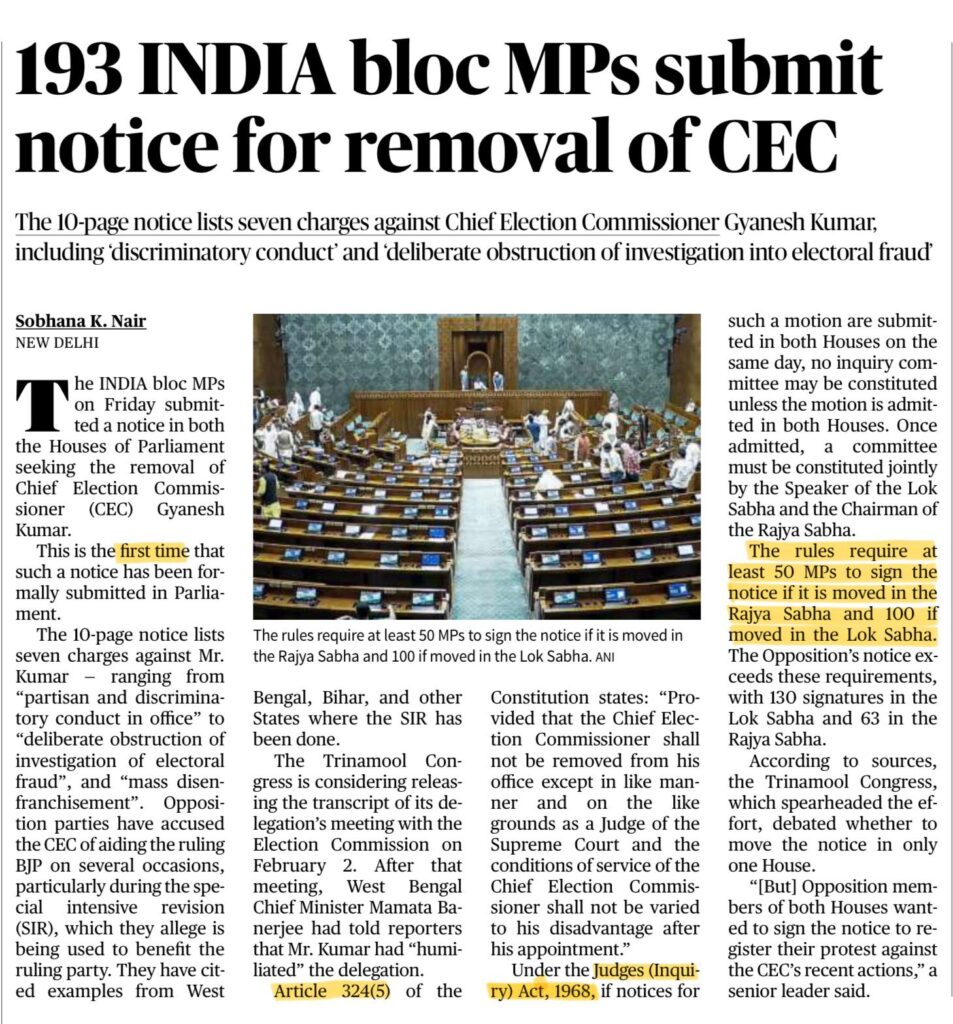
Opposition MPs submitted a notice in both Houses seeking removal of Chief Election Commissioner (CEC) Gyanesh Kumar over alleged misconduct in electoral processes.
Constitutional & Legal Basis
Article 324:
Superintendence, direction and control of elections vested in the Election Commission of India.
Article 324(5):
- CEC removable only in the same manner and on the same grounds as a Supreme Court judge.
- Service conditions cannot be varied to his disadvantage after appointment.
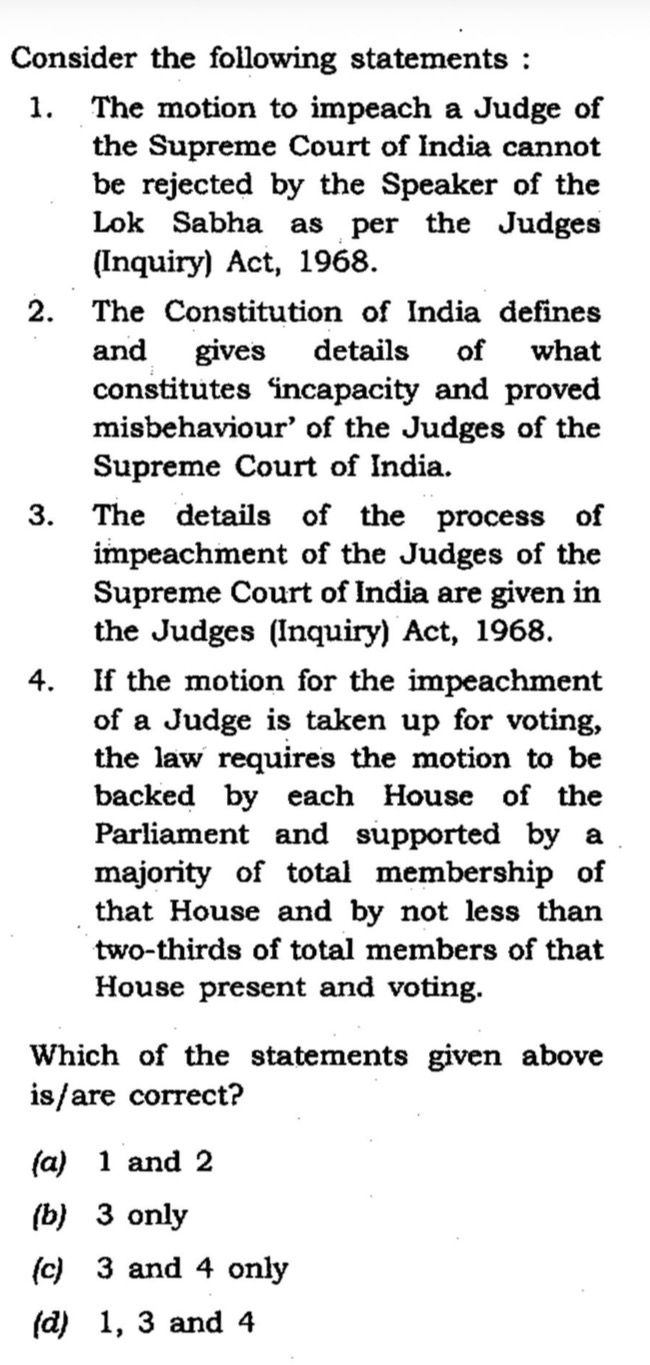
Judges (Inquiry) Act, 1968:
- Provides statutory procedure for inquiry into proved misbehaviour/incapacity.
Removal of CEC (Process)
- Notice moved in either House; requires 100 MPs (Lok Sabha) or 50 MPs (Rajya Sabha).
- If admitted, a 3-member inquiry committee is formed:
- Supreme Court judge
- High Court Chief Justice
- Distinguished jurist
- Committee investigates and submits report.
- If charges are proved, motion must pass in both Houses by special majority
(majority of total membership + two-thirds present and voting). - After passage, the President issues the removal order.
Key Points
- First formal removal notice against a sitting CEC in Parliament.
- Allegations include:
- Partisan conduct
- Obstruction of electoral fraud inquiries
- Disenfranchisement concerns during SIR exercises.
- Notice exceeds required signatures:
- 130 LS
- 63 RS
Removal of Other Election Commissioners
Governed by Article 324(5)
- Removed by the President only on recommendation of the CEC.
Does not follow full parliamentary impeachment procedure.