Context
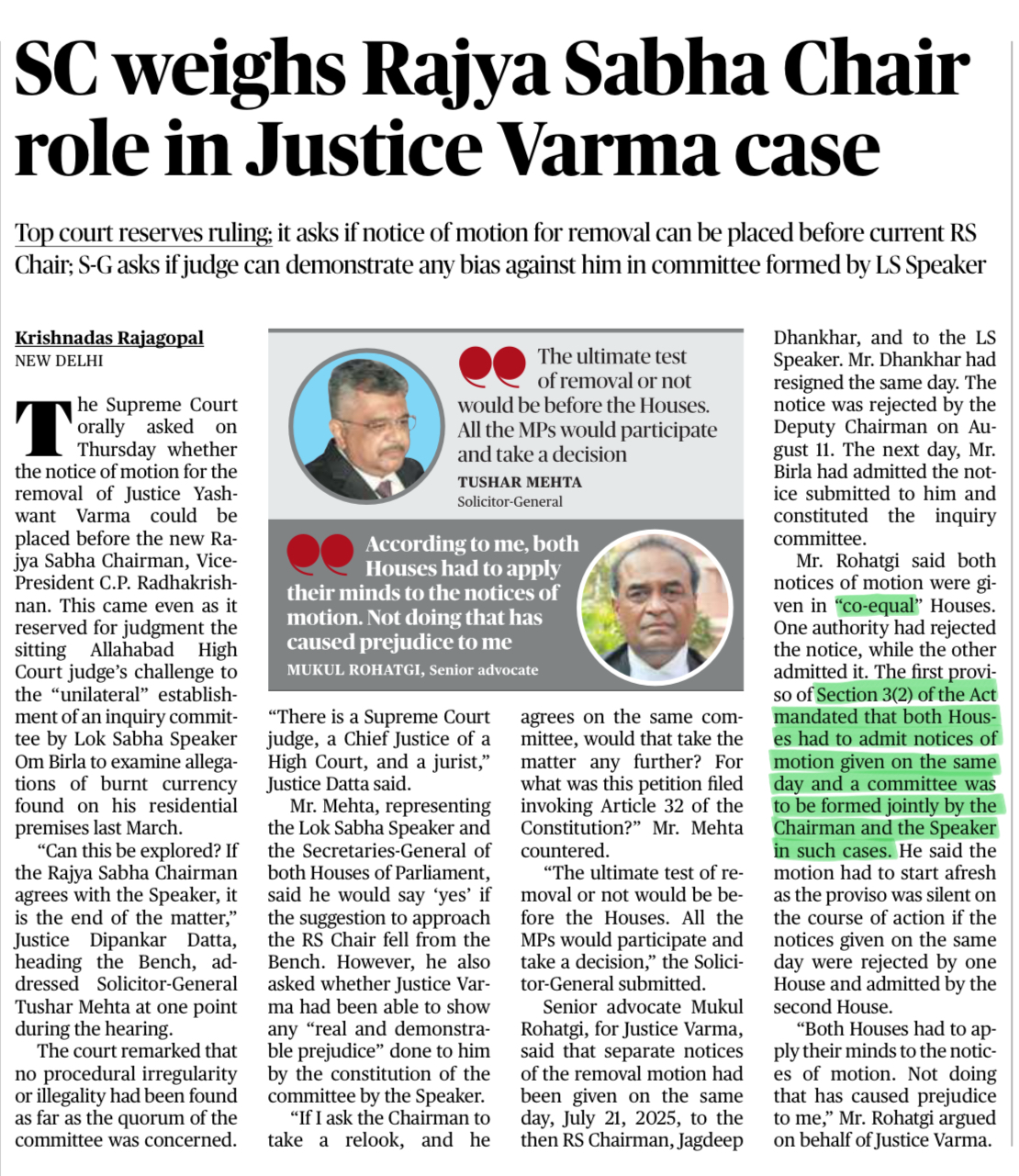
The Supreme Court is examining whether the new Rajya Sabha Chairman has a role in admitting a motion for removal of a High Court judge, in the case of Justice Yashwant Varma (Allahabad HC), and whether the procedure followed was constitutionally valid.
Core Issues Involved
Issue 1: Procedure for removal of a High Court judge
• Whether notice of motion for removal can be placed before a newly appointed Rajya Sabha Chairman
• Whether both Houses must act together when notices are given on the same day
Issue 2: Role of Presiding Officers
• Whether Lok Sabha Speaker alone can constitute an inquiry committee
• Or whether RS Chairman and LS Speaker must act jointly
This case is NOT about a new Chairman only
It is about constitutional procedure and institutional balance
Constitutional and Legal Provisions (Prelims-critical)
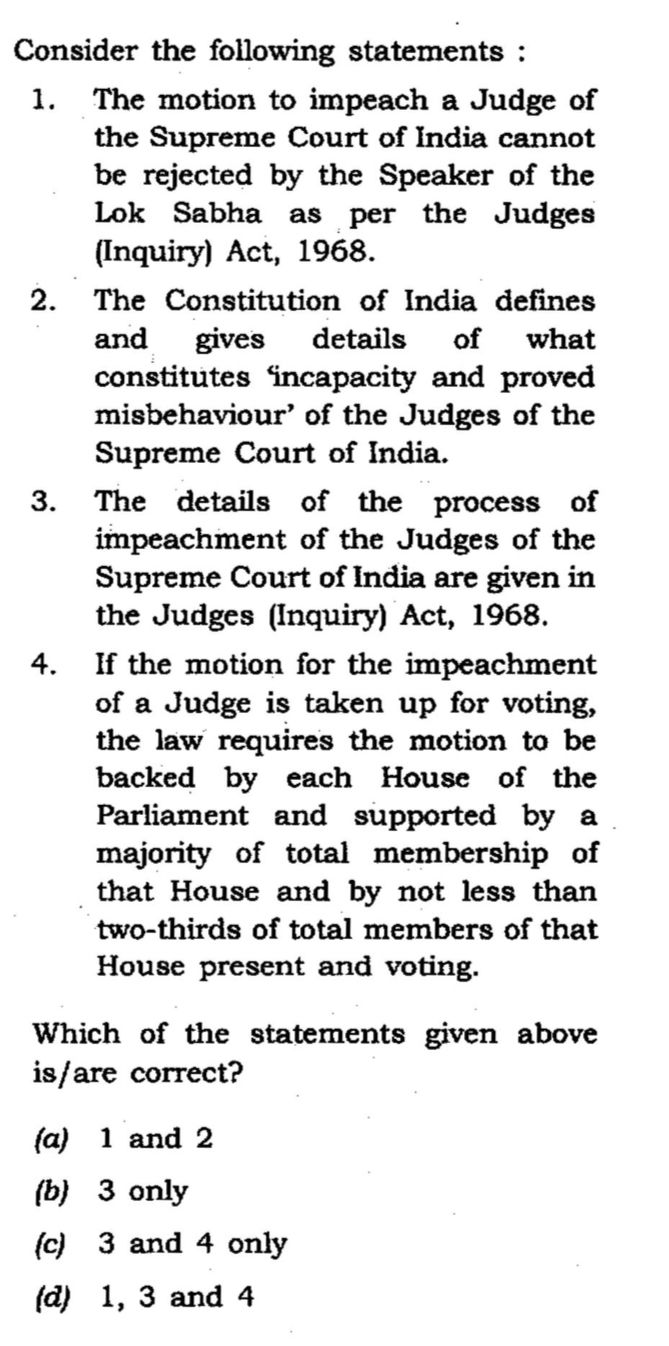
Article 124(4) – Removal of Judges
• Applies to Supreme Court judges
• Removal by special majority of Parliament
• Proven misbehaviour or incapacity
Article 217(1)(b) – Removal of High Court Judges
• Removal in the same manner as Supreme Court judges
• Hence, Article 124(4) procedure applies to High Court judges also
Judges (Inquiry) Act, 1968 – Section 3
• When a motion for removal is admitted, an Inquiry Committee must be formed
• If notices are given in both Houses on the same day, the committee must be formed jointly by the Lok Sabha Speaker and the Rajya Sabha ChairmanKey phrase used by the Supreme Court
Both Houses are “co-equal”