Context: Right to Life
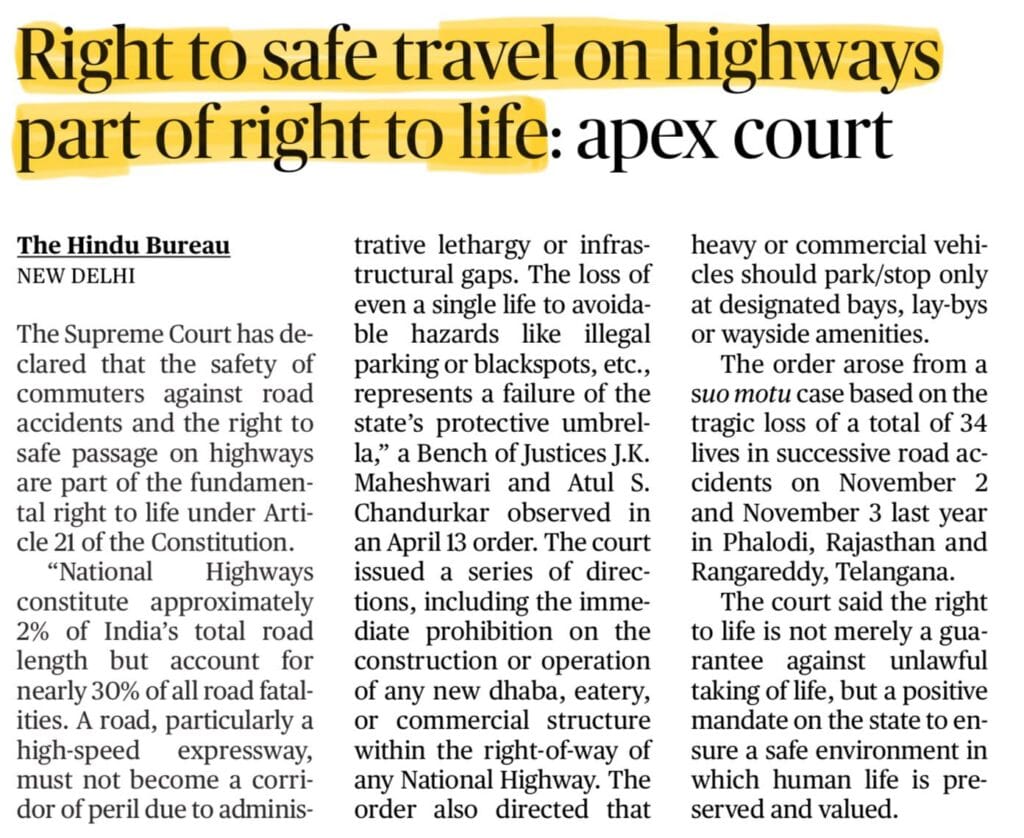
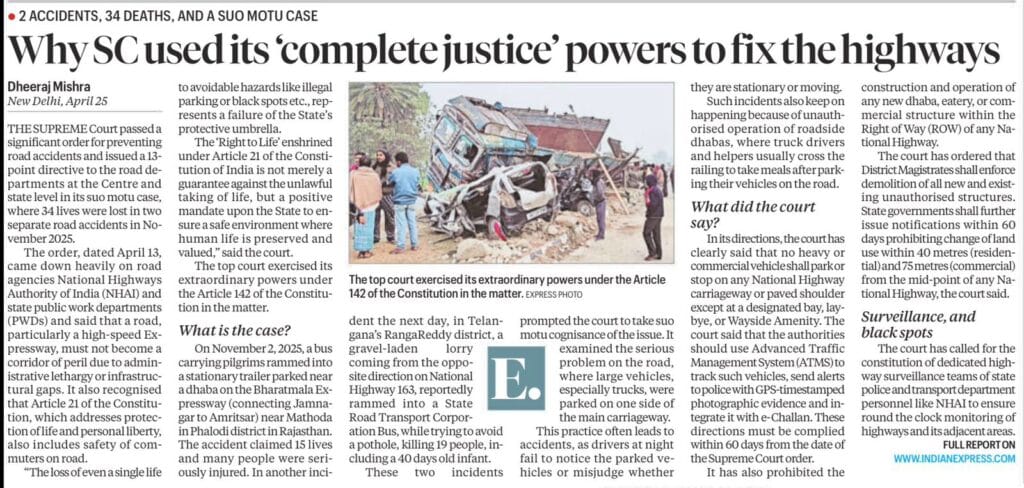
In a suo motu case after two highway accidents causing 34 deaths, the Supreme Court held that safe travel is part of the Right to Life and called for systemic road safety reforms.
Key Points
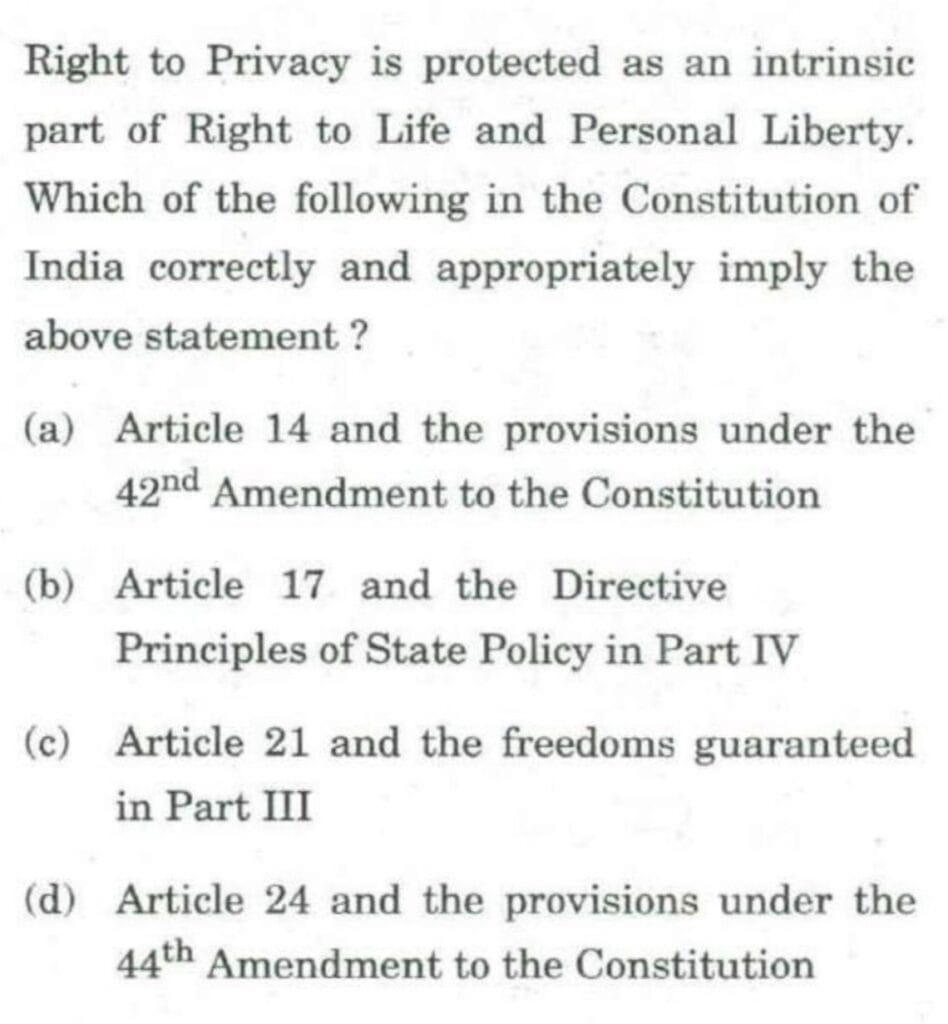
- Article 21 – Right to Life and Personal Liberty:
- “No person shall be deprived of his life or personal liberty except according to procedure established by law.”
- Expanded to include safe, secure, and dignified travel, making road safety a fundamental right.
- Article 142 – Complete Justice:
- Empowers the Court to pass orders necessary for complete justice.
- Used to issue binding directions for structural road safety reforms.
- Articles 38 & 47 – Welfare and Public Health:
- State is duty-bound to ensure welfare and public health, which includes preventing road accidents and ensuring safe infrastructure.
- Judicial Observation:
- Deaths due to encroachments, illegal parking, blackspots, and weak enforcement are preventable and indicate failure of governance.
- State Responsibility:
- Imposes a positive obligation on authorities to create and maintain a safe road environment.
- Key Directions:
- Removal of encroachments and unauthorised activities on highways.
- Designated parking for heavy vehicles.
- Use of technology and stricter enforcement.
- Identification and correction of accident-prone areas.
- Significance:
- Transforms road safety into a constitutionally enforceable right.
- Strengthens accountability of State agencies and governance standards.