
SC Suo Motu Case Over NCERT Textbook
1) Context
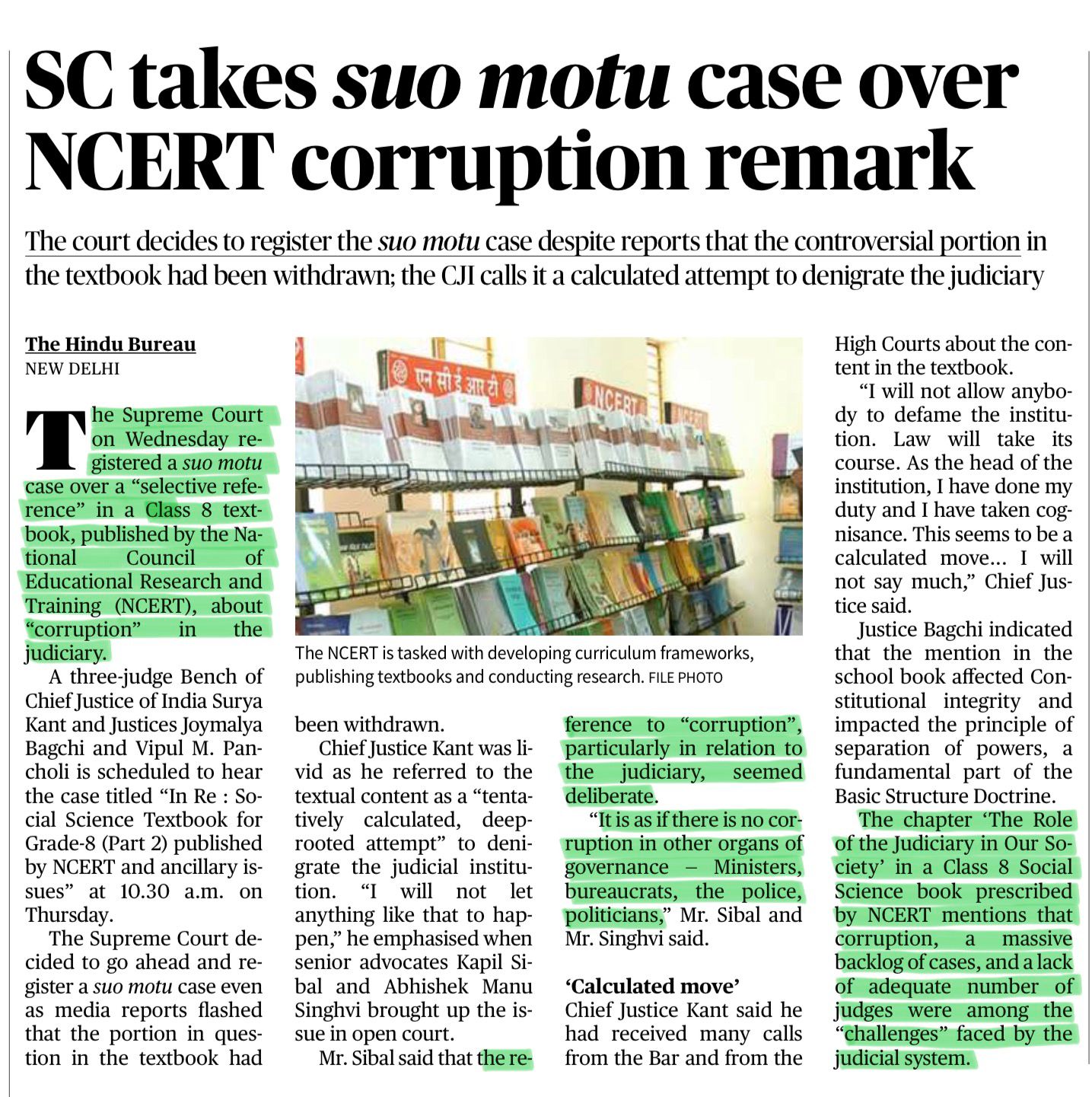
1.1 Trigger: The Supreme Court of India registered a suo motu case over content in a Class 8 Social Science textbook published by National Council of Educational Research and Training (NCERT).
1.2 Chapter: “The Role of the Judiciary in Our Society referred to corruption, case backlog, and shortage of judges as challenges in the judicial system. The Chief Justice observed that the selective reference to “corruption” in the judiciary appeared deliberate and could undermine institutional credibility, even though the passage was later withdrawn.
2) Constitutional Basis of Suo Motu Power
2.1 Meaning: Suo motu = Court acts on its own initiative without a formal petition.
2.2 Enabling Provisions: • Article 32 → Power to enforce Fundamental Rights.
• Article 142 → Power to pass any order necessary for “complete justice.”
• Article 129 → Supreme Court is a Court of Record with power to punish for contempt.
These provisions, read together, allow the Court to intervene when constitutional institutions or public interest are implicated.
3) Link with Contempt of Court
3.1 Constitutional Source: Article 129 gives the Supreme Court contempt jurisdiction.
3.2 Statutory Framework:
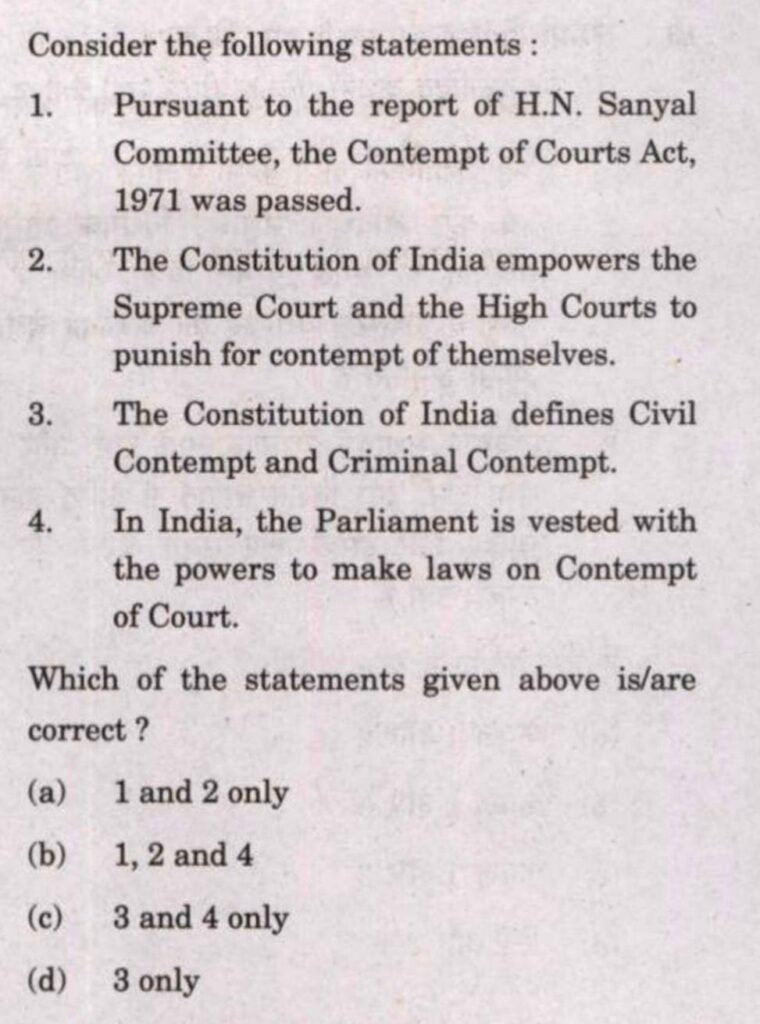
Contempt of Courts Act, 1971
• Civil Contempt: Wilful disobedience of court orders.
• Criminal Contempt (Section 2(c)): Acts that scandalise or lower the authority of the court, interfere with judicial proceedings, or obstruct administration of justice.