10 Dec, 2025 | Daily Current Affairs

Trump Tariffs on Indian Rice May Impact U.S. Market | GS2 Trade News

Important Data & Facts

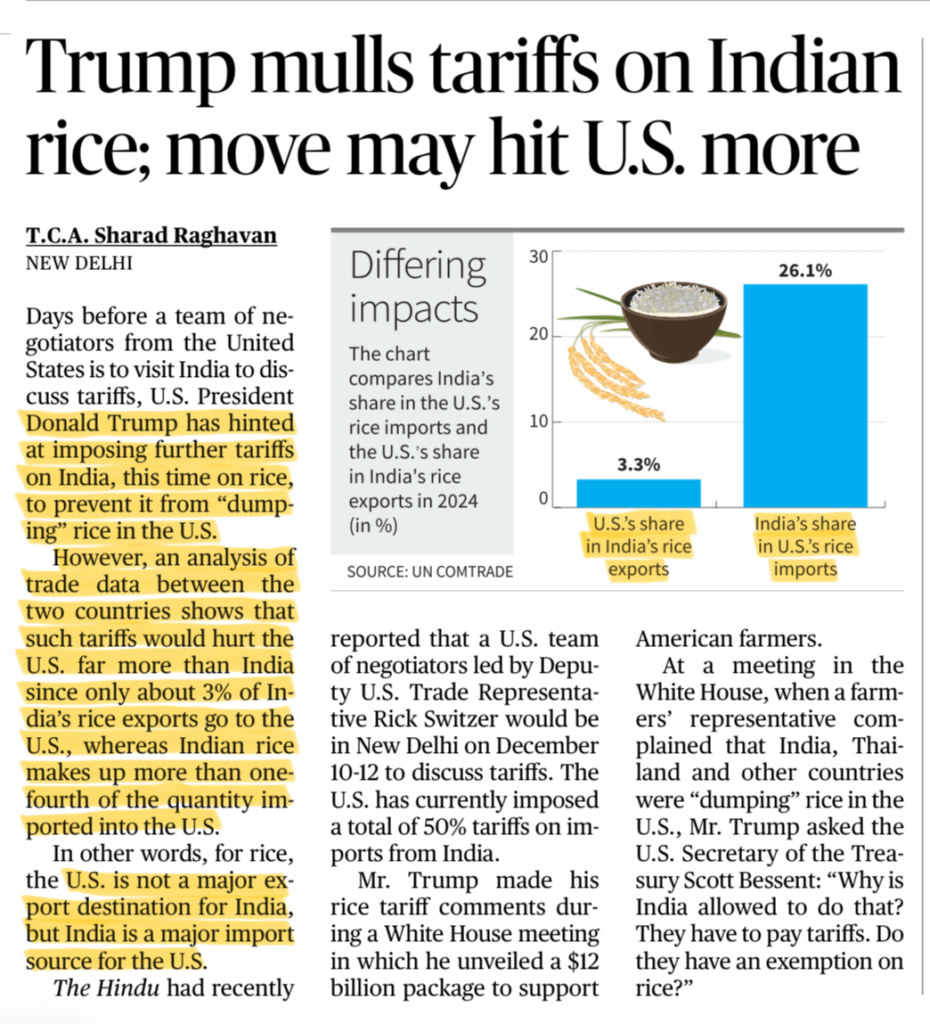
  1. India–U.S. Rice Trade Share
    • Only 3.3% of India’s rice exports go to the U.S.
    → U.S. is not a major market for Indian rice exports.
    • 26.1% of U.S. rice imports come from India.
    → India is a major supplier for U.S. rice demand.

Impact Direction
• Tariffs would hurt the U.S. more than India because:
• India sends very little rice to the U.S. (3% of our export basket).
• But the U.S. depends heavily on Indian rice (over 1/4th of its rice imports).

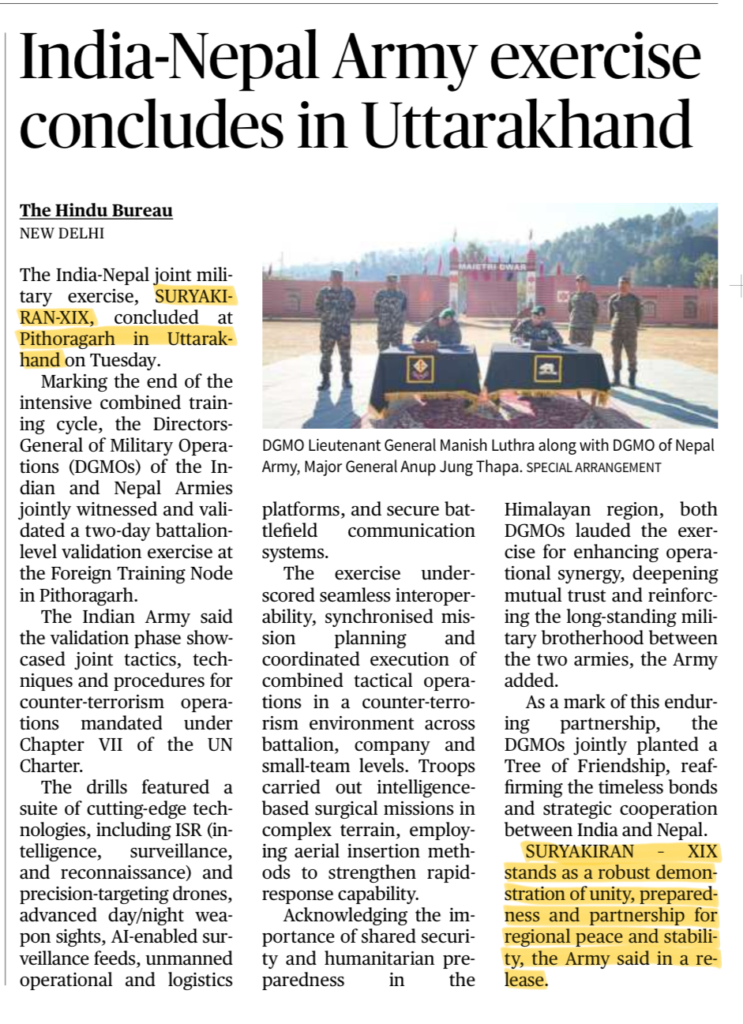
India Nepal Army Exercise Concludes in Uttarakhand | Defence News for UPSC

SURYA KIRAN–XIX (India–Nepal Military Exercise)
• Bilateral exercise: India–Nepal
• Edition: 19th (XIX)
• Location: Pithoragarh, Uttarakhand
• Level: Battalion-level joint training
• Observed by: DGMOs of both armies Core Focus
• Counter-terrorism operations under UN Charter Chapter VII
• Joint mission planning & interoperability
• Small-team tactical operations
• Intelligence-based surgical missions
• Rapid-response capability

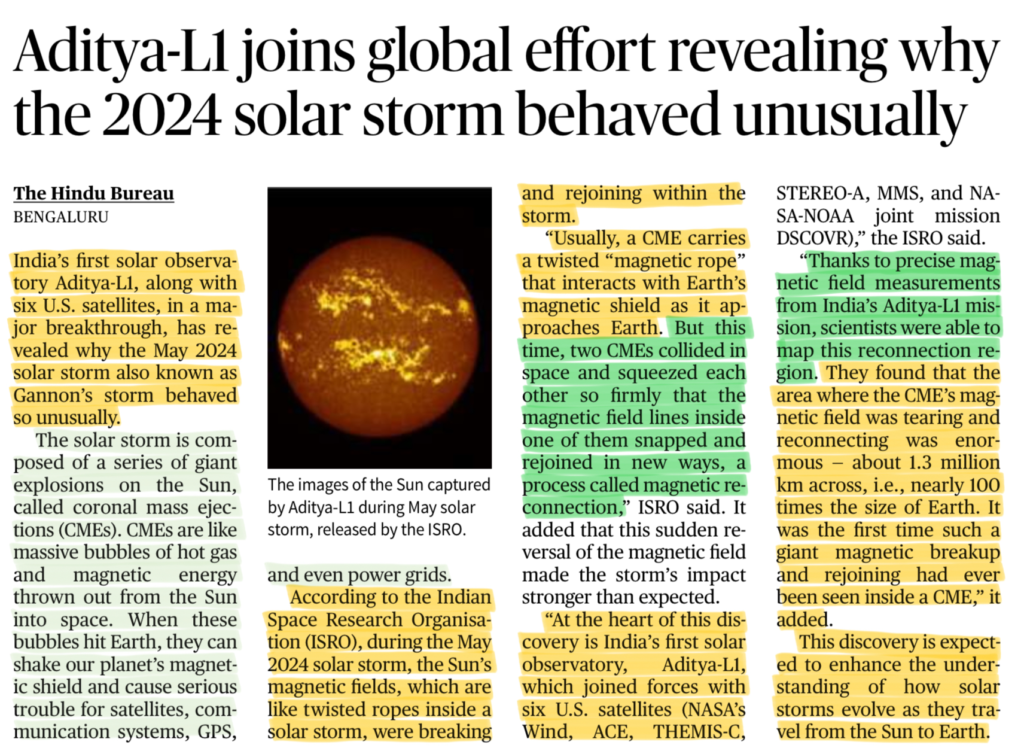
Aditya L1 Solar Storm Study Explains Unusual 2024 Event | Space GS3

  1. Context
    • May 2024 Solar Storm (Gannon’s Storm) showed unusually strong behaviour.
    • India’s Aditya–L1, along with U.S. satellites, has identified the exact reason.
  2. Normal Behaviour of a CME (Coronal Mass Ejection)
  3. A CME normally carries a stable, twisted magnetic rope (flux rope).
  4. This magnetic structure remains intact as the CME travels through space.
  5. Any magnetic reconnection typically occurs near Earth, when the CME interacts with Earth’s magnetic field.
  6. The internal magnetic field of a CME does not usually break or reorganise during transit.
  7. Therefore, storm intensity is usually determined only when the CME approaches Earth.

What Was Different in the 2024 Solar Storm (Aditya–L1 Discovery)
(a) Collision of Two CMEs
• Two coronal mass ejections collided and compressed each other in space.
(b) Magnetic Breakup Inside the CME
• Magnetic field lines inside one CME snapped and rejoined
→ a process known as magnetic reconnection.
• This happened inside the CME, not near Earth — first observation of its kind.
(c) Massive Reconnection Region
• Size: ~1.3 million km (about 100 times Earth’s diameter).
• Such a large internal magnetic reconfiguration has never been recorded before.
(d) Result → Stronger Storm
• This internal magnetic disturbance intensified the CME earlier than expected, making the May 2024 solar storm exceptionally strong.

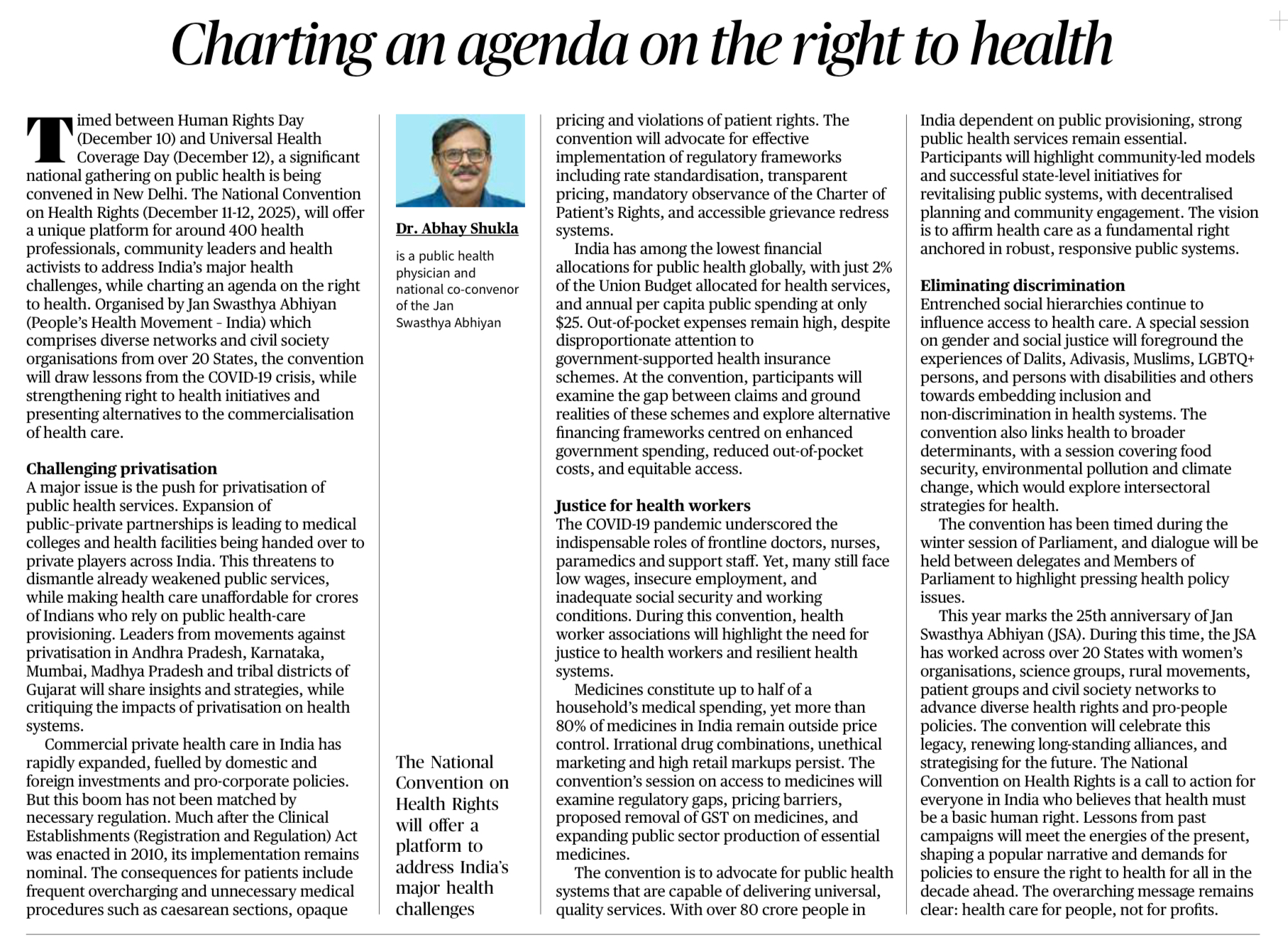
Right to Health in India: Charting a Policy Agenda | GS2 Health

Context
• The National Convention on Health Rights (Dec 11–12, 2025) brings together health professionals and civil society from 20+ States to shape a national agenda on the Right to Health.
• Held around Human Rights Day and Universal Health Coverage Day, it reflects a push to strengthen public health systems post-COVID-19.

Key Issues Highlighted
A. Rising Privatisation of Healthcare
• Expansion of public–private partnerships and transfer of medical institutions to private players has made healthcare unaffordable.
• Despite the Clinical Establishments Act (2010), regulation remains weak → overcharging, unnecessary procedures, opaque pricing, violation of patient rights.
• Privatisation widens inequality as millions rely on weak public systems.

B. Low Public Financing
• India spends only 2% of the Union Budget on health and about $25 per capita annually — among the lowest globally.
• High out-of-pocket expenditure persists despite government insurance schemes.
• Convention will examine the gap between scheme promises and reality, and argue for higher public spending, equitable access, and reduced OOPE.

C. Justice for Health Workers
• COVID-19 revealed essential roles of doctors, nurses, ASHAs, paramedics.
• Yet they continue to face low wages, insecure contracts, poor working conditions, and inadequate social protection.
• The convention demands respect, fair pay, safety, and workforce strengthening to build resilient health systems.

D. Access to Medicines
• Medicines form half of household health spending.
• 80% of drugs in India remain outside price control → irrational pricing, unethical marketing, high markups.
• The convention advocates stronger price regulation, GST reform on medicines, and expansion of the public sector production of essential drugs.

E. Inclusion and Non-Discrimination
• Social hierarchies restrict access to care.
• A special session will highlight barriers faced by:
Dalits, Adivasis, Muslims, LGBTQ+ persons, persons with disabilities, and women.
• Emphasis on embedding equity and non-discrimination in health systems.

F. Public Provisioning & Community-Based Models
• Evidence from States shows that community-led, decentralised approaches can revitalise public health systems.
• The vision emphasises healthcare as a public good, not a profit-making commodity.

G. Broader Determinants of Health
• Links health to food security, environmental pollution, climate change.
• Calls for inter-sectoral collaboration for long-term health resilience.

Purpose of the Convention
• To push Parliament and policymakers toward Right to Health–based reforms.
• To resist commercialisation of health, reaffirming “healthcare for all, not profits”.
• Celebrates 25 years of the Jan Swasthya Abhiyan, showcasing its work with women’s groups, rural movements, and civil society networks.

TDF (Mains Question)

India’s public health system continues to face challenges of privatization, low public spending, inequity, and weak regulation. In this context, discuss the key concerns highlighted by recent debates on the Right to Health and suggest measures to strengthen public health systems. (150 words)

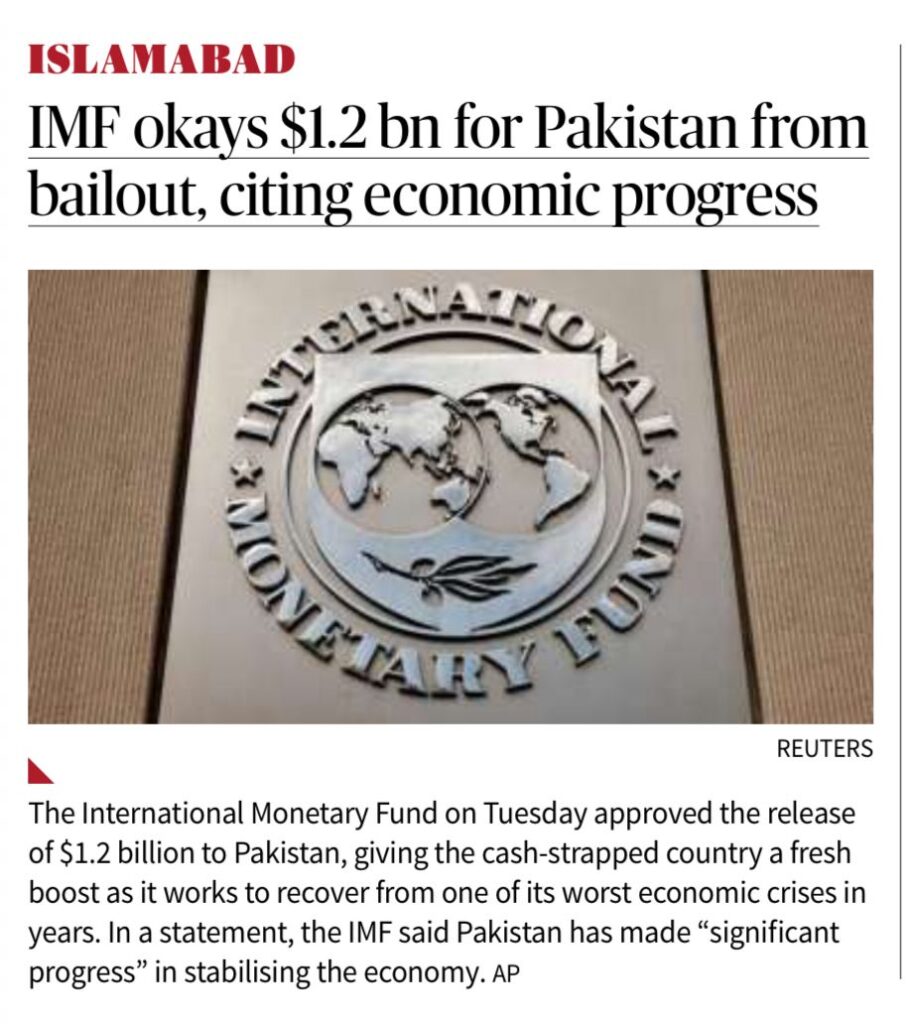
IMF Bailout for Pakistan Approved at $1.2 Billion | GS2 IR News

Context
IMF approved $1.2 bn for Pakistan as part of its bailout package, citing “significant progress” in stabilizing its crisis-hit economy. What is an IMF Bailout?
IMF bailout = Emergency loan given to a country facing severe economic trouble (low forex, high debt, inflation) to prevent economic collapse.
Comes with conditions:
• Fiscal tightening
• Subsidy cuts
• Tax/structural reforms

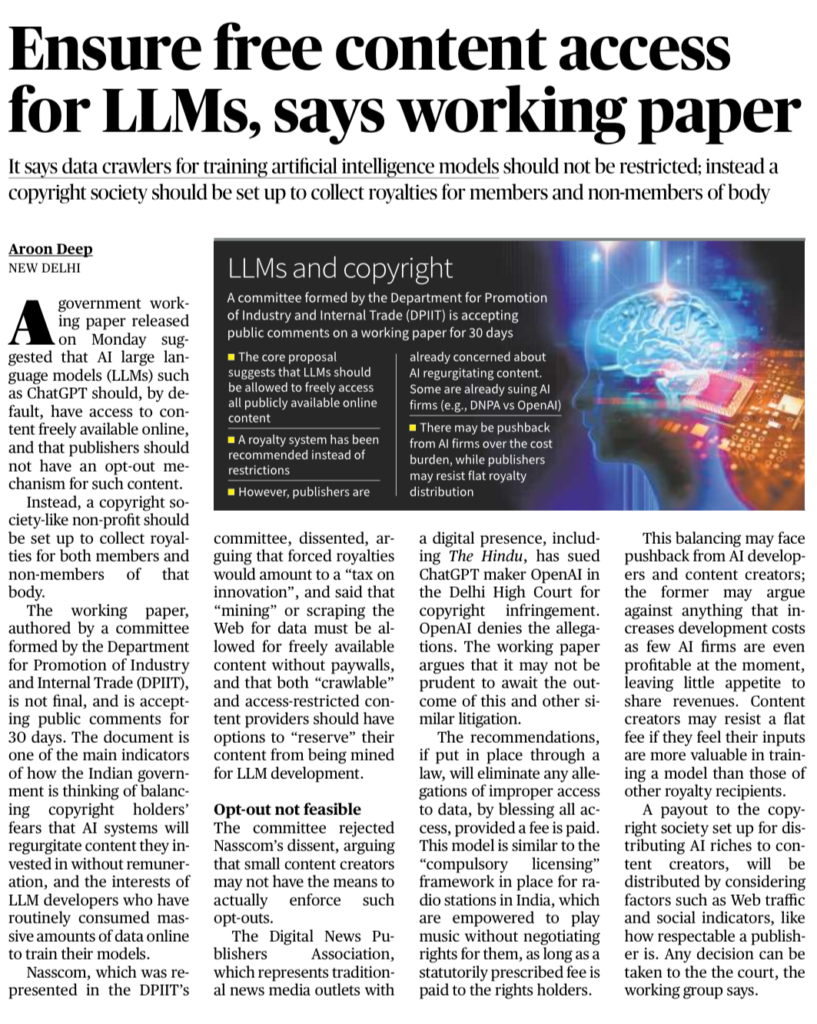
Free Content Access for LLMs Suggested in Policy Paper | Tech GS3

Large Language Model (LLM)
A Large AI model trained on huge text datasets that can understand and generate human-like language. (Examples: ChatGPT, Gemini)

DPIIT Working Paper:
! Free access to public online content
LLMs should be allowed to train on all publicly available internet data so India’s  AI models get enough training material.
” Copyright society for royalties
A new body will collect royalties from AI companies and distribute them to content creators → ensures creators are paid when AI uses their work.

No “opt-out” for publishers

Publishers cannot block AI from using their publicly available content.
Reason: impractical + restricts data for AI training.
$ Aim
Balance creator protection with AI development in India.
% Based on compulsory licensing
AI can use content without permission, but must pay regulated royalty (same
principle used for FM radio).

About the UPSC Civil Services Examination (UPSC CSE)

The UPSC Civil Services Examination (CSE) is one of the most competitive and esteemed examinations in India, conducted by the Union Public Service Commission to recruit officers for services such as the Indian Administrative Service (IAS), Indian Police Service (IPS), Indian Foreign Service (IFS), and others. The exam comprises three stages — Prelims, Mains, and the Personality Test (Interview) — designed to test a candidate’s knowledge, aptitude, decision-making, and leadership skills.


How to Prepare Effectively for UPSC CSE

Cracking the UPSC CSE requires a deep understanding of the syllabus, consistent revision, structured answer writing, and smart test-taking strategies. The Prelims test analytical and conceptual clarity, the Mains focuses on critical thinking, articulation, and subject mastery, while the Interview assesses presence of mind, ethical judgment, and personality traits relevant to public service.

At Understand UPSC, we empower aspirants with a personalized and focused approach to each stage of the exam.


Why Choose Understand UPSC?

Understand UPSC is a mentorship-driven platform offering a clear, clutter-free strategy to tackle the Civil Services Examination. Our programs like Transform (for beginners and intermediate learners) and Conquer (for advanced mains preparation) provide structured study plans, syllabus-wise video content, interactive live sessions, and answer writing support.

We emphasize:

  • Concept clarity through topic-wise lectures

  • Test series designed around real UPSC standards

  • Personalized mentorship in small groups

  • Regular performance tracking and peer benchmarking

  • Doubt-clearing sessions, current affairs analysis, and monthly magazines


Join the Understand UPSC Learning Community

Our mission is to make UPSC preparation less overwhelming and more strategic. We combine mentorship, discipline, and academic rigor to help you clear CSE with confidence. Whether you’re preparing from Delhi, Mumbai, Bangalore, or a remote village — our online-first model ensures quality guidance reaches every corner of India.

Join the thousands of aspirants who trust Understand UPSC to guide their journey toward becoming civil servants.

Stay connected with us through our Telegram, YouTube, and Instagram channels for daily tips, strategies, and updates.

Copyright © 2025 USARAMBHA EDUCATION (UnderStand UPSC). All Rights Reserved.

Join the Success Journey!