Guillotine in Parliament: Lok Sabha Passes Demands for Grants Explained

Context

Lok Sabha used guillotine to pass pending Demands for Grants together due to limited time in the Budget process.

1. Closure Motion (Concept)

A device to end debate and bring the House to vote; guillotine and kangaroo are its types used for time management.

2. Types of Closure Motion

• Guillotine Closure: all pending Demands for Grants are voted together without discussion at a fixed time (Budget context).
• Kangaroo Closure: only selected important demands/clauses are discussed, rest are skipped and voted.

Budget Process

(i) Budget Presentation:
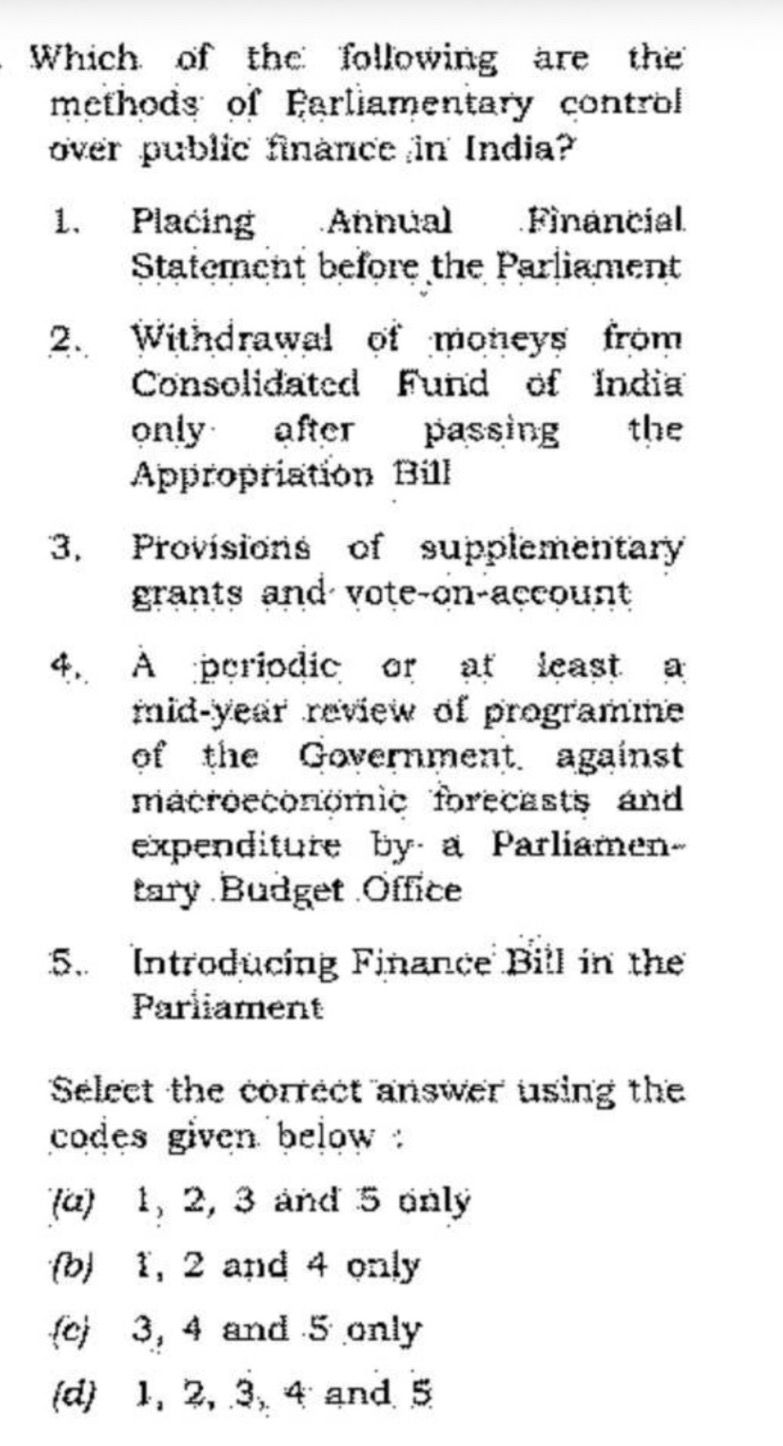
Annual Financial Statement introduced in Parliament.

(ii) General Discussion:
Overall discussion on Budget (no voting at this stage).

(iii) Departmentally Related Standing Committees (DRSCs):
Demands for Grants are examined in detail by DRSCs, which submit reports to Parliament (no voting, only scrutiny).

(iv) Demands for Grants (Lok Sabha):
Ministry-wise demands are discussed and voted; Rajya Sabha can only discuss.

(v) Cut Motions:
Members move motions to reduce demands (policy/economy/token cuts → control over executive).

(vi) Guillotine:
Remaining demands are passed together without discussion due to time constraint.

(vii) Appropriation Bill:
Authorizes withdrawal from Consolidated Fund of India (legal spending power).

(viii) Finance Bill:
Gives effect to taxation proposals of the Budget.

Guillotine in Parliament
PYQ – 2012, Ans – A
About the UPSC Civil Services Examination (UPSC CSE)

The UPSC Civil Services Examination (CSE) is one of the most competitive and esteemed examinations in India, conducted by the Union Public Service Commission to recruit officers for services such as the Indian Administrative Service (IAS), Indian Police Service (IPS), Indian Foreign Service (IFS), and others. The exam comprises three stages — Prelims, Mains, and the Personality Test (Interview) — designed to test a candidate’s knowledge, aptitude, decision-making, and leadership skills.


How to Prepare Effectively for UPSC CSE

Cracking the UPSC CSE requires a deep understanding of the syllabus, consistent revision, structured answer writing, and smart test-taking strategies. The Prelims test analytical and conceptual clarity, the Mains focuses on critical thinking, articulation, and subject mastery, while the Interview assesses presence of mind, ethical judgment, and personality traits relevant to public service.

At UnderStand UPSC, we empower aspirants with a personalized and focused approach to each stage of the exam.


Why Choose UnderStand UPSC?

UnderStand UPSC is a mentorship-driven platform offering a clear, clutter-free strategy to tackle the Civil Services Examination. Our programs like Transform (for beginners and intermediate learners) and Conquer (for advanced mains preparation) provide structured study plans, syllabus-wise video content, interactive live sessions, and answer writing support.

We emphasize:

  • Concept clarity through topic-wise lectures

  • Test series designed around real UPSC standards

  • Personalized mentorship in small groups

  • Regular performance tracking and peer benchmarking

  • Doubt-clearing sessions, current affairs analysis, and monthly magazines


Join the UnderStand UPSC Learning Community

Our mission is to make UPSC preparation less overwhelming and more strategic. We combine mentorship, discipline, and academic rigor to help you clear CSE with confidence. Whether you’re preparing from Delhi, Mumbai, Bangalore, or a remote village — our online-first model ensures quality guidance reaches every corner of India.

Join the thousands of aspirants who trust UnderStand UPSC to guide their journey toward becoming civil servants.

Stay connected with us through our Telegram, YouTube, and Instagram channels for daily tips, strategies, and updates.

Copyright © 2026 USARAMBHA EDUCATION (UnderStand UPSC). All Rights Reserved.

Join the Success Journey!