Context: Women in Panchayats
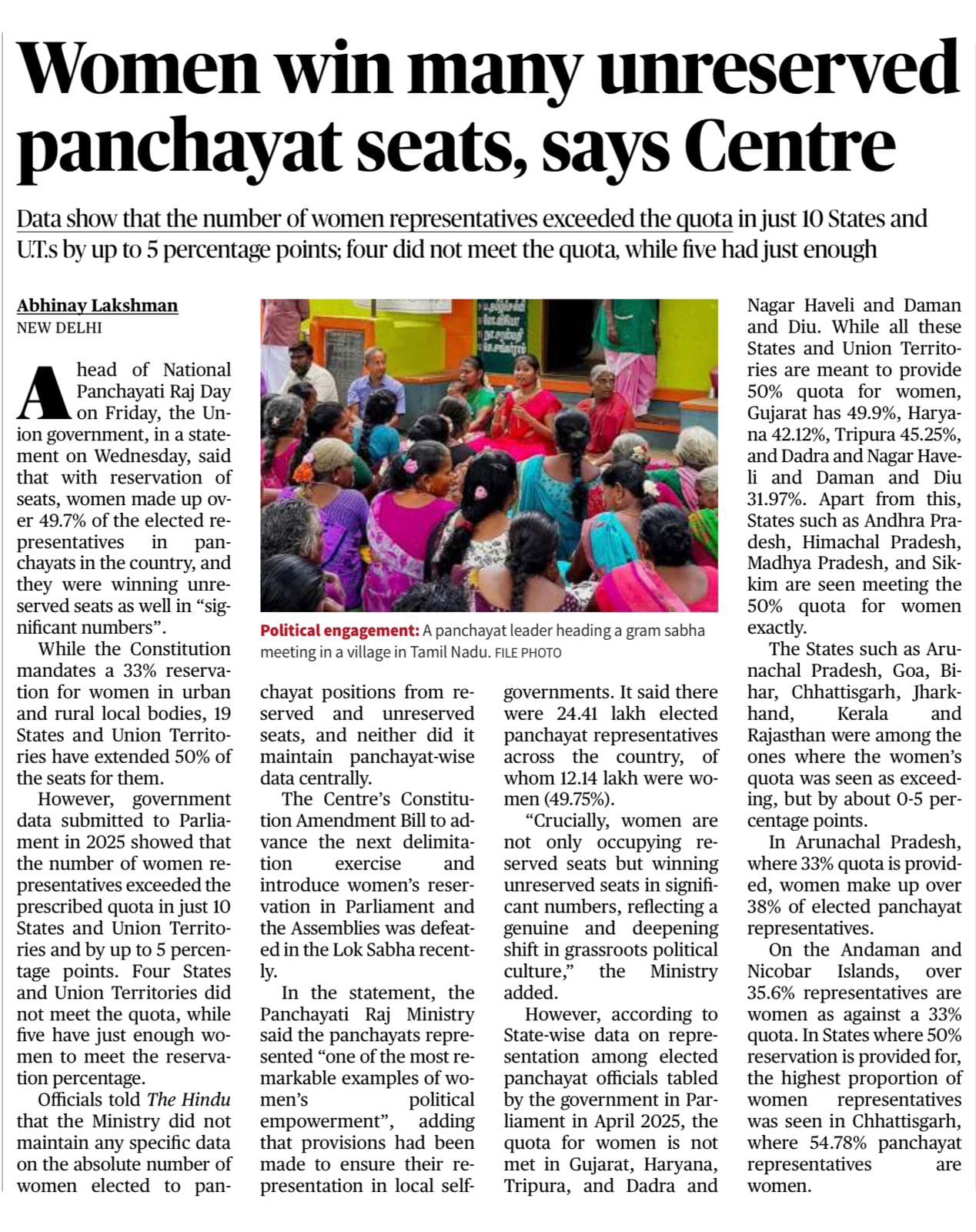
Three decades after the 73rd Constitutional Amendment, Panchayati Raj Institutions are being evaluated for outcomes in grassroots democracy, particularly the extent to which women’s political reservation has translated into independent leadership and broader representation beyond quotas.
Key Data
- Women’s reservation: minimum 33%; many states at 50%
- Women representatives: ~14–15 lakh (≈46%)
- Significant rise in women winning unreserved seats (key highlight)
- PRIs form the largest base of elected women globally
- Clear shift from quota-based presence to competitive electoral participation
Issues
- Proxy representation (“sarpanch pati”)
- Incomplete devolution of 3Fs (funds, functions, functionaries)
- Capacity and training gaps
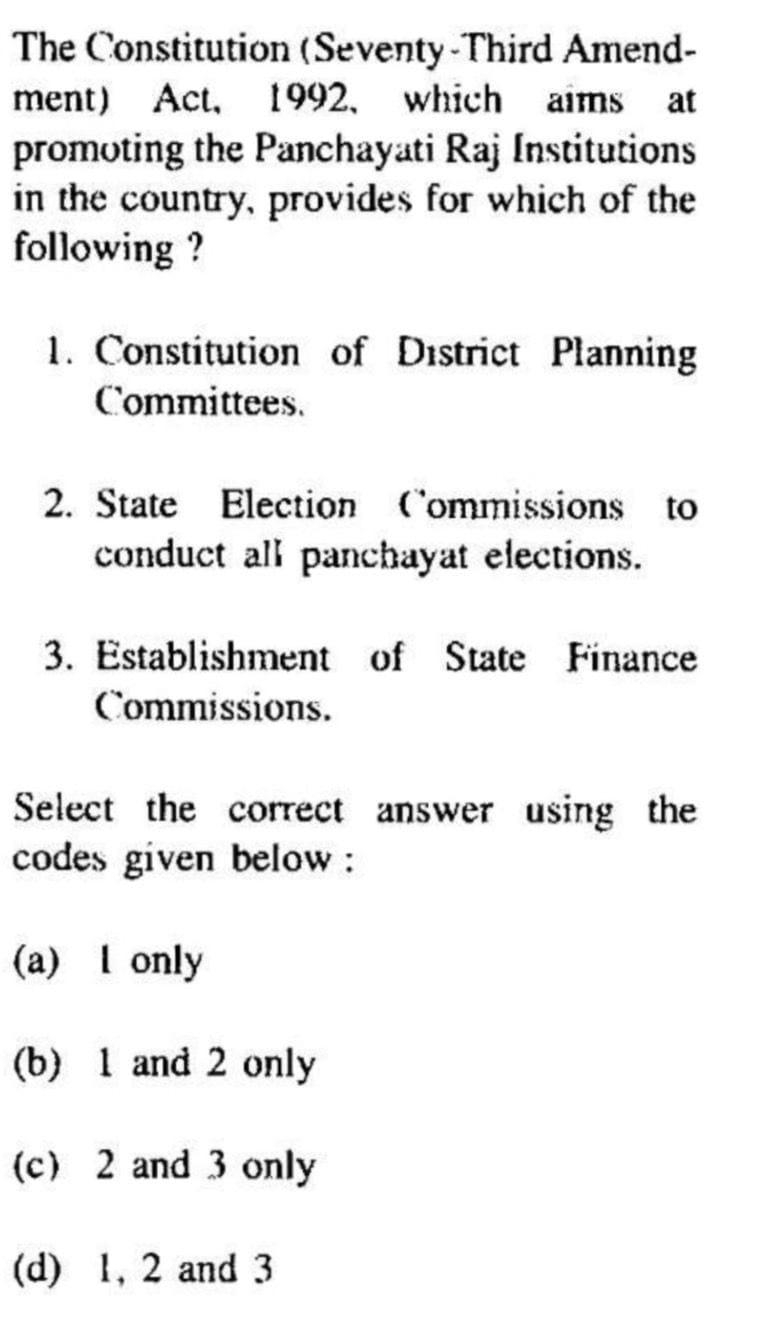
73rd Constitutional Amendment Act, 1992
- Part IX (Articles 243–243O)
- Three-tier system: village, intermediate, district
- Elections every 5 years (State Election Commission)
- Reservation: SC/ST (proportional), women ≥33%
- 11th Schedule: 29 subjects
- State Finance Commission every 5 years