
Context: AMOC weakening
A recent study published in Nature warns that the Atlantic Meridional Overturning Circulation (AMOC) — a major Atlantic Ocean current system — may weaken sharply due to climate change, affecting global climate and India’s monsoon.
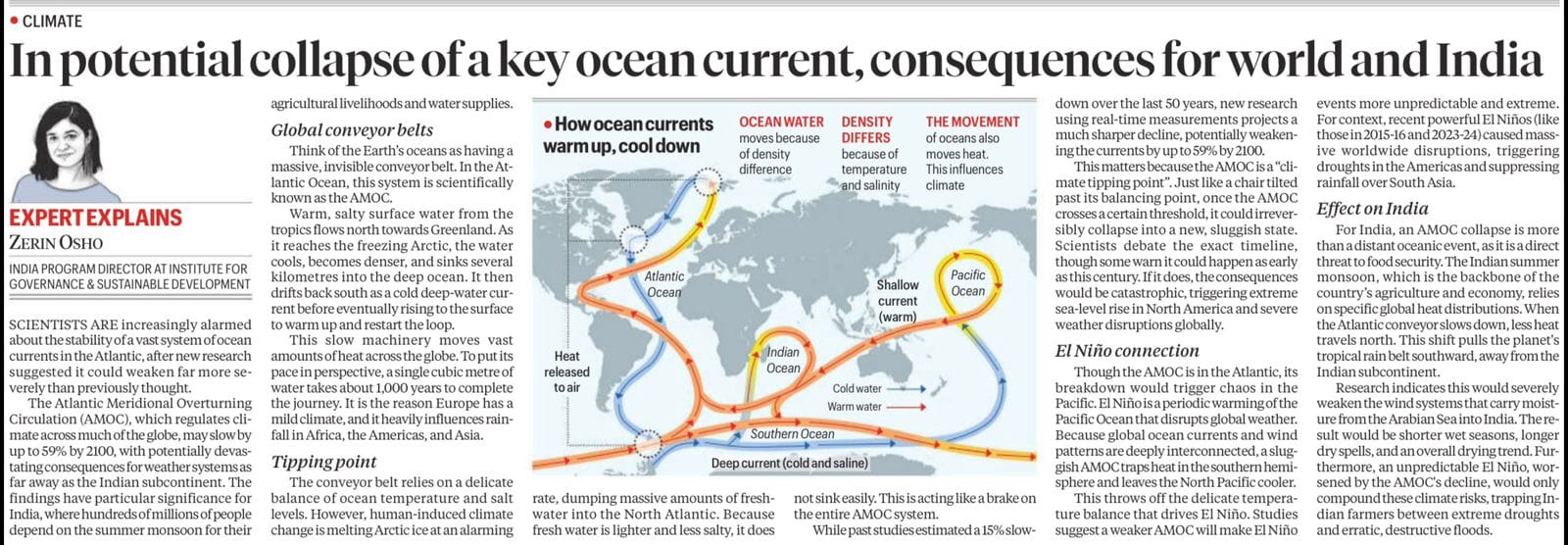
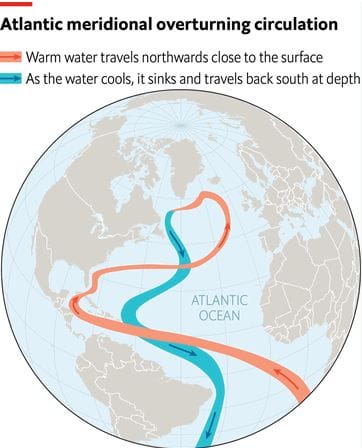
What is AMOC?
- A giant Atlantic Ocean “conveyor belt”.
- Warm surface water moves northwards; cold dense water sinks and flows southward deep in ocean.
- Helps distribute global heat and regulate climate.
Why is it Weakening?
- Melting Arctic/Greenland ice adds freshwater.
- Reduced salinity prevents water from sinking properly.
- This disrupts the circulation cycle.
Why is it Important?
AMOC influences:
- Europe’s climate
- Global rainfall patterns
- Hurricanes & extreme weather
- Monsoon systems
Tipping Point
- Scientists fear irreversible collapse beyond a threshold.
- Studies project up to 59% weakening by 2100.
Impact on India
- Weak Indian monsoon
- Erratic rainfall, floods & droughts
- Longer dry spells
- Threat to agriculture, food & water security
- Stronger/unpredictable El Niño effects







