Source: The Hindu, Tags: 3 June 2026
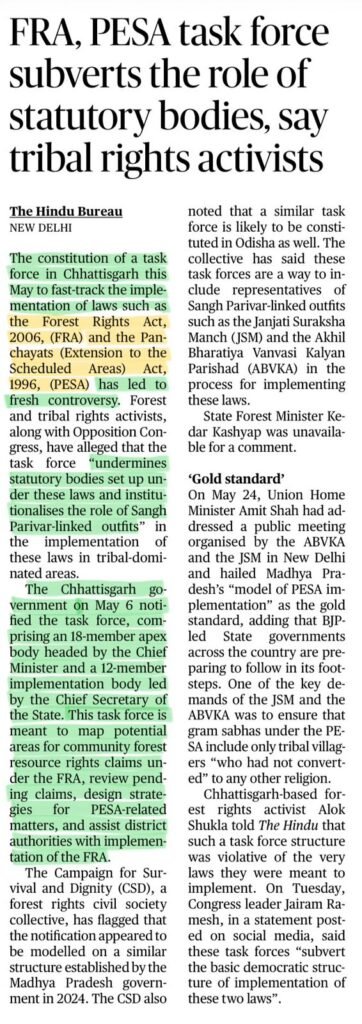
Context: FRA, PESA task force subverts the role of statutory bodies, say tribal rights activists
The Chhattisgarh government has constituted a task force to expedite implementation of the Forest Rights Act, 2006 and the Panchayats Extension to Scheduled Areas Act, 1996. Critics argue that the move may dilute the role of statutory institutions, particularly the Gram Sabha, which forms the foundation of both laws.
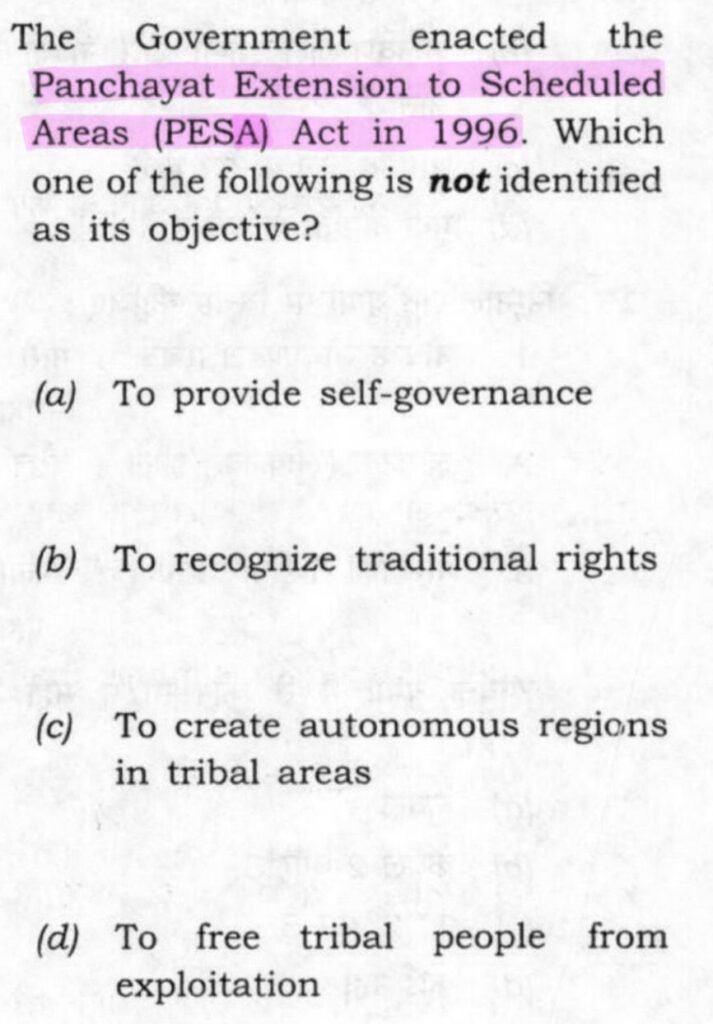
PESA Act, 1996
- Extends Part IX of the Constitution, related to Panchayats, to Fifth Schedule Areas.
- Nodal Ministry: Ministry of Panchayati Raj.
- Core idea: Tribal self-governance through Gram Sabha.
Gram Sabha Powers
- Approval of local development plans.
- Consultation before land acquisition and rehabilitation.
- Management of Minor Forest Produce.
- Protection of customs, traditions and community resources.
Forest Rights Act, 2006
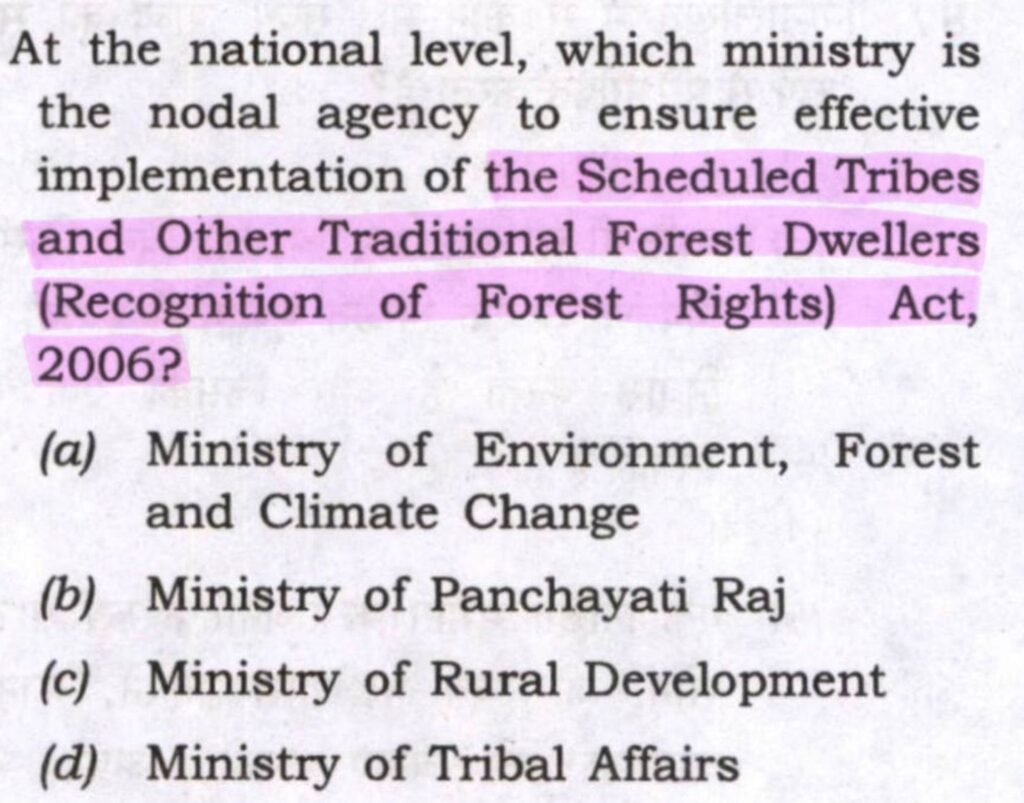
- Recognises rights of Scheduled Tribes and Other Traditional Forest Dwellers.
- Nodal Ministry: Ministry of Tribal Affairs.
Rights Recognised under FRA
- Individual Forest Rights
- Community Forest Rights
- Minor Forest Produce rights
- Habitat rights of Particularly Vulnerable Tribal Groups
Common Theme
Both PESA and FRA place the Gram Sabha at the centre of governance and resource management in tribal areas.
What is the Controversy?
Government’s Position
- Faster disposal of pending claims.
- Mapping of Community Forest Resource areas.
- Better implementation of FRA and PESA.
Critics’ Position
- Task force may bypass Gram Sabha-led institutions.
- It may weaken statutory mechanisms created under FRA and PESA.
- It may centralise powers meant for tribal communities.