Source: The Indian Express | Page 6 | Tags: 15 June 2026, Buddhism, GS1, Indian Culture, UNESCO Heritage
Context:
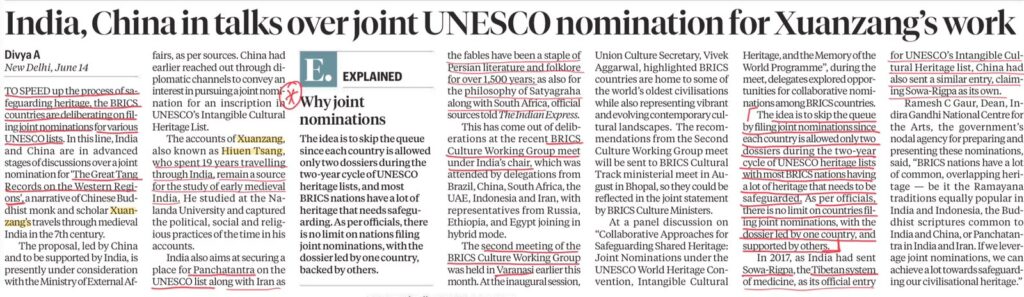
India and China are discussing a joint UNESCO nomination for “The Great Tang Records on the Western Regions,” written by the Chinese Buddhist monk Xuanzang, also known as Hiuen Tsang.
The proposal was discussed during the 2nd BRICS Culture Working Group Meeting held in Varanasi under India’s BRICS Chairmanship.
UNESCO Joint Nomination
A UNESCO joint nomination means two or more countries jointly nominate a heritage element having shared civilisational or cultural roots.
Key Features
- One country leads the dossier.
- Other countries support it.
- Multinational nominations receive greater priority in UNESCO’s evaluation process.
Examples Under Discussion
Xuanzang’s Records
- India–China
Panchatantra
- India–Iran
- Ancient Indian collection of animal fables with influence across Persia and West Asia.
Satyagraha
- India–South Africa
- Linked to Mahatma Gandhi’s philosophy of non-violent resistance shaped during his South African years.
Sowa-Rigpa
- Traditional Tibetan medicine earlier claimed separately by India and China.
2nd BRICS Culture Working Group Meeting
Location
- Varanasi
Chairmanship
- India
Objective
- Promote joint heritage nominations among BRICS countries.
- Safeguard shared cultural heritage.
Xuanzang / Hiuen Tsang: UPSC Basics
- Chinese Buddhist monk.
- Visited India during the reign of Harshavardhana.
- Travelled across India between 629 CE and 645 CE.
- Spent nearly 19 years studying Buddhism.
- Studied at Nalanda Mahavihara.
- Authored Great Tang Records on the Western Regions, also known as Si-Yu-Ki.
Importance of Xuanzang’s Account
His writings are an important source for understanding 7th-century India’s:
- Political conditions
- Social life
- Religious practices
- Economic conditions
- Buddhist centres of learning
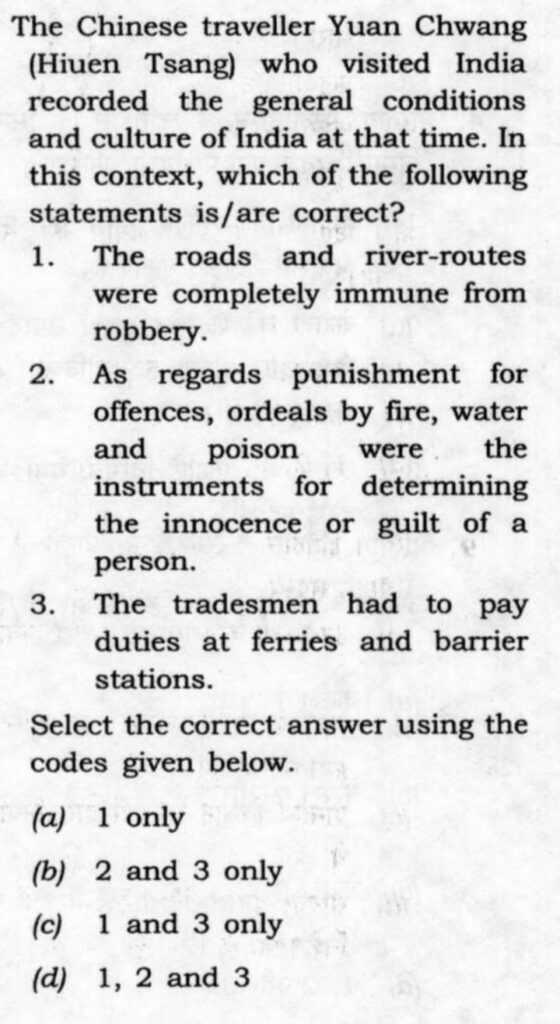
PYQ Fact
Xuanzang recorded that:
- Traders paid duties at ferries and barriers.
- Ordeals by fire, water and poison were used in judicial practices.