Source: The Indian Express | Page 12 | Tags: 25 & 26 June 2026, Earthquakes, Geography, GS1, Plate Tectonics
Context: Venezuela Seismic Doublet Earthquake
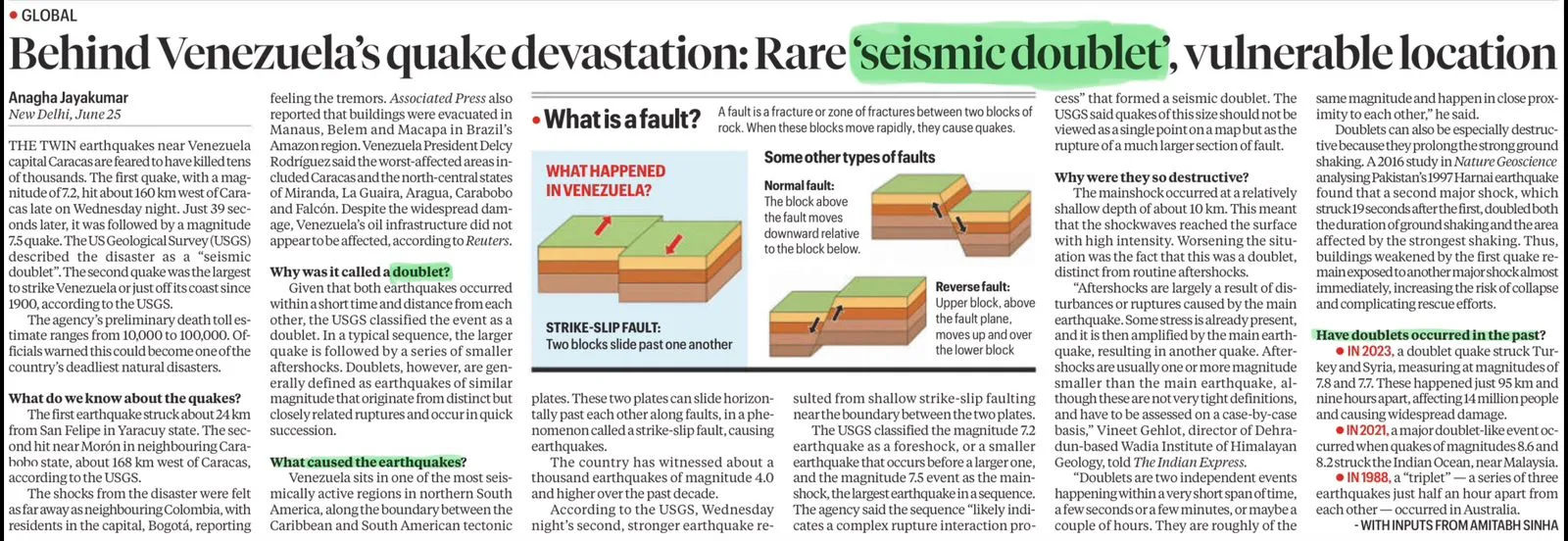
Two powerful earthquakes of magnitude 7.2 and 7.5 struck near Caracas, Venezuela, only 39 seconds apart, creating a rare seismic doublet. Shallow depth and strike-slip faulting amplified the destruction.
Earthquake Basics
Fault
A fault is a fracture in the Earth’s crust where tectonic plates move.
How an Earthquake Occurs
Sudden release of accumulated stress along a fault generates seismic waves.
Types of Seismic Waves
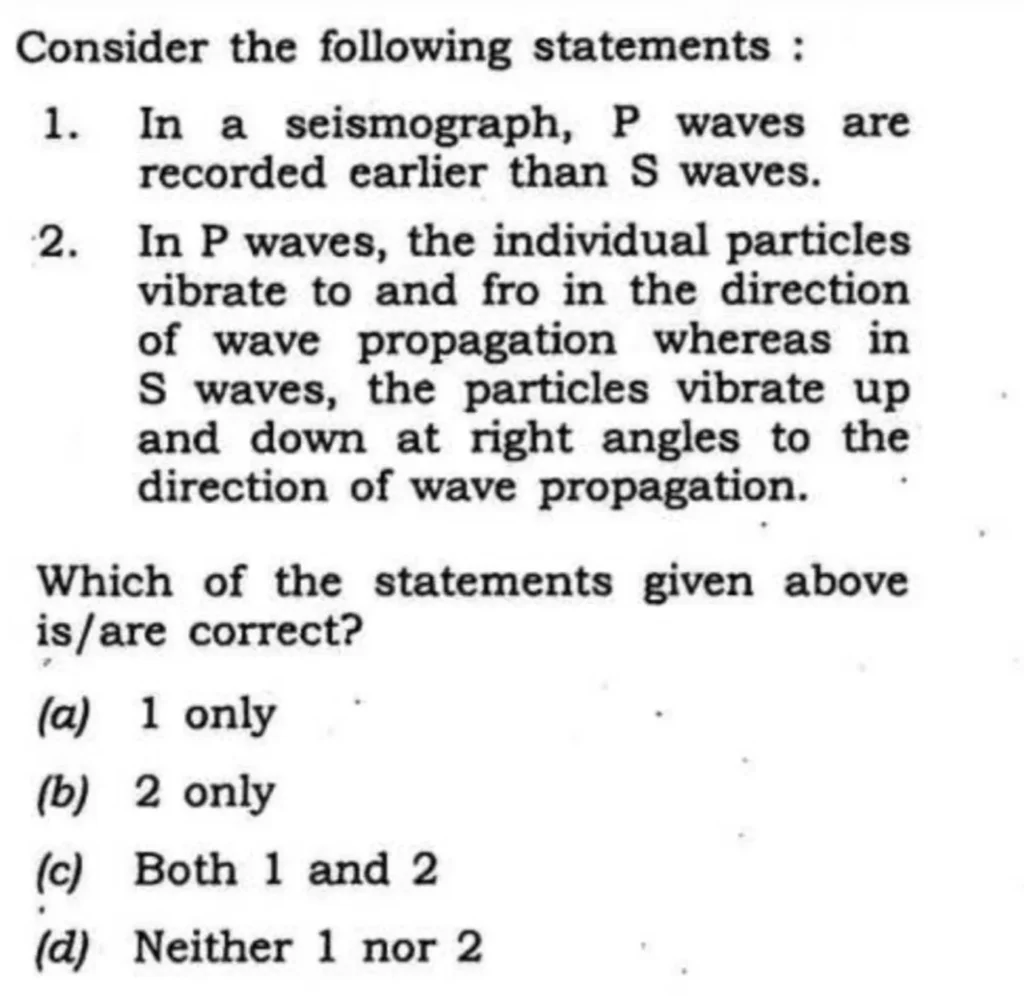
P Waves — Primary Waves
- Fastest seismic waves.
- Longitudinal waves.
- Travel through solids, liquids and gases.
- Reach first on a seismograph.
S Waves — Secondary Waves
- Slower than P waves.
- Transverse waves.
- Travel only through solids.
- Cause stronger shaking than P waves.
Surface Waves / L Waves
- Travel along the Earth’s surface.
- Most destructive.
- Cause maximum ground movement.
Seismic Doublet
A seismic doublet means two independent earthquakes of similar magnitude occurring close to each other within minutes to a few hours.
They are caused by closely related fault ruptures.
Seismic Doublet vs Aftershock
Seismic Doublet
- Two major earthquakes.
- Nearly equal magnitude.
Aftershock
- Smaller earthquake.
- Triggered by the main shock as the crust readjusts.
Why Seismic Doublets Are Dangerous
- First earthquake weakens buildings and infrastructure.
- Second earthquake strikes before recovery.
- Ground shaking continues for longer.
- Building collapse risk increases.
- Casualties rise.
- Rescue operations become difficult.
Why Venezuela Was Vulnerable
The destruction was worsened by:
- Shallow earthquake depth
- Strike-slip faulting
- Dense population near affected areas
- Vulnerable buildings
- Limited time gap between two shocks
PYQ Link
- P waves are recorded earlier than S waves.
- In P waves, particles vibrate to and fro in the direction of wave propagation.
- In S waves, particles vibrate at right angles to the direction of wave propagation.