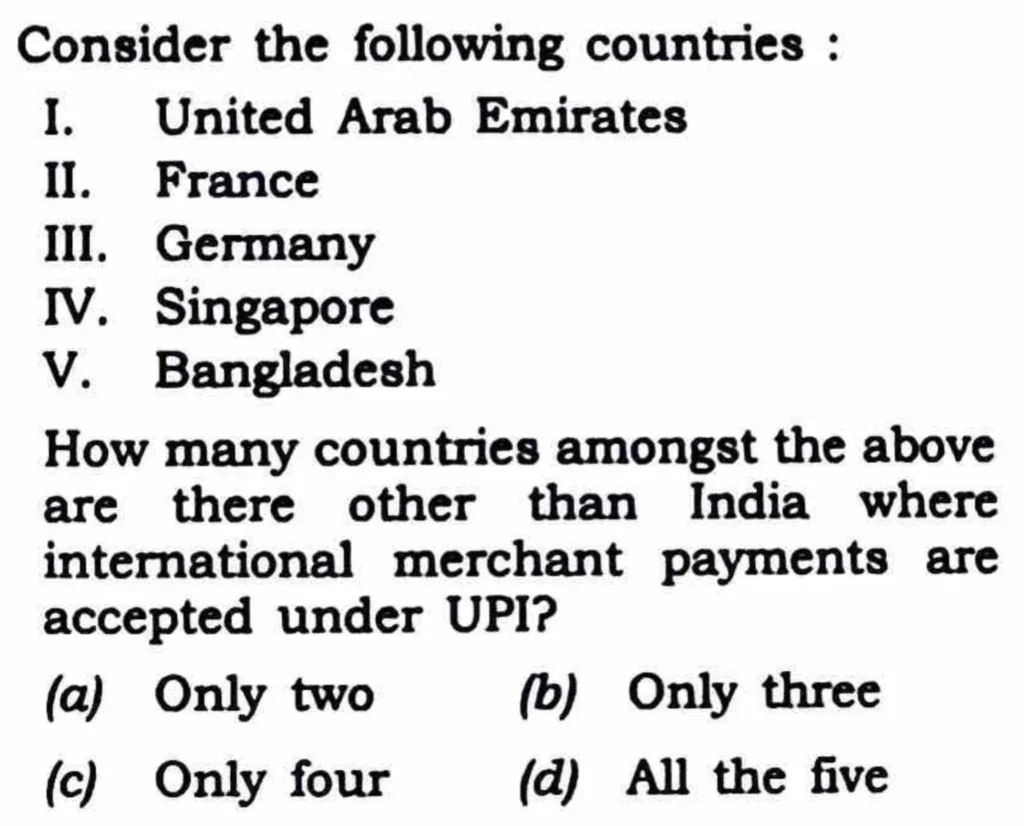
Source: The Hindu | Page 12 (Thursday) | Tags: 25 & 26 June 2026, Digital Payments, Economy, FinTech, GS3
Context:
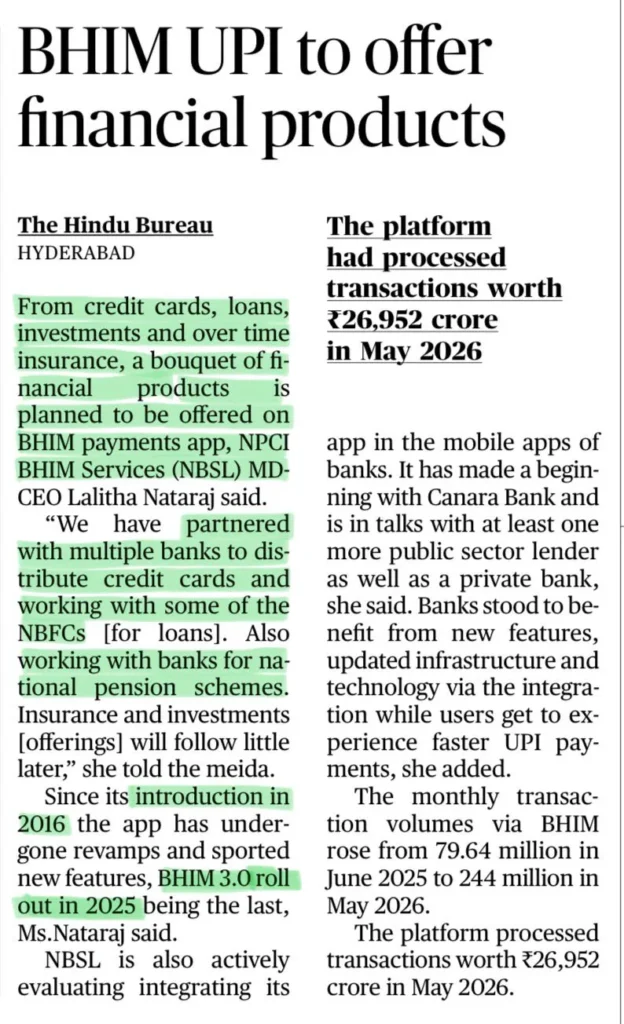
National Payments Corporation of India, through NPCI BHIM Services Ltd., will expand the BHIM app beyond payments by offering credit cards, loans, National Pension System, investments and insurance through banks and NBFCs.
Unified Payments Interface
UPI is a real-time bank-to-bank payment system.
Launched
- 2016
Developed By
- National Payments Corporation of India
Regulated By
National Payments Corporation of India
NPCI is a non-profit umbrella organisation for retail payments.
Established
- 2008
Set Up By
- Reserve Bank of India
- Indian Banks’ Association
Status
- Not a statutory body
UPI Features
- Virtual Payment Address
- QR code-based payments
- Mobile number-based payments
- 24×7 settlement
- Interoperability
- Two-factor authentication
- Person-to-Person payments
- Person-to-Merchant payments
BHIM App
BHIM means Bharat Interface for Money.
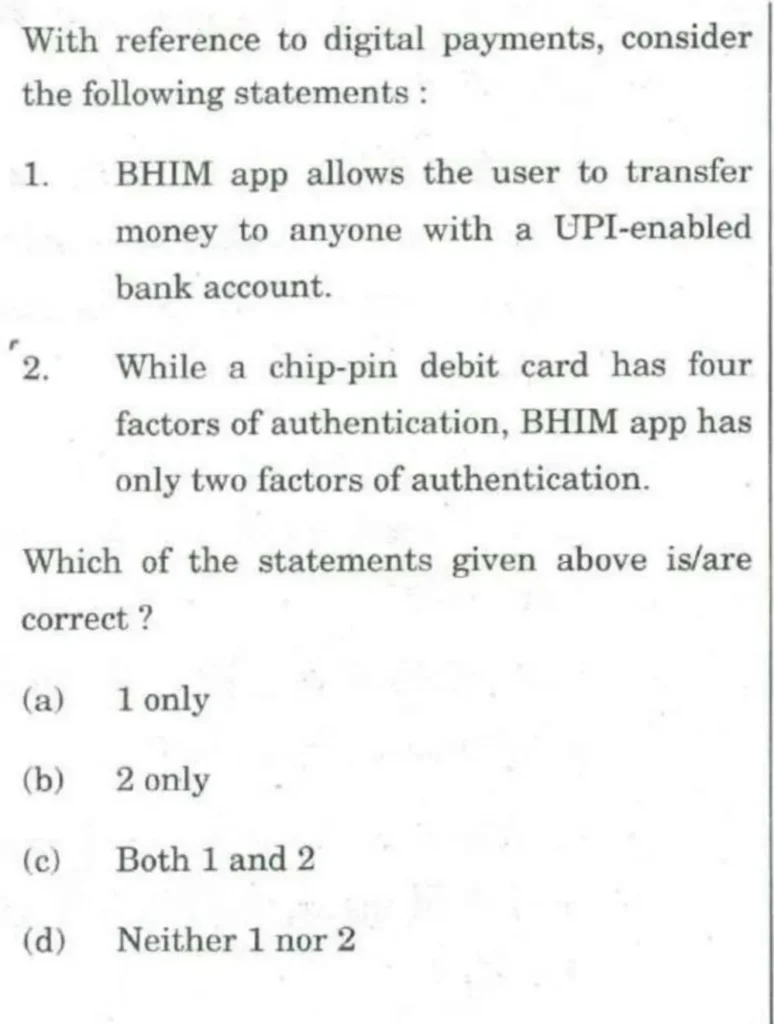
It enables users to transfer money to any UPI-enabled bank account.
Proposed Financial Products on BHIM
- Credit cards
- Loans
- National Pension System
- Investments
- Insurance
Significance
- Converts BHIM from a payment app into a broader financial services platform.
- Improves digital financial inclusion.
- Helps banks and NBFCs reach wider users.
- Supports fintech-led credit and investment access.
- Strengthens India’s digital public infrastructure ecosystem.
PYQ Integration
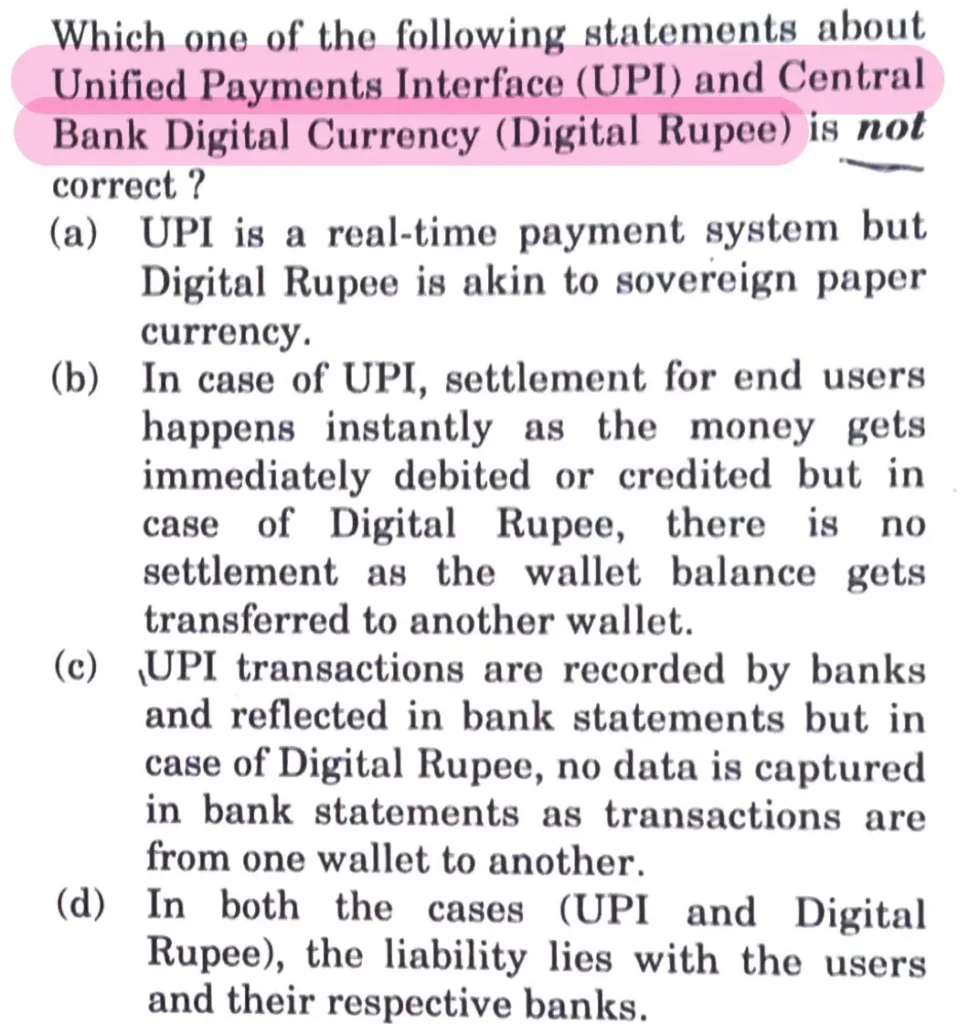
UPI vs Digital Rupee
- UPI is a payment system.
- Digital Rupee is digital legal tender issued by RBI.
UPI
- Transfers bank deposits.
- Money remains a commercial bank liability.
Digital Rupee
- Direct liability of RBI.
Important Concepts to Differentiate
- UPI
- Digital Rupee / CBDC
- Mobile Wallets
- Bank Deposits
PYQ Facts
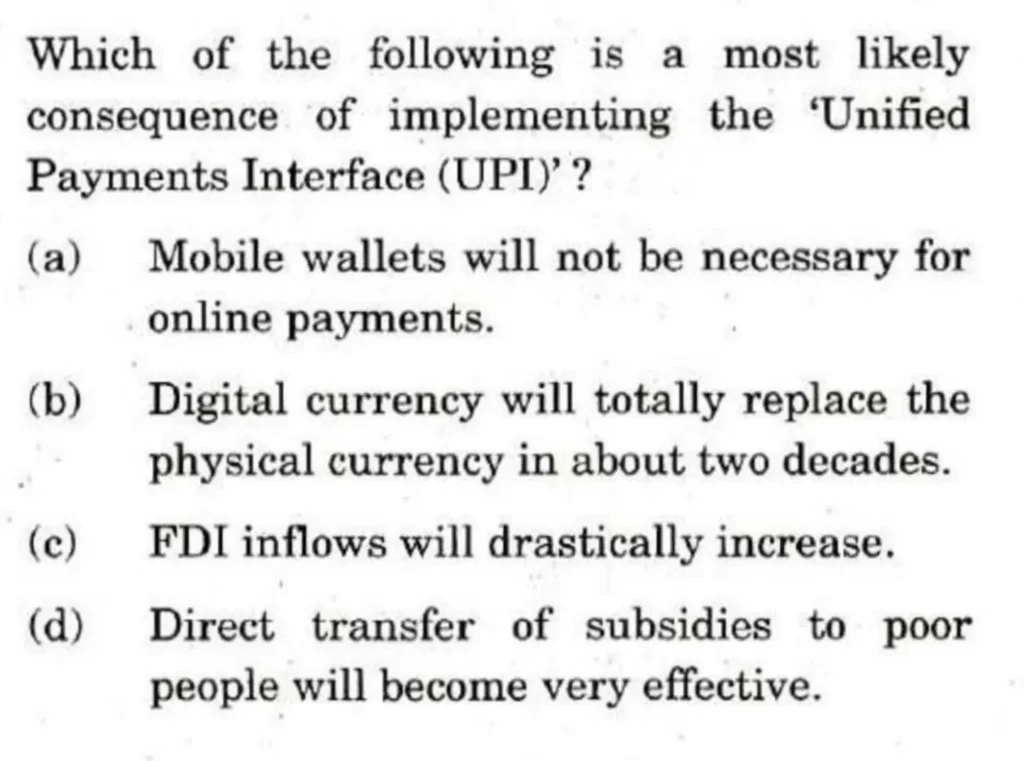
- UPI strengthens Direct Benefit Transfer.
- BHIM enables transfers to any UPI-enabled bank account using two-factor authentication.
- UPI is not a digital currency.