Context: Asiatic Elephant Conservation
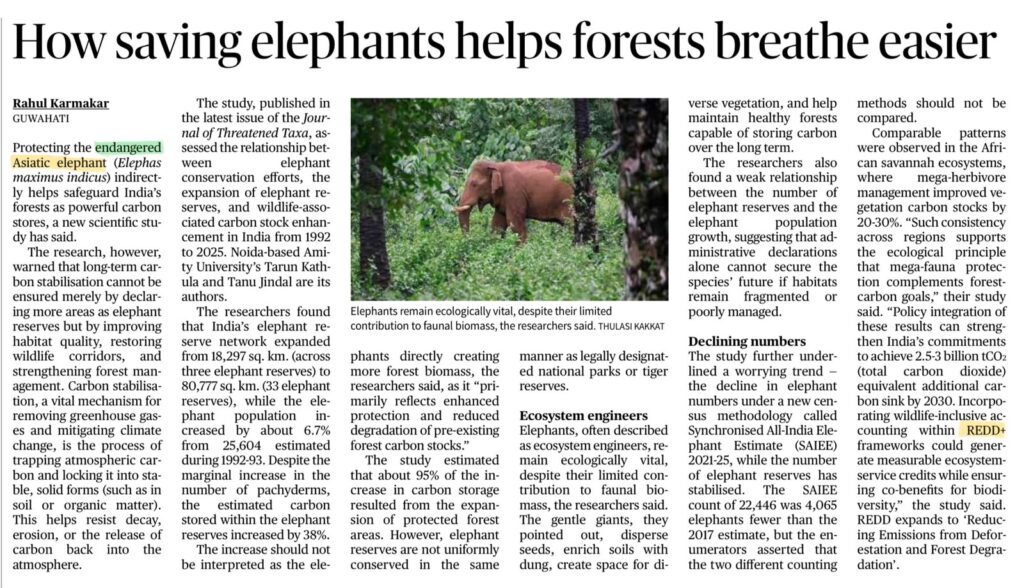
A recent study shows that conserving the Endangered Asiatic Elephant strengthens forest carbon sinks, biodiversity and India’s climate commitments.
Asiatic Elephant
Scientific Name
- Elephas maximus indicus
Conservation Status
IUCN
- Endangered
- Appendix I
Wildlife Protection Act, 1972
- Schedule I
Distribution
Found in:
- India
- Nepal
- Bhutan
- Bangladesh
- Myanmar
India’s Share
India supports around 60% of the global wild population.
Key Facts
- Largest Asian land mammal.
- Herbivore.
- Gestation period: 20–22 months.
- Keystone species.
- Ecosystem engineer.
Ecological Role
Elephants support forests through:
- Seed dispersal
- Soil enrichment
- Forest regeneration
- Carbon sequestration
- Maintenance of wildlife corridors
Key Findings
- Elephant reserves expanded from 18,297 sq km in 1992 to 80,777 sq km in 2025.
- Elephant population increased by 6.7%.
- Forest carbon storage increased by 38%.
- 95% of carbon gains came from better habitat protection, not merely increasing elephant numbers.
- Habitat quality and wildlife corridors are more important than expanding reserves alone.
REDD and REDD+
REDD
Reducing Emissions from Deforestation and Forest Degradation
- Proposed at COP-11, Montreal, 2005 under UNFCCC.
REDD+
Adopted at COP-13, Bali, 2007.
It expands REDD by adding:
- Forest conservation
- Sustainable forest management
- Enhancement of forest carbon stocks
PYQ Link
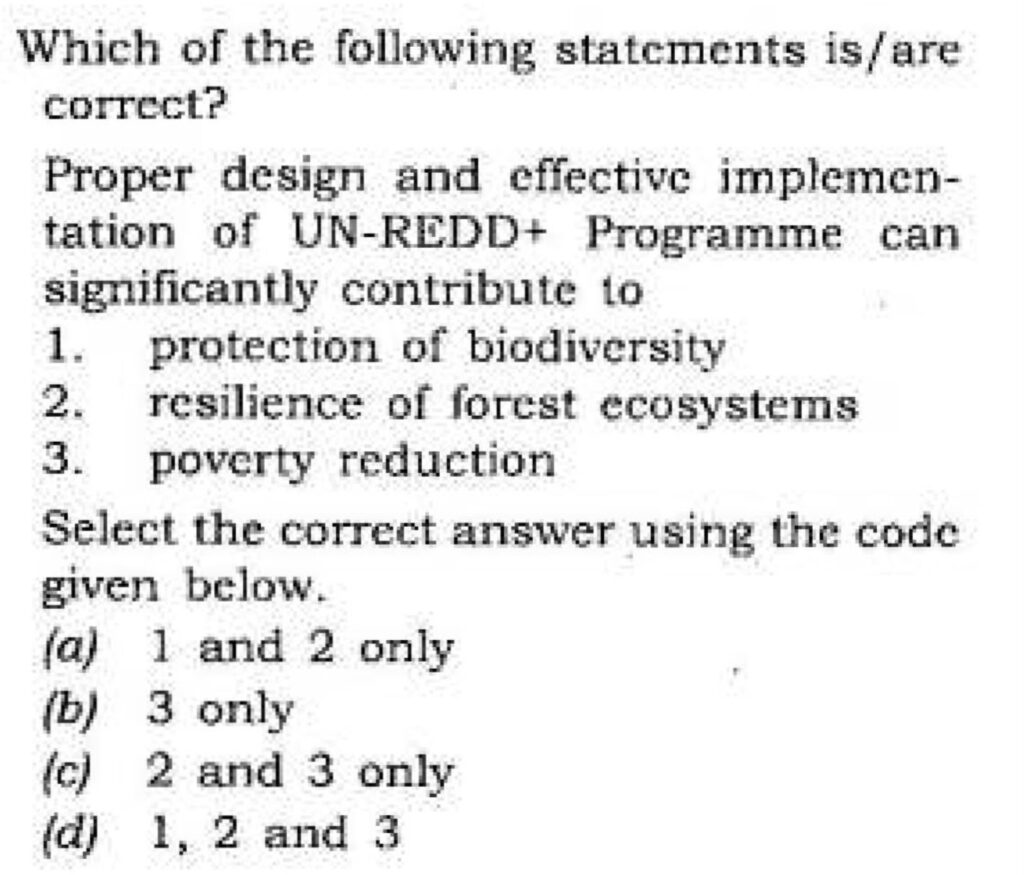
Proper design and implementation of the UN-REDD+ Programme can contribute to:
- Protection of biodiversity
- Resilience of forest ecosystems
- Poverty reduction
Significance
- Elephant conservation supports biodiversity.
- Protects forest carbon sinks.
- Strengthens India’s climate commitments.
- Helps forest regeneration.
- Supports local livelihoods through ecosystem conservation.
- Shows that wildlife protection and climate action can work together.