Context: QR Codes on Medicine Packs
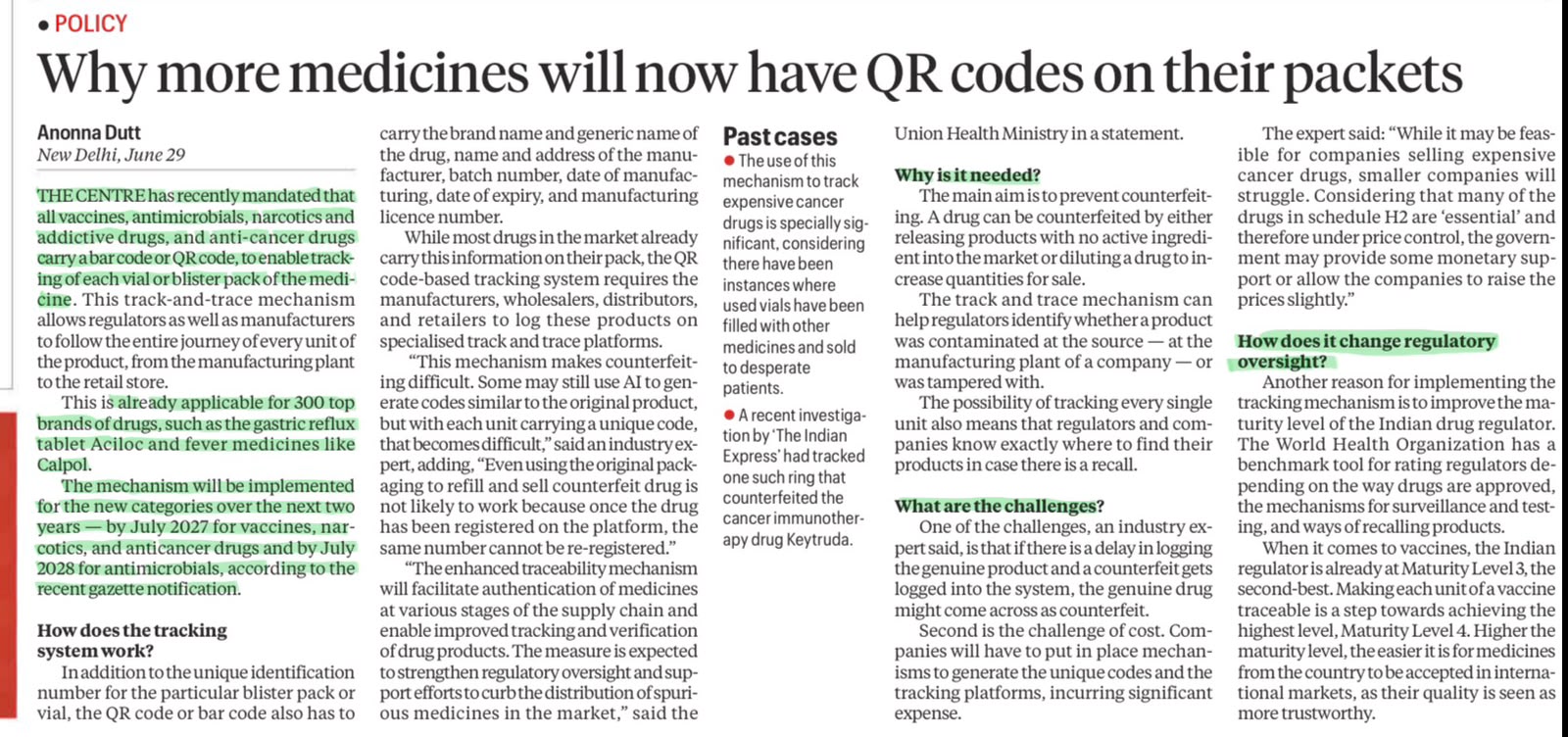
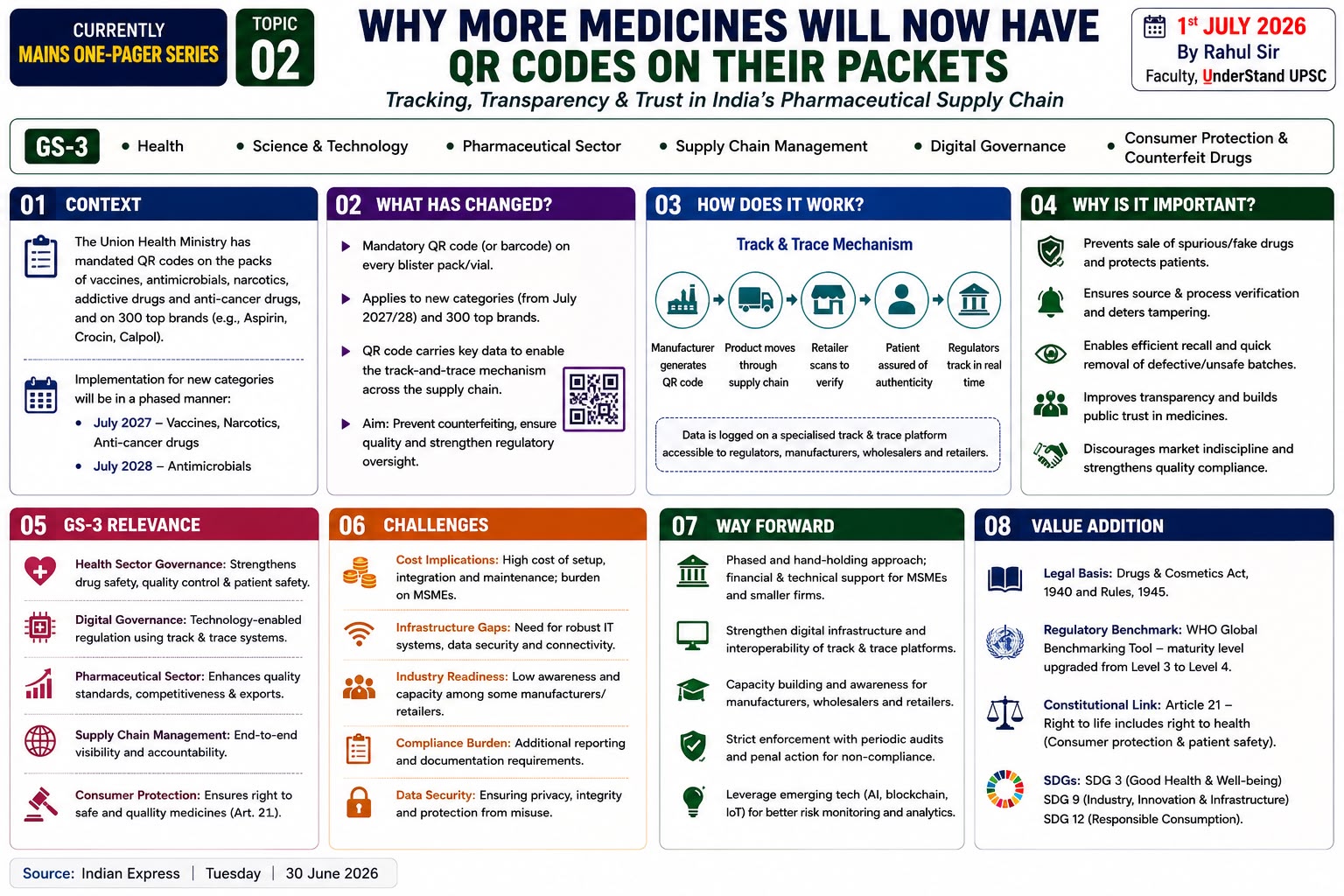
The Union Health Ministry has mandated QR codes on medicine packs to improve traceability, prevent counterfeit drugs and strengthen quality control in the pharmaceutical supply chain.
The requirement will be implemented in phases for selected categories of medicines.
What Has Changed?
More medicines will carry QR codes or barcodes on their packaging.
These QR codes will allow tracking and tracing of medicine packs through the supply chain.
Categories Covered
The rule applies to selected medicines, including:
- Narcotics
- Psychotropic substances
- Anti-cancer drugs
- Antibiotics
- Other critical medicines
Implementation Timeline
July 2027
QR codes for:
- Vaccines
- Narcotics
- Anti-cancer drugs
July 2028
QR codes for:
- Antimicrobials / antibiotics
How QR-Based Tracking Works
Each medicine pack gets a unique identification code.
The code can help verify:
- Manufacturer details
- Batch number
- Expiry date
- Supply-chain movement
- Authenticity of the product
Track-and-Trace Mechanism
The medicine can be traced from:
Manufacturer
→ Distributor
→ Stockist
→ Retailer
→ Patient
Why Is It Important?
1. Prevents Counterfeit Drugs
QR codes help identify fake or substandard medicines.
2. Improves Patient Safety
Patients and regulators can verify authenticity.
3. Strengthens Supply Chain
It improves monitoring from manufacturing to retail sale.
4. Faster Recalls
If a batch is defective, it can be quickly traced and recalled.
5. Better Regulatory Oversight
Regulators can track high-risk medicines more effectively.
6. Builds Public Trust
Greater transparency improves confidence in medicine quality.
Legal Basis
Drugs and Cosmetics Act, 1940
- Regulates import, manufacture, distribution and sale of drugs and cosmetics.
Drugs Rules, 1945
- Provide detailed rules for regulation of medicines.
Institutions Involved
- Union Health Ministry
- Central Drugs Standard Control Organisation
- State drug regulators
- Pharmaceutical companies
- Retail pharmacies
Challenges
- Cost of QR-code implementation.
- Integration with existing supply-chain systems.
- Ensuring data security.
- Training retailers and regulators.
- Preventing fake QR codes.
- Ensuring compliance by small manufacturers.
- Building consumer awareness.
Way Forward
- Phased implementation.
- Strong digital infrastructure.
- Regular compliance audits.
- Public awareness campaigns.
- Integration with regulator databases.
- Penalties for non-compliance.
- Use of AI and analytics for suspicious supply-chain patterns.
Mains Value Addition
This topic can be used in answers on:
- Health governance
- Pharmaceutical regulation
- Consumer protection
- Digital governance
- Supply-chain transparency
- Patient safety
- Counterfeit drug control