Context: India Energy Security Policy
The articles argue that India needs a resilient and sustainable energy strategy combining coal chemistry, clean energy transition and a unified policy architecture.
India’s energy future requires balancing:
- Energy security
- Energy affordability
- Environmental sustainability
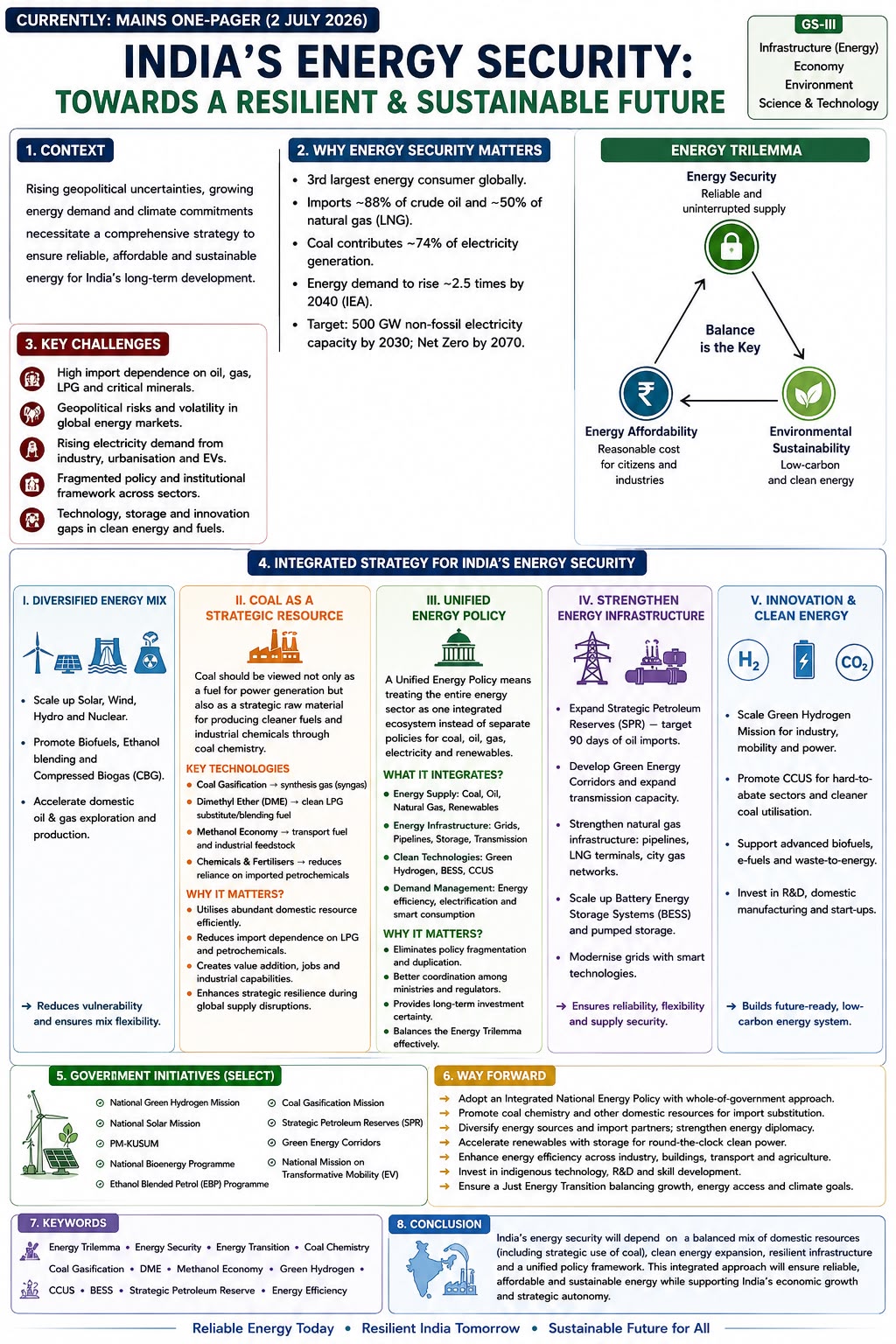
Why Energy Security Matters
India is:
- The 3rd largest energy consumer globally.
- Dependent on imports for around 88% of crude oil.
- Dependent on imports for around 50% of natural gas / LNG.
- Dependent on coal for around 74% of electricity generation.
India’s energy demand may rise 2.5 times by 2040.
India has also set major energy goals:
- 500 GW non-fossil electricity capacity by 2030.
- Net Zero by 2070.
Energy Trilemma
India must balance three goals:
1. Energy Security
Reliable and uninterrupted supply.
2. Energy Affordability
Reasonable cost for citizens and industries.
3. Environmental Sustainability
Low-carbon and clean energy transition.
Key Challenges
- High import dependence on oil, gas, LPG and critical minerals.
- Geopolitical risks and volatility in global energy markets.
- Rising electricity demand from industry, transport and households.
- Fragmented policy and institutional framework across sectors.
- Technology, storage and innovation gaps in clean energy.
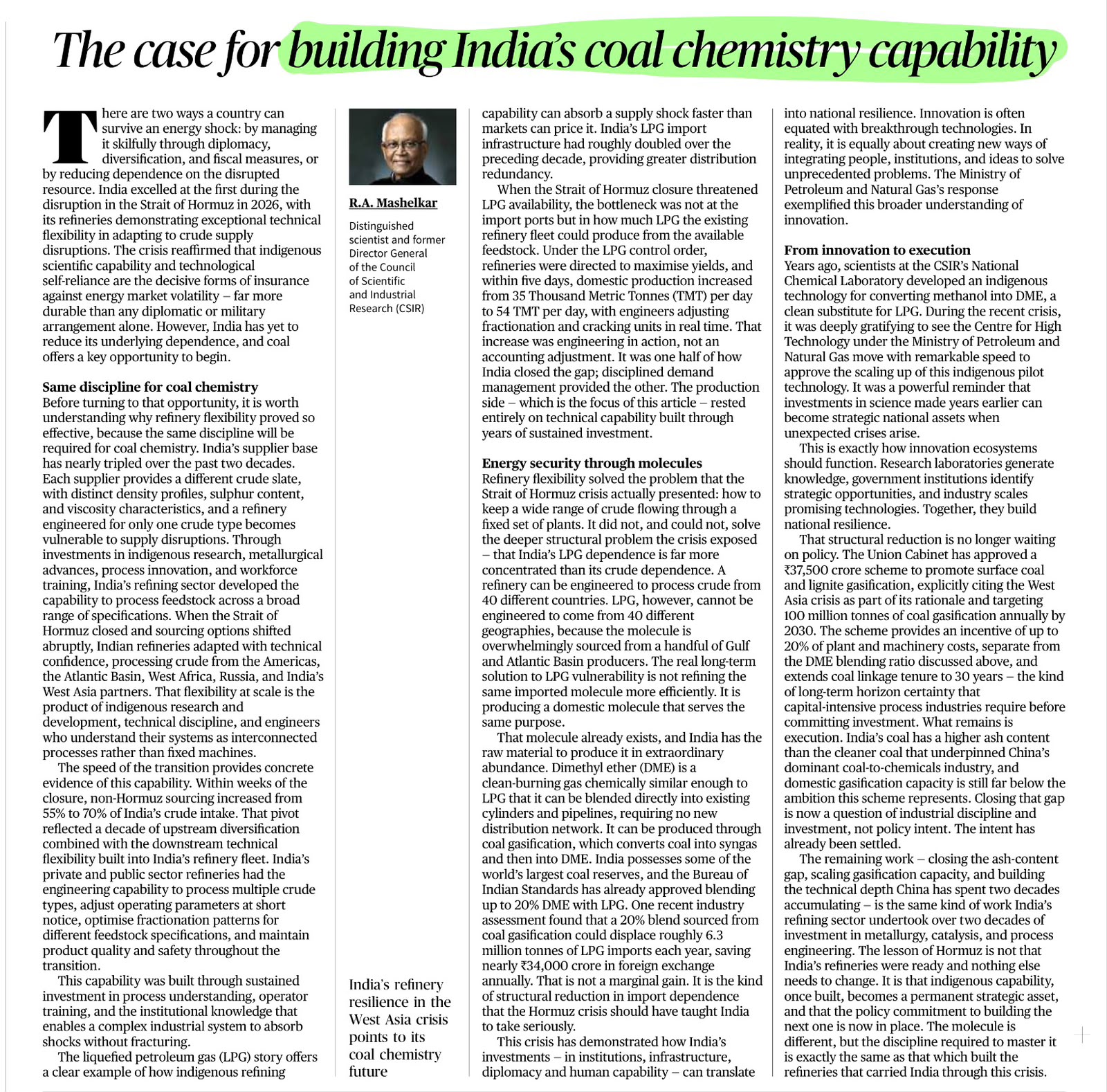
Coal as a Strategic Resource
Coal should not be seen only as a fuel for power generation.
It can also be used as a strategic raw material for:
- Cleaner fuels
- Industrial chemicals
- Graphite
- Methanol
- Dimethyl Ether
- Syngas
Coal Chemistry
Coal chemistry means using coal as a feedstock to produce useful industrial products through chemical conversion.
Key Technologies
1. Coal Gasification
Converts coal into synthesis gas / syngas.
2. Dimethyl Ether
Can be used as an LPG substitute and clean fuel.
3. Methanol Economy
Uses methanol as a cleaner fuel and industrial feedstock.
4. Chemicals and Fertilisers
Coal-derived chemicals can reduce dependence on imported petrochemicals.
Why Coal Chemistry Matters
- Utilises domestic coal resources efficiently.
- Reduces import dependence on LPG and petrochemicals.
- Creates value-added products.
- Generates jobs and industrial capacity.
- Enhances strategic resilience during global supply disruptions.
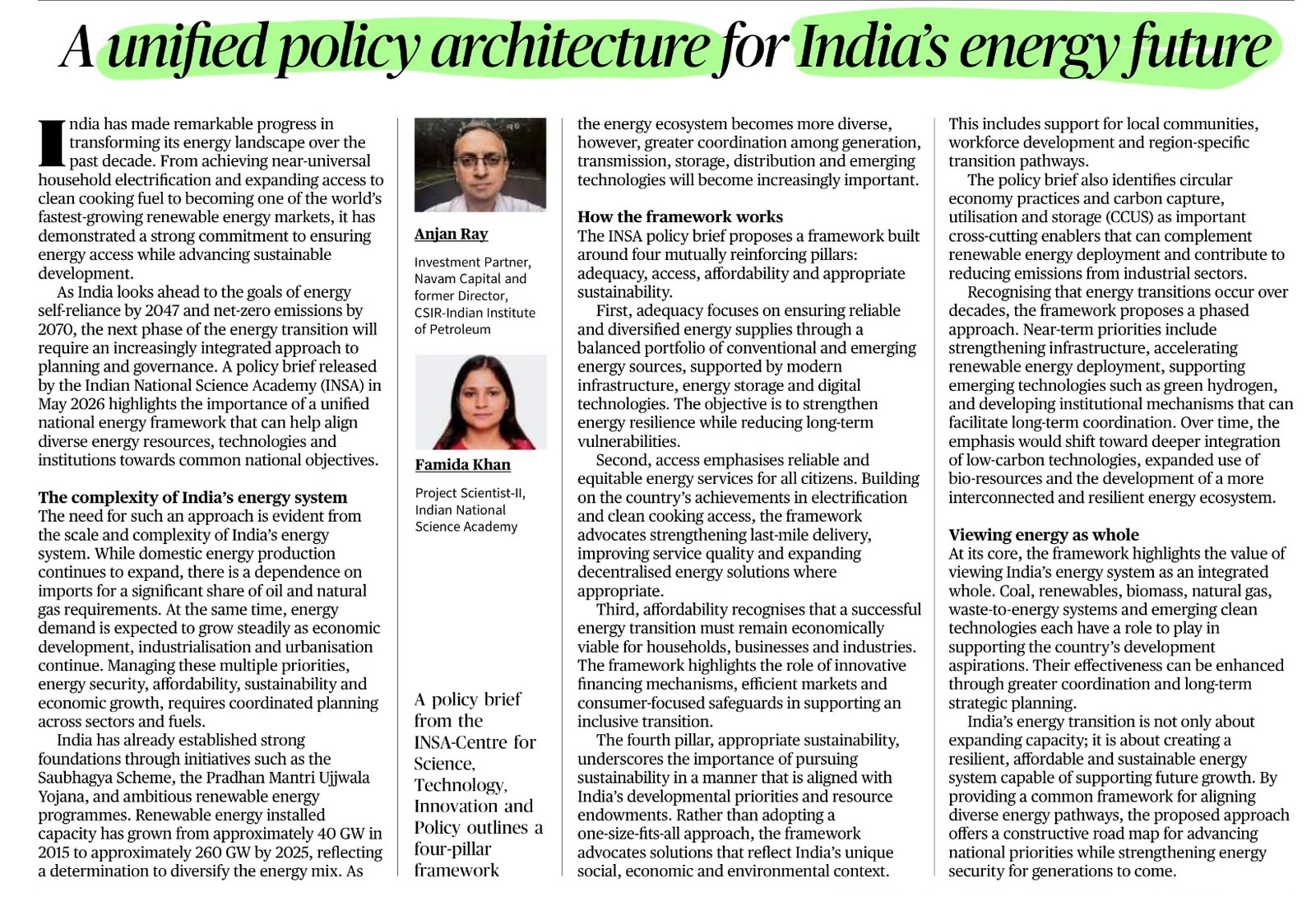
Unified Energy Policy
A unified energy policy means treating the energy sector as one integrated ecosystem rather than separate silos of:
- Coal
- Oil
- Gas
- Renewables
- Electricity grids
- Pipelines
- Storage
- Transmission
What It Integrates
- Energy supply
- Coal, oil, gas and renewables
- Energy infrastructure
- Grids, pipelines, storage and transmission
- Clean technologies
- Green hydrogen, BESS and CCUS
- Demand management
- Energy efficiency, electrification and smart consumption
Integrated Strategy for Energy Security
1. Diversified Energy Mix
- Scale up solar, wind, hydro and nuclear.
- Promote biofuels, ethanol blending and compressed biogas.
- Accelerate domestic oil and gas exploration.
2. Coal as a Strategic Resource
- Use coal for cleaner fuels and chemicals.
- Promote coal gasification.
- Reduce petrochemical import dependence.
3. Unified Energy Policy
- Reduce institutional fragmentation.
- Improve coordination among ministries and regulators.
- Provide long-term investment certainty.
- Balance security, affordability and sustainability.
4. Strengthen Energy Infrastructure
- Expand strategic petroleum reserves.
- Develop green energy corridors.
- Strengthen natural gas pipelines.
- Scale up battery energy storage systems and pumped storage.
- Modernise grids with smart technologies.
5. Innovation and Clean Energy
- Scale green hydrogen.
- Promote carbon capture, utilisation and storage.
- Support advanced biofuels.
- Invest in domestic manufacturing and energy start-ups.
Government Initiatives
- National Green Hydrogen Mission
- National Solar Mission
- PM-KUSUM
- National Bioenergy Programme
- Ethanol Blended Petrol Programme
- Coal Gasification Mission
- Strategic Petroleum Reserves
- Green Energy Corridors
- National Mission on Transformative Mobility and Battery Storage
Way Forward
- Adopt an integrated national energy policy.
- Promote coal chemistry and clean coal use.
- Diversify energy sources.
- Expand renewable energy with storage.
- Improve energy efficiency across sectors.
- Invest in indigenous technology and R&D.
- Ensure a just energy transition balancing growth, access and climate goals.
Conclusion
India’s energy security will depend on a balanced mix of domestic resources, clean energy expansion, resilient infrastructure and unified policy coordination.